
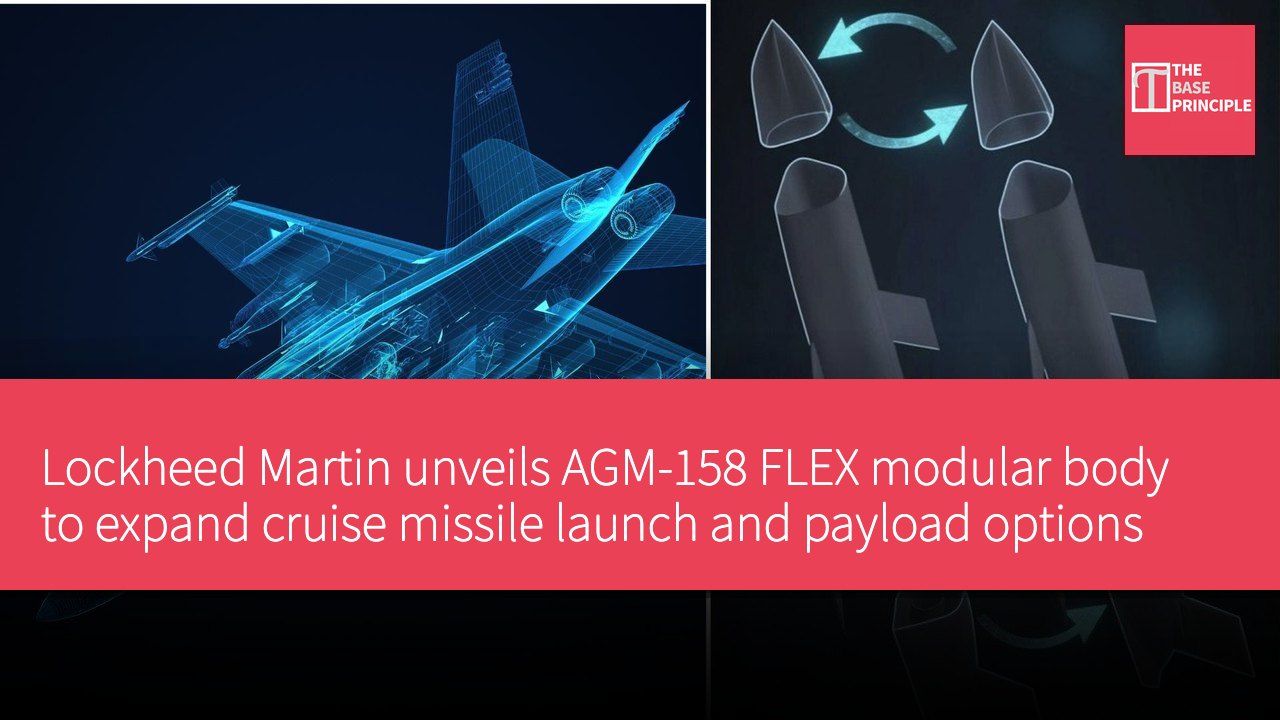
- The AGM-158 FLEX modular airframe expands cruise missile launch options.
- The FLEX airframe can be configured with different noses and tails to support multiple launch methods.
- The architecture treats the missile as a configurable platform, boosting flexibility.
- Lockheed Martin plans to create a common architecture to accommodate future needs.
A US defense giant has unveiled a modular airframe designed to broaden the launch and payload options of its AGM-158 cruise missile family. The modular body, dubbed AGM-158 FLEX, has been developed by Lockheed Martin. In a statement, the company said: "Our AGM-158 FLEX airframe concept is how we will deliver a modular and versatile system to our AGM-158 customers, current and future. We have invested more than $35 million in designing and validating combat-proven Joint Air-to-Surface Standoff Missile (JASSM) subsystems into a new modular airframe concept.
This investment spans concept development, airframe design, testing, prototype manufacturing and the establishment of major suppliers."
Versatility of the FLEX airframe
Lockheed Martin says its FLEX airframe solution will allow removable noses that can accommodate JASSM and Long Range Anti-Ship Missile (LRASM) sensor suites, as well as removable tails that can be configured for ground, underwater and surface launch configurations, in addition to the existing air-launched configuration for JASSM and LRASM. The air-launched configuration will be specifically designed to leverage existing compatibility with all current and future JASSM and LRASM air launch platforms. The FLEX airframe will also come in different sizes, including a 206-inch very long-range option, JASSM-XR, and a 168-inch option consistent with JASSM-ER.
The first configuration of the FLEX airframe is JASSM-XR, which is part of our more than $35 million investment and will provide the US military and its allies with significantly increased long-range strike range.
The company claims the AGM-158 FLEX will leverage the mature, world-class JASSM and LRASM production lines, the established supply chain, and mission planning and software infrastructure, ensuring FLEX can be rapidly produced and delivered at scale. Lockheed also stressed that its FLEX airframe will offer a modular body that gets ahead of component obsolescence, provides future capability enhancements to outpace threats, and enables scalability in the manufacturing plant. The company's tail configurations can support ground, underwater and surface launch configurations, while the air-launched variant is designed to maintain compatibility with existing and future JASSM and LRASM aircraft platforms.
This architecture is significant because it treats the missile airframe as a configurable platform rather than a single-purpose product.
A common architecture for future needs
In practice, Lockheed Martin aims to create an architecture in which different sensors, propulsion-related components, launch configurations and other subsystems can be integrated as requirements evolve. The company said the JASSM-XR configuration is designed to give the US military and its allies significantly increased long-range strike range. The emphasis on long-range capability reflects the broader evolution of modern air warfare, in which aircraft may need to release weapons from greater distances in environments protected by increasingly sophisticated air defense systems. However, the scope of the FLEX concept extends beyond simply extending missile range.
Its core objective is to establish a common architecture able to accommodate multiple future requirements.
Implications of modular design for military strategy
Lockheed Martin's launch of the AGM-158 FLEX modular airframe marks a significant advance in missile technology. The design not only supports multiple launch configurations but can also be adapted to evolving combat requirements, underscoring the importance modern militaries place on adaptability. As the air combat environment grows more complex, missiles with long-range strike capability have become more important, and the development of the FLEX airframe is a response to that need. The modular design can extend the service life of the missile and provide stronger response capability in the face of new threats.