
- Lockheed Martin is accelerating the production of the Orion spacecraft to support NASA's Artemis missions.
- The Orion spacecraft is designed with a focus on human safety and efficient production, featuring advanced thermal protection systems.
- A shift in production thinking allows Lockheed Martin to bypass repetitive qualification testing.
- Rapid response teams have been introduced to address technical anomalies, enhancing production efficiency and response speed.
As the National Aeronautics and Space Administration (NASA) intensifies its timeline for establishing a permanent human presence on the Moon, major contractor Lockheed Martin is accelerating its manufacturing approach. The defense giant is transforming the production of the Orion spacecraft into a streamlined assembly line aimed at supporting NASA's upcoming Artemis III, IV, and V missions. Overall, these efforts will support NASA's restructured Artemis framework and ignition directives to establish a lasting human presence on the Moon.
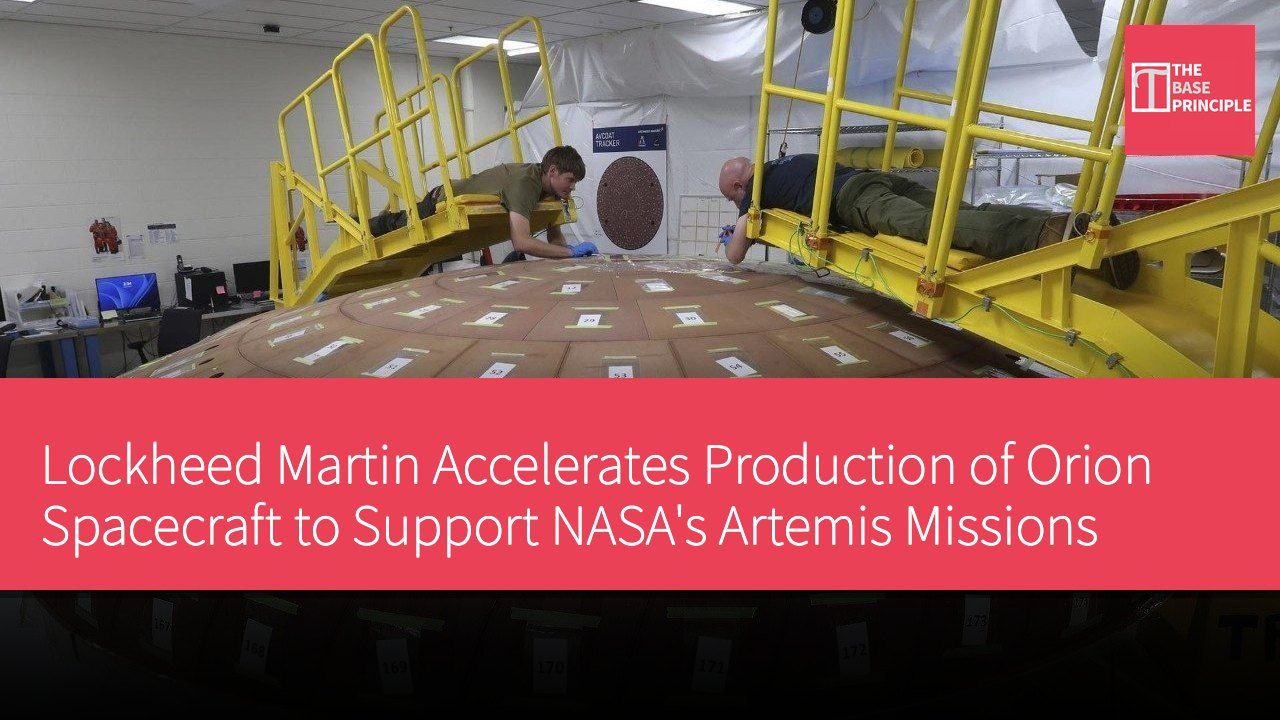
Technicians are analyzing the thermal protection tiles of the Orion Artemis IV spacecraft. The design of the Orion spacecraft is intended to survive in deep space while prioritizing human safety and efficient production. Its life support system maintains a breathable environment for four crew members during extended missions. To withstand atmospheric re-entry, the capsule is equipped with a 16.5-foot diameter Avcoat thermal shield capable of withstanding temperatures up to 5,000 degrees Fahrenheit at speeds approaching 25,000 miles per hour. The spacecraft operates using multiple redundant computers, data networks, and glass cockpit displays for automated monitoring and manual control.
Shift in Production Thinking
Transitioning from a "development mindset" to a "production mindset" requires a change in the certification process for space hardware. Lockheed Martin's experts and engineers are leveraging data from previous flights to skip repetitive qualification testing, rather than treating each Orion capsule as an unverified prototype. Once a design is proven flightworthy, testing will focus on verifying manufacturing quality. "Once the design is qualified, acceptance testing can focus on verifying that each unit is built correctly," said Tim Norick, Lockheed Martin's Orion project hardware director.
"We are leveraging past flight experience to reduce testing time and scope while retaining the essential tests and evidence needed to confirm flight readiness and protect crew safety."
Strategies to Enhance Production Efficiency
Lockheed Martin is also reusing hardware that has been flight-qualified from previous Artemis missions to reduce costs and protect the flight schedule. The company has expanded its Orion workforce by adding over 100 technicians and support staff, moving operations to a round-the-clock, three-shift work model, operating seven days a week. "The key to acceleration lies in three areas: investing more resources in the work, improving work efficiency, and reducing unnecessary scope and avoidable rework," said Scott Daniels, director of Orion assembly, integration, and testing at Kennedy Space Center.
To maintain smooth assembly line operations, the program has introduced dedicated "rapid response teams." These senior experts immediately intervene to resolve unexpected technical anomalies on-site. "We have embedded authority at all levels so that relevant personnel can respond quickly, avoiding wasted time in lengthy decision chains," said Brian Hinde, senior manager of Orion production engineering at Lockheed Martin. This approach allows the core integration team to focus on achieving key delivery objectives without being hindered by administrative delays.
Accelerated production goals extend deep into the supply chain. NASA's Michoud Assembly Facility in Louisiana is undergoing infrastructure upgrades to enhance the manufacturing capacity of the Orion's Avcoat thermal shield. Facility expansions and tooling improvements have increased weekly output from about four material blocks to over 20. Artemis I completed an uncrewed lunar flyby, followed by Artemis II's historic crewed lunar flyby. Artemis III will serve as a crewed orbital rendezvous test, laying the necessary technological groundwork for Artemis IV to achieve the first crewed landing on the lunar surface since Apollo 17.
This process will help transform temporary visits into a permanent human base on the Moon, utilizing the experiences gained on the lunar surface as a stepping stone for future crewed missions to Mars.
Item Specifications Thermal Shield Avcoat, 16.5 feet in diameter High-Temperature Resistance Capable of withstanding up to 5,000 degrees Fahrenheit Speed Approaching 25,000 miles per hour
Impact of Accelerated Production on Future Space Exploration
Lockheed Martin's acceleration of Orion spacecraft production underscores its commitment to NASA's Artemis missions, not only to establish a lunar base but also to prepare for future crewed missions to Mars. By applying past flight data to the production process, testing time can be reduced and efficiency improved, which is crucial in space exploration. The introduction of rapid response teams effectively addresses unexpected issues during production, ensuring the stability of mission timelines. Overall, these measures not only help lower costs but also accelerate the pace of space exploration.