
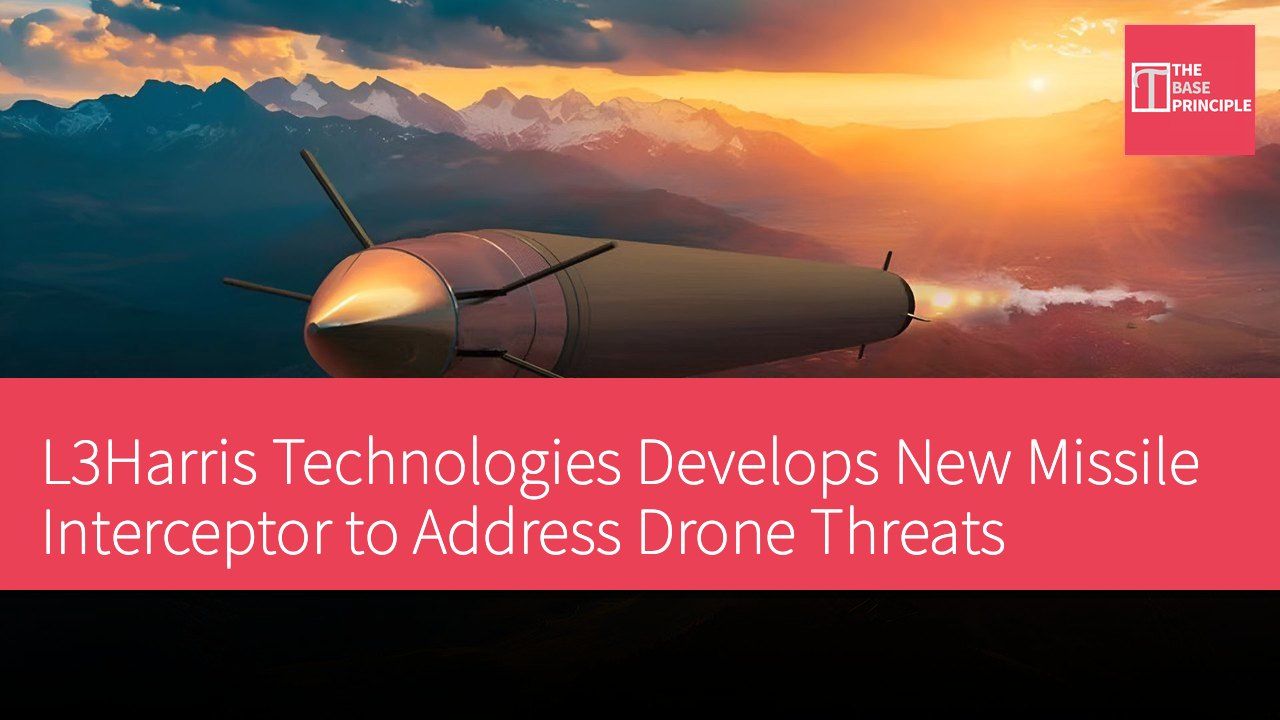
- L3Harris is developing a new missile interceptor to address drone threats.
- The interceptor will feature greater range and speed, enhancing military flexibility.
- The ramjet propulsion system is central to the interceptor's performance improvements.
- Compatibility with existing launch platforms will reduce the need for equipment modifications.
L3Harris Technologies is developing a longer-range missile interceptor aimed at helping the U.S. Army counter drone and other aerial threats without the need for entirely new launch infrastructure. The defense contractor has secured a three-year agreement worth up to $60 million to advance the weapon's development through flight performance testing. The initiative addresses the growing challenges in military air defense. Small and medium-sized drones pose threats to troops and facilities, necessitating an interceptor that balances engagement range with operational flexibility.
Flight testing is underway, and L3Harris has entered the second phase of the Army's Xtended Range Counter-sUAS missile program. The project operates under the guidance of the U.S. Army Combat Capability Development Command Aviation and Missile Center. In this phase, engineers will evaluate flight performance using a fully integrated interceptor. The announcement did not specify when testing would begin or disclose the results of prior development work. L3Harris claims its design can offer greater range and speed than existing systems, aiming to provide military operators with more flexibility in countering aerial threats.
These capabilities help address the ongoing challenges of drone warfare. Defenders must respond to various types of aircraft while managing the costs and availability of defensive missiles. An interceptor capable of engaging targets at greater distances can expand the protective range of existing air defense units. However, L3Harris has not disclosed the missile's maximum range, flight speed, or demonstrated interception rate. The Army has also not announced a date for operational deployment.
Technical Challenges of the Propulsion System
The ramjet propulsion system extends range, and the interceptor's propulsion system is central to its proposed performance improvements. L3Harris is pursuing an air-breathing ramjet design aimed at enhancing fuel efficiency and extending engagement distance. Unlike traditional rocket engines, ramjet engines extract oxygen from the surrounding air to sustain combustion. They typically require the aircraft to reach sufficient speeds before generating effective thrust, making their integration into missile design an engineering challenge. For the interceptor, propulsion efficiency will impact the energy available during engagements.
Greater range can provide air defense operators with additional time and distance to respond to approaching aircraft. L3Harris combines its propulsion approach with advanced seeker technology. The seeker helps the interceptor detect and track its targets during engagements. The company has not disclosed the specific seeker configuration or guidance architecture planned for the weapon. Scott Alexander, president of L3Harris's missile solutions business, stated that the design combines propulsion expertise with advanced seeker technology, describing the anticipated outcome as a modular, cost-effective interceptor compatible with existing launch platforms.
Compatibility with Existing Platforms
Compatibility with existing U.S. military platforms is another focus of the development work. Integrating the interceptor into existing launch infrastructure can reduce the need for significant equipment modifications. This approach also aids the Army in assessing the weapon within established operational frameworks. However, L3Harris has not identified the specific launch systems that will support the interceptor. The initiative also aims to address traditional short-range air defense threats as well as drones. This broader mission will provide the Army with another option for countering various aerial targets.
The next major milestone will be demonstrating the interceptor's performance in flight. Test results should help clarify whether its propulsion system and modular design can deliver the range and flexibility promised by L3Harris. This $60 million ceiling covers three years of development work, but the announcement did not specify the final procurement value. The Army has not disclosed production quantities or deployment plans.
Impact of the New Interceptor on Military Defense
L3Harris's new missile interceptor represents a response to the drone threat, particularly without the need for entirely new launch infrastructure. This not only enhances the flexibility of military operations but also expands the defensive range to address various aerial threats. The use of the ramjet propulsion system demonstrates a focus on fuel efficiency and engagement distance, which are critical on future battlefields. Additionally, compatibility with existing launch platforms will enable the Army to integrate new technologies more rapidly, enhancing overall operational capability.