
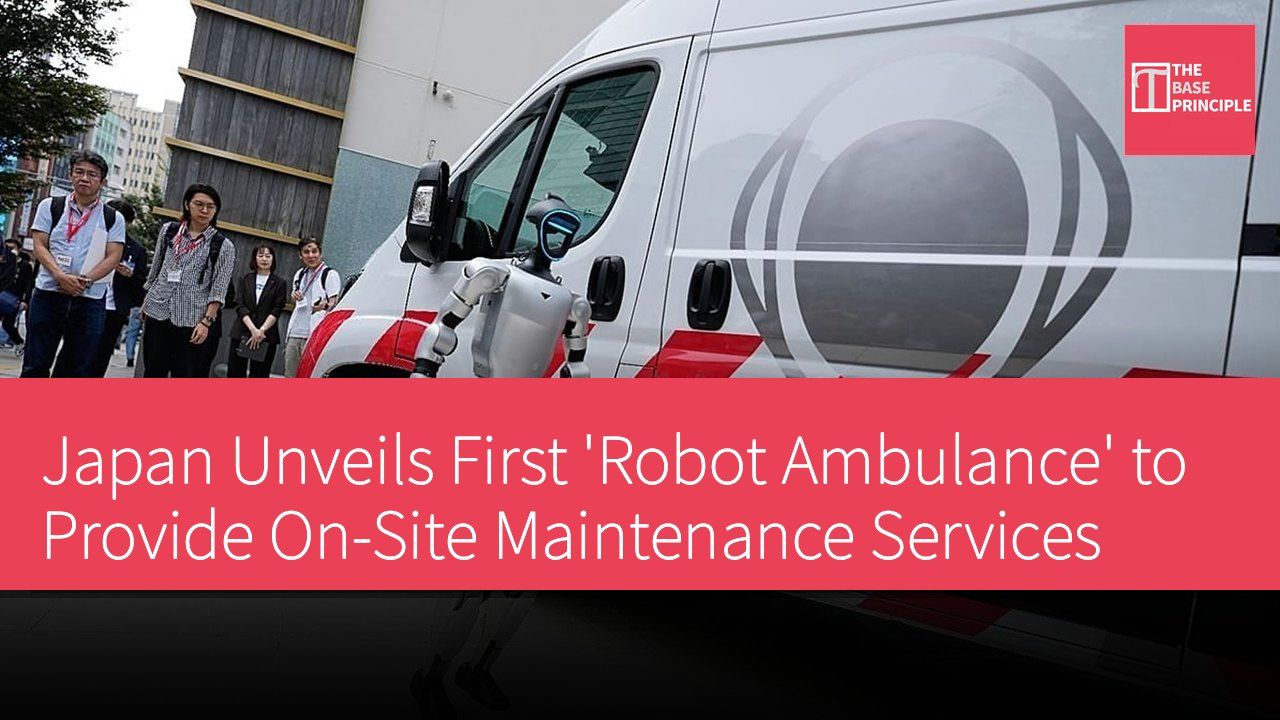
- GMO Internet Group has launched Japan's first robot ambulance to provide roadside support.
- The ambulance can carry engineers and replacement parts to repair sites as needed.
- The new service aims to shorten repair times and enhance customer service experiences.
- As humanoid robots become more common, on-site maintenance services will grow in importance.
Japanese tech giant GMO Internet Group (GMO Air) has recently launched an innovative service hailed as Japan's first "robot ambulance." This novel vehicle, essentially a roadside support unit for humanoid robots, is set to hit the streets of Tokyo soon. The specially equipped van is designed to carry engineers, repair equipment, spare parts, and a backup humanoid robot to any required location. GMO Air engineer Shota Takizawa explains, "This humanoid 'ambulance' will bring a replacement humanoid robot to the site and swap out the damaged one."
The concept is that if the "ambulance" cannot repair the robot on-site, it can transport the robot back to a "repair base," while the replacement robot acts as a "concierge" for the customer. Importantly, the van is not autonomous, nor is it a case of robots repairing other robots, making it an interesting blend of old and new technologies.
New Service Enhances Customer Experience
Imagine a hotel with two humanoid cleaning "staff" or a warehouse staffed by humanoid "workers." If one of these robots breaks down at the start of a workday, the customer could lose several days of service because the robot must be sent back to GMO Air for repairs. This new service aims to significantly shorten repair times by bringing engineers and parts directly to the customer's location. These engineers will diagnose the issue on-site and either repair the robot or leave a replacement while taking the damaged one away for repairs. If humanoid robots become widespread, this is actually a fairly reasonable service model.
Once businesses rely on them to perform work, uptime, on-site maintenance, spare parts logistics, and replacement robots become critical. This is the ecosystem that has developed around automobiles, industrial machinery, aircraft, and IT hardware.
Market Demand and Future Outlook
Through this new vehicle, GMO envisions a future where humanoid robots perform business-critical tasks in factories, shops, offices, warehouses, and more. The issue is that if a robot worth around £50,000 to £100,000 breaks down, you may not want to send it back to a service center and have the customer's operations disrupted for several days. According to GMO Air, the concept stems from the disruption it experienced when damaged robots needed to be sent in for repairs. GMO Air CEO Tomohiro Uchida stated, "From this experience, we came up with the idea of providing replacement humanoid robots."
Takizawa added, "When humanoid robots become more popular, this service will be a necessity." Currently, GMO Air has only one "ambulance" at its Tokyo headquarters, but they plan to add more vehicles in the future if customer demand justifies it. For now, this unique vehicle serves as a demonstration/pilot for the kind of on-site support business GMO envisions will be needed as humanoid robot deployments increase. Its launch also comes amid growing international competition in the development of humanoid robots, particularly between the United States and China. The Japanese government has recently set a target of providing 10 million robots across various industries, including healthcare and manufacturing, by 2040.
If anything approaching that scale occurs, everyday questions like "Who is going to come out when my robot's left knee actuator fails?" could spawn an astonishing industry.
The Potential of Humanoid Robot Maintenance Services
As humanoid robots become integrated into business operations, the importance of repair and support services is becoming increasingly apparent. GMO's robot ambulance not only improves repair efficiency but also reduces operational disruptions caused by breakdowns. This innovative service model reflects the market's demand for immediate support, especially in the context of the growing prevalence of high-value robots. The focus of businesses on maintenance costs and uptime is likely to drive the development of related services. As global competition in humanoid robots intensifies, the emergence of such services could lead to a new wave of business opportunities.