
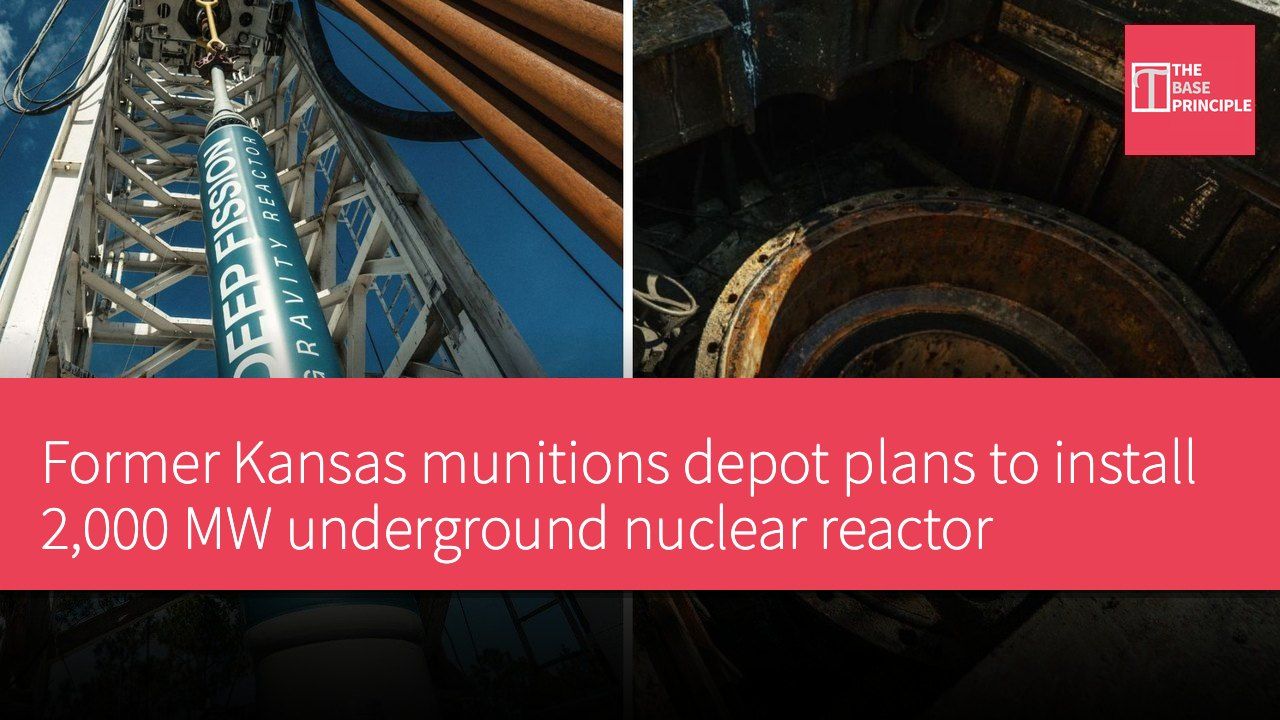
- Deep Fission plans to install a 2,000 MW nuclear reactor underground in Kansas.
- The project aims to provide stable, carbon-free power to attract heavy industry.
- The reactor design replaces traditional containment domes with natural geology, reducing construction costs.
- The project is set to begin commercial operations in 2028, gradually increasing capacity.
A former munitions depot in Kansas will host an unusual nuclear energy project. Energy startup Deep Fission has signed a significant supply agreement with the Great Plains Development Authority. The company plans to provide up to 2,000 MW of power to the Great Plains Industrial Park located in Parsons. The plan eliminates traditional surface reactor domes, with engineers intending to install the reactor about a mile underground. This agreement transforms a previous letter of intent into a binding commercial contract. Local officials hope that the guaranteed low-carbon power will attract heavy industry to the 14,000-acre area.
Brad Reams, director of the Great Plains Industrial Park, stated, "Reliable and affordable power is key to attracting employers to Southeast Kansas, and it is what the companies we are in talks with are asking for." He noted, "Deep Fission's gravity reactor is designed to provide stable, carbon-free power within the park, and this agreement gives us a long-term energy plan."
Innovative Design of the Gravity Reactor
The project utilizes Deep Fission's proprietary design, known as the gravity reactor. In short, it is a pressurized water reactor that uses standard low-enriched uranium fuel, similar to commercial power plants operating worldwide. The key difference lies in its working environment. Traditional reactors use large concrete containment domes and pressure vessels to keep cooling water under high pressure. Deep Fission replaces these mechanical systems with natural geology. The reactor is located within a narrow, water-filled shaft underground. At a depth of one mile, the weight of the water column generates intense pressure.
This natural hydrostatic pressure keeps the cooling water in a liquid state at high temperatures. Meanwhile, the surrounding bedrock acts as a massive radiation shield, with the surrounding rock and water also capable of absorbing heat and providing passive emergency cooling. The company states that this layout eliminates the need for large surface structures. By using standard commercial drilling equipment, Deep Fission aims to reduce construction costs and accelerate deployment.
Commercial Promotion and Operational Plans
Currently, testing for commercial promotion has begun. In September, a working group lowered a full-sized 20-foot canister to a depth of 100 feet in a test borehole, aligning the unit at depth before pulling it back to test the deployment equipment, followed by attempts at deeper drilling. Parsons has initiated related work under a pilot program from the U.S. Department of Energy. With the signing of the supply contract, the project will enter the commercial delivery phase. The initial phase aims for a capacity of 150 MW. After obtaining permits and commencing operations, Deep Fission plans to start commercial operations on September 30, 2028.
Subsequently, capacity will gradually increase based on local demand, ultimately reaching 2,000 MW. Local authorities will purchase power to meet the energy needs of their commercial tenants and have the right to enter into direct purchase agreements with individual businesses. The contract does not impose minimum purchase quotas on the park management authority. Deep Fission's CEO, Liz Mueller, summarized, "This agreement transforms a shared vision into a binding commitment, and our approach is to deliver stable power directly to where it is needed."
Project Specifications Reactor Type Pressurized Water Reactor Fuel Type Low-Enriched Uranium Expected Start Date September 30, 2028 Initial Phase Target Capacity 150 MW Final Target Capacity 2,000 MW
Potential Impact of the Underground Nuclear Reactor
Deep Fission's underground nuclear reactor plan represents a significant innovation in nuclear technology, utilizing natural geology to replace traditional containment structures, which not only reduces construction costs but also enhances safety. As global demand for low-carbon energy rises, this plan could serve as a model for future nuclear development, particularly in heavy industrial areas where stable power supply is needed. As the project progresses, its impact on the local economy and energy market will also be worth monitoring.