
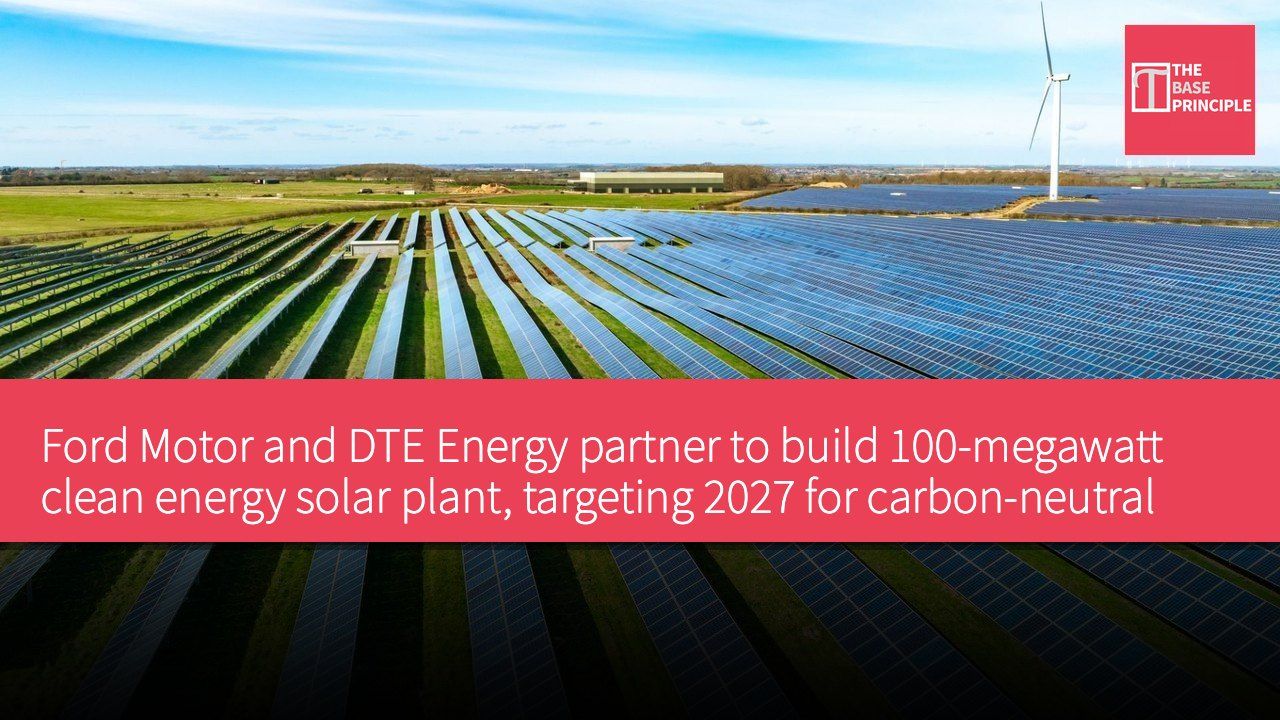
- Ford will produce trucks with clean energy in 2027, ensuring 100% carbon-free electricity.
- Cold Creek Solar Park provides a major clean electricity source for Michigan.
- The project not only promotes clean energy but also creates jobs for local communities.
- Ford's clean energy target delayed to 2027, with plans to achieve fully carbon-free electricity by 2035.
When a new Ford truck rolls off the assembly line in Michigan at the end of 2027, it will be built entirely with sunlight and wind. U.S. company DTE Energy has officially completed construction of the Cold Creek Solar Park near Coldwater, a facility with a capacity of 100 megawatts. The park is funded by a project in which Ford Motor Company committed to purchase up to 650 megawatts of clean electricity. This partnership ensures that by the end of 2027, all Ford vehicles produced in Michigan will be manufactured using 100% carbon-free electricity.
Cold Creek is part of a larger solar boom in Michigan. The facility can generate enough clean electricity to power approximately 23,000 to 25,000 households statewide, marking a significant milestone in driving local clean power production. Ford Motor Company funded the $1.94 billion Cold Creek Solar Park by participating in DTE's voluntary CleanVision MIGreenPower program. Through this partnership, Ford commits to purchasing up to 650 megawatts of renewable electricity.
The initiative enables large corporations and residents to directly link their electricity consumption to Michigan's renewable energy sources.
Clean Energy's Impact on Communities
For Michigan, the benefits extend beyond the factory. Projects like Cold Creek bring tax revenue to rural host communities, create local jobs, and strengthen grid resilience in surrounding areas. As automakers shift to electric vehicles, ensuring the factories themselves run on clean energy addresses a piece of the decarbonization puzzle. This initiative is a critical step toward achieving full carbon neutrality by 2050, covering all its vehicles, plants, and supply chain.
"The Cold Creek Solar Park is more than just a new renewable energy project. It reflects what can be achieved when customers and energy suppliers work together to accelerate Michigan's clean energy future," said Matt Paul, president and chief operating officer of DTE Electric. "Through MIGreenPower, we are helping companies like Ford achieve their sustainability goals while building renewable energy infrastructure that will power generations to come."
Ford's Clean Energy Target Delayed
Ford's clean energy target timeline has been delayed. Although Ford and DTE initially set a 2025 launch target when they signed the agreement in August 2022, neither company has explained why the deadline was pushed to 2027. According to EPA estimates, Ford's participation in the MIGreenPower program will offset up to 600,000 tonnes of carbon dioxide emissions annually once fully implemented. Ford's electricity procurement in Michigan advances the company's broader effort to transition all global manufacturing facilities to 100% carbon-free electricity, with a target date of 2035.
The Cold Creek site plans to commission a 75-megawatt battery storage system, an addition that will allow the park to store excess solar energy during peak sunlight hours and dispatch it to the grid during evening demand peaks. Running assembly plants on solar power directly supports Ford's efforts to reduce lifecycle emissions across its lineup. This approach lowers the overall carbon footprint of both conventional gasoline vehicles and electric models such as the F-150 Lightning and Mustang Mach-E.
With Cold Creek now operational, DTE's clean energy portfolio expands to 20 wind parks and 36 solar parks in Michigan, with enough capacity to serve approximately 1 million households.
Item Specification Solar park capacity 100 megawatts Battery storage system capacity 75 megawatts Number of households powered Approximately 23,000 to 25,000 households
Environmental Impact of Ford and DTE Partnership
The partnership between Ford Motor and DTE Energy is not only a model of corporate transformation but also demonstrates the potential of large enterprises in advancing renewable energy. The construction of the Cold Creek Solar Park not only provides clean electricity for Ford's production but also stimulates the local economy, creates jobs, and enhances community grid resilience. As the auto industry shifts toward electrification, such collaborations are critical to achieving carbon neutrality goals, especially against a backdrop of growing global emphasis on environmental sustainability.