
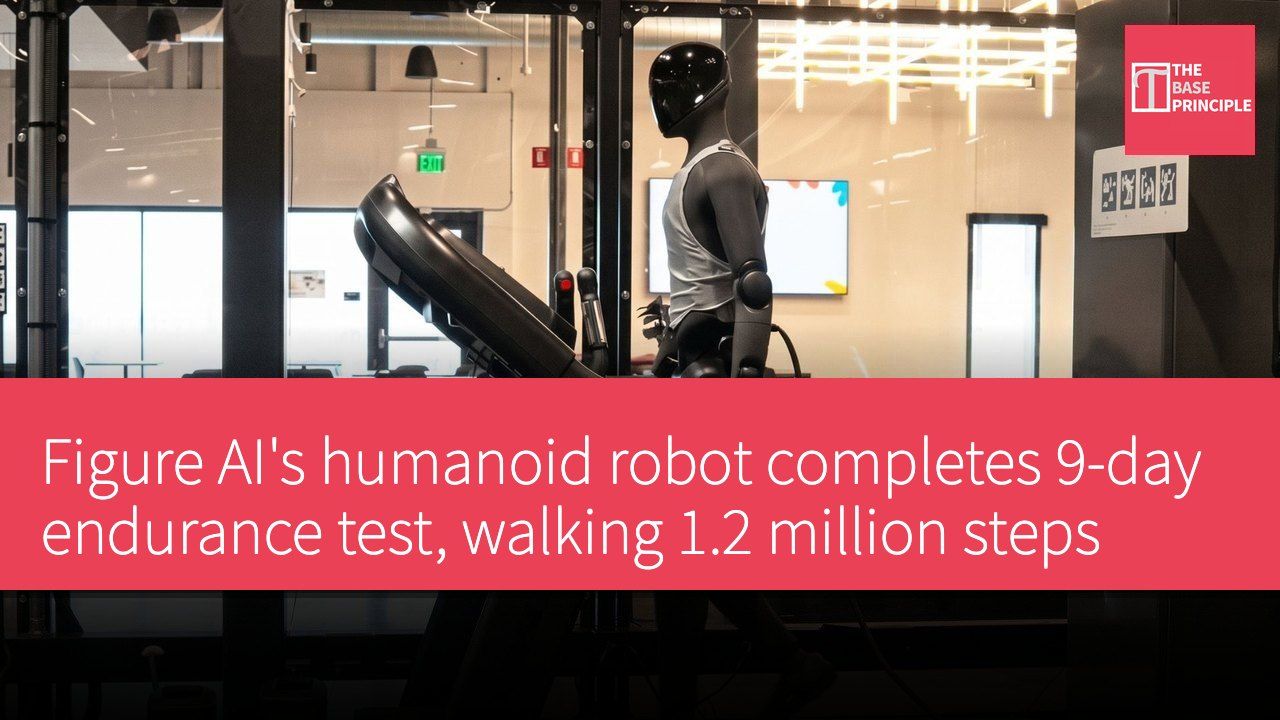
- Figure AI's humanoid robot completed a 9-day endurance test, walking 1.2 million steps.
- The test aims to reveal potential failures in the robot and achieve longer operational times.
- Figure 03 is the company's third-generation humanoid platform, redesigned to support household and commercial tasks.
- The test results of the new platform will help understand its reliability in industrial environments.
Figure AI is conducting extended endurance tests on its latest humanoid robot to uncover weaknesses that short-term demonstrations may overlook. According to CEO Brett Adcock's report on X, Figure 03 has walked 348 miles on a treadmill, completing 1.2 million steps over nine consecutive days. Adcock stated that this experiment was initially a side project aimed at putting the robot under stress to reveal potential failures. Time-lapse footage shows Figure 03 walking on the treadmill at the testing facility while connected to a power line.
This test was conducted as part of Figure's multiple attempts to go beyond the context of short-term demonstrations. The goal for Figure 03 is to achieve longer operational times.
Design and Functionality of Figure 03
Figure 03 was launched on October 9, 2025, representing the company's third-generation humanoid platform. Figure redesigned its hardware to support household tasks and commercial work, with a focus on scalability. F.03 has just walked continuously for 9 days on this treadmill, covering 348 miles and 1.2 million steps. This project was initially intended to test the robot's failure conditions. Adcock stated on Twitter, "Let's see how long it can last."
This robot is equipped with updated cameras that provide double the frame rate and one-quarter the latency. According to Figure, each camera also offers a 60% wider field of view. Its hand design includes palm cameras and tactile sensors capable of detecting forces as small as three grams. Figure has also equipped this robot with wireless inductive charging capabilities, with coils inside its feet allowing it to charge on compatible charging stations, providing 2 kilowatts of power. This system can support longer deployments, although the treadmill post did not explain the role of charging in this test.
In previous endurance tests, Figure has conducted longer operational demonstrations of its humanoid robots. In May 2026, the company conducted a live demonstration of the Figure 03 robot sorting packages, lasting approximately 200 hours. The event was initially an eight-hour demonstration but was later extended to nine days. Reports indicate that these robots collectively handled 249,560 packages during the live stream. However, the robots took turns performing tasks, allowing individual units to charge between shifts. Each robot typically operated for three to four hours before another robot took over.
Significance of the Test Results
This treadmill experiment is different because Adcock's post emphasizes the accumulated walking distance and step count. It remains unclear whether a single robot completed the entire test or how the team managed its power needs. These details will help determine the significance of the latest milestone for endurance.
Figure's new platform was launched as the company retired its previous generation models. On September 30, Figure announced the retirement of its Figure 02 series as production of Figure 03 is ramping up. Figure 02 marked several milestones, including the company's first deployment at the BMW Spartanburg plant in South Carolina, where the robots were responsible for handling metal parts in automotive production. Figure stated that this deployment contributed to the production of over 30,000 BMW X3 vehicles.
One reason the company chose to retire the old models is that their custom components made the disassembly process time-consuming. Instead, Figure trained the robots to jump into molten steel at a foundry in Finland, melting down most of the old models.
Figure 03 now faces different challenges. Its latest treadmill test may reveal the platform's endurance under long-term repetitive motion. The results could provide useful insights into the reliability required for humanoid robots to undertake longer shifts in industrial environments.
Impact of Endurance Testing on Humanoid Robots
Figure AI's endurance testing is crucial for assessing the reliability of its humanoid robots during long-term operations. As technology advances, robots need to undertake longer work shifts in industrial environments, making the test results directly impact their application potential. This test not only showcases the robot's walking capabilities but may also reveal its endurance under continuous motion, helping the company improve design and functionality to meet market demands.