
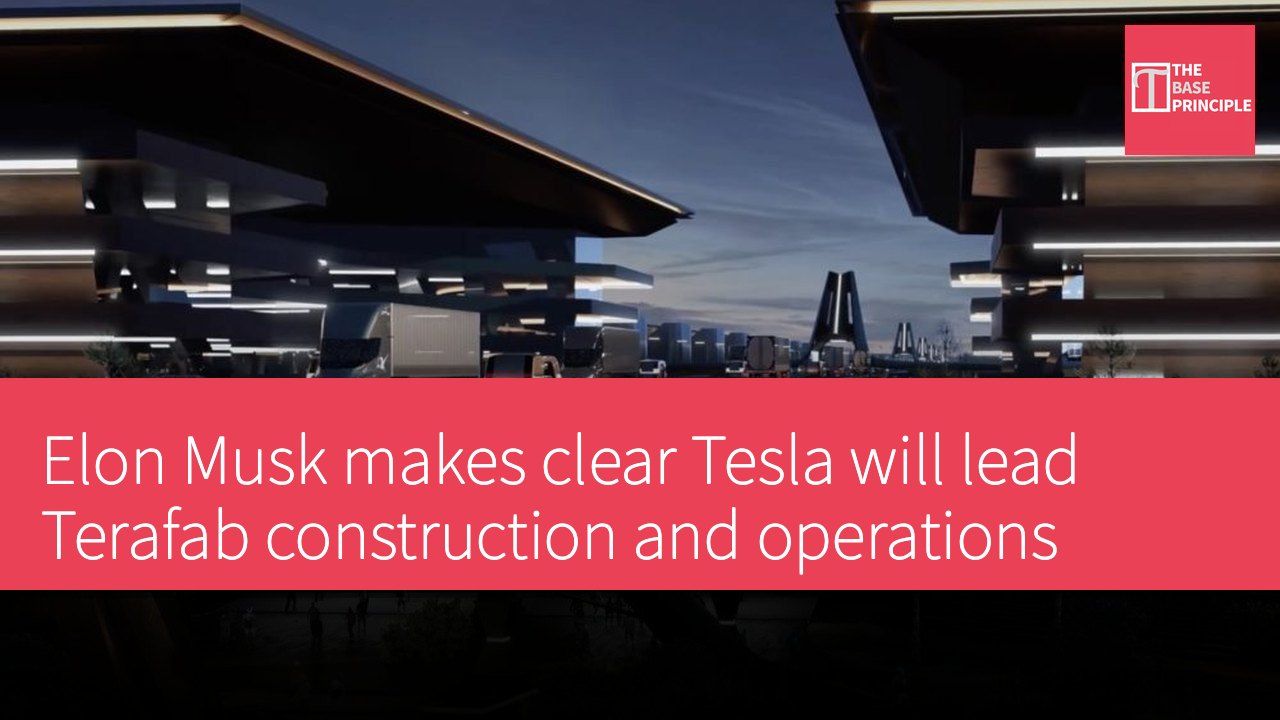
- Elon Musk emphasizes Tesla will lead construction and operation of the Terafab factory.
- The possibility of subleasing to TSMC exists, but will not go beyond that.
- Terafab will meet Tesla and SpaceX's future chip needs.
- Owning the factory means Musk's companies can avoid competing with other customers for production line time.
Elon Musk made clear that the massive chip factory Terafab, which Tesla and SpaceX plan to build in Texas, will be operated by his companies. Responding to an article on the X platform, Musk said the claim that Taiwan Semiconductor Manufacturing Co. (TSMC) would most likely own and operate the factory was incorrect. He emphasized: "No, we will build and operate this factory, no question about it. Perhaps TSMC can sublease a portion of Terafab if needed, but no more than that."
In short, subleasing means TSMC could rent a portion of the complex to produce chips, similar to a tenant leasing a floor of an office building. The building, equipment selection, and day-to-day operations will be handled by Tesla and SpaceX. The remarks put an end to speculation that began last week. On Oct. 2, technology journalist Tim Culpan reported that TSMC was exploring ways to help operate the Terafab factory. Musk responded the next day calling it merely "discussions, but could bear fruit," which Teslarati also reported at the time.
That left room for the possibility that the world's largest contract chipmaker could take over, while Musk's latest post closes that door.
Operational control of the Terafab factory
Here is the background on why this matters: Tesla currently designs its own AI chips but pays external companies such as TSMC and Samsung to manufacture them. In March, Musk revealed Terafab as a joint project of Tesla, SpaceX, and xAI, saying existing suppliers could not scale quickly enough to meet his companies' future needs. The goal is to produce enough chips each year to supply one terawatt of compute capacity — roughly 50 times the current output of the global AI chip industry. Those chips will be used for Tesla's Optimus humanoid robot, Cybercab, and Full Self-Driving computer, as well as for chips in SpaceX's planned orbital data centers.
Background and challenges of factory construction
Owning the factory means Musk's companies will not have to compete with other chip customers for production line time. Intel remains part of the project. The company signed an agreement in April to help design, build, and package chips, and Chief Executive Lip-Bu Tan told Bloomberg this week that Intel will continue working on Terafab despite the TSMC rumors. The project moved from concept to construction planning in the summer. In August, SpaceX confirmed a site in Grimes County, about an hour from Houston, paid the county $10 million under a tax abatement agreement, and said civil engineering would begin soon.
The first phase is budgeted at $16.8 billion, with total spending across all phases potentially reaching $119 billion.
TSMC Chairman C.C. Wei said new fabs typically take two to three years to build, plus another one to two years to reach full capacity. Tesla and SpaceX have never operated a factory of this kind, which is why TSMC's expertise drew so much attention. Musk's response shows he prefers to learn the process in-house rather than cede control so critical to the project to an outside company. Terafab Texas will become the largest, most valuable building on Earth, and will be extremely beautiful.
How Musk secures dominance in chip production
Elon Musk's operational control of the Terafab factory underscores the importance he places on the chip production process. As Tesla and SpaceX's chip demands grow, the risks of relying on external suppliers rise accordingly. Owning the factory not only ensures production capacity but also increases flexibility, avoiding competition with other customers for production line time — a critical advantage in the fast-moving tech industry. Moreover, Musk's decision reflects his insistence on autonomous technology development, which is vital for the future of AI and autonomous driving technologies.