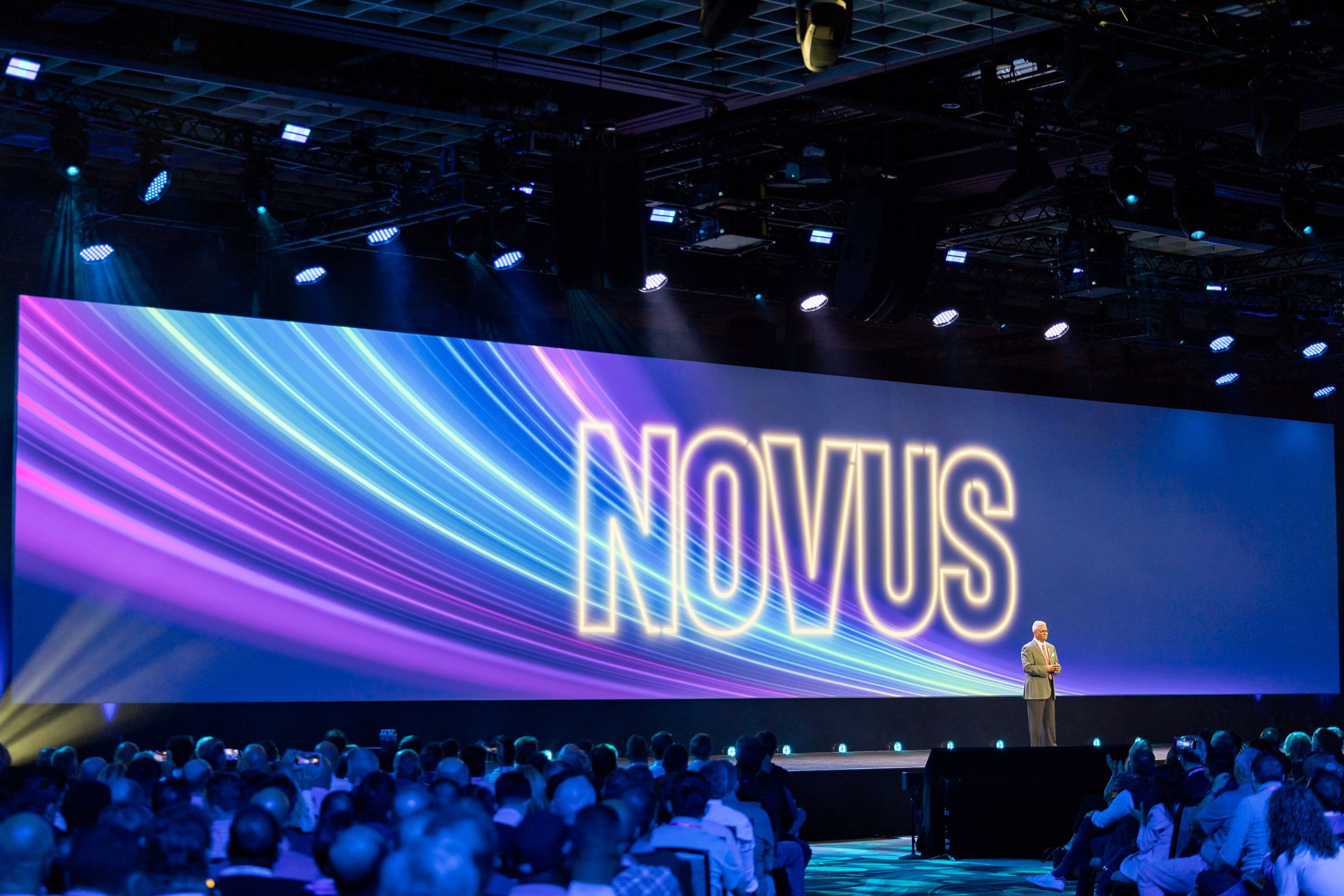
As artificial intelligence (AI) technology rapidly advances, the demand for data infrastructure among enterprises is increasing, particularly in the context of operating large-scale GPU environments. The recently launched NetApp Novus™, the fastest storage system globally, is designed to meet this demand. To gain deeper insights into NetApp's long-term strategy in the AI infrastructure space and the unique advantages of its new product, the Techritual editorial team interviewed Deng Zi'an, General Manager of NetApp Hong Kong, Macau, and Mongolia.
AI-Driven Data Infrastructure
Deng Zi'an pointed out that NetApp's long-term strategy is to assist enterprises in transforming their data into AI-ready data, ensuring that data can be accessed and utilized by AI regardless of whether it is located on-premises, in edge environments, or in the cloud. He emphasized that as enterprises push for AI applications, they must consider not only the performance of computing resources and infrastructure but also how to discover, prepare, protect, and govern the data that drives AI applications.
"AI is driven by data, and data is driven by NetApp."
Deng Zi'an, General Manager of NetApp Hong Kong, Macau, and Mongolia
He mentioned that the recently launched NetApp AI Data Engine (AIDE) aims to help enterprises discover and govern data across different environments, enabling better application of this data in AI.
Unique Advantages of NetApp Novus
When discussing the core technology of NetApp Novus, Deng Zi'an emphasized that this storage system is specifically designed to address the challenges of large-scale AI, featuring a unique architecture that can achieve a total throughput of up to 100TB/s within a single namespace and support hundreds of thousands of GPUs. He noted that this design allows enterprises to meet the demands of AI factories without needing to rebuild their entire infrastructure.
"The unique advantage of Novus lies in integrating industry-leading performance, scalability to handle high AI workloads, and enterprise-grade data management within a single architecture."
Deng Zi'an, General Manager of NetApp Hong Kong, Macau, and Mongolia
This integration capability not only enhances performance but also allows enterprises to maintain efficiency, security, and operational simplicity while scaling their AI infrastructure, avoiding additional system complexity issues.
Addressing the Challenges of AI Factories
Deng Zi'an discussed the challenges faced in designing NetApp Novus, emphasizing that the operational scale of AI factories is vastly different from traditional enterprise environments. Enterprises need to support multiple workloads simultaneously, including training and inference, while ensuring that the GPU environment receives a stable data supply. He pointed out that these considerations led NetApp to base the design of Novus on NetApp ONTAP and adopt open standards like pNFS, allowing enterprises to continue leveraging their trusted data infrastructure.
"Our goal is not only to enhance performance but also to equip enterprises with the scalability required for AI."
Deng Zi'an, General Manager of NetApp Hong Kong, Macau, and Mongolia
This design not only improves performance but also enables enterprises to remain flexible in the face of changing market demands.
Key to Enhancing GPU Utilization
Deng Zi'an explained that GPU utilization depends not only on computational power but also on the performance of the storage system. If the storage system fails to deliver data promptly, the GPU must wait, impacting computational efficiency. The design of NetApp Novus aims to reduce such bottlenecks by separating metadata services from data transfer paths, allowing for independent scaling and ensuring that data can be efficiently transmitted to GPUs.
"Novus helps enterprises utilize their computational resources more effectively by separating metadata services from the actual data transfer paths."
Deng Zi'an, General Manager of NetApp Hong Kong, Macau, and Mongolia
This design not only enhances GPU operational efficiency but also allows enterprises to achieve higher returns in AI environments.
Demand for AI Infrastructure in Hong Kong
Deng Zi'an noted that the demand for AI infrastructure in Hong Kong is rapidly growing, primarily due to government investment in public resources and enterprises' adoption of AI. He mentioned that Hong Kong's overall computing power has reached 5,000 petaFLOPS, and the government's "AI Funding Scheme" has approved multiple R&D projects, indicating strong market demand for AI.
"The Hong Kong market is moving from the AI experimentation phase to broader applications."
Deng Zi'an, General Manager of NetApp Hong Kong, Macau, and Mongolia
He emphasized that as enterprises' demand for AI workloads increases, NetApp will strive to assist them in building data infrastructure capable of supporting high-performance AI environments.
Future Directions in Storage Technology Development
Deng Zi'an believes that in the coming years, storage technology will no longer be merely a place for data storage but will become an essential component of the enterprise intelligence layer. He pointed out that as AI becomes more deeply integrated into business operations, data preparation and management will become critical. He anticipates an increasing market demand for flexibility, as enterprises seek to enhance performance and expand capacity based on workload requirements.
"The future of storage technology is not just about storing more data but making data a reliable and readily available resource."
Deng Zi'an, General Manager of NetApp Hong Kong, Macau, and Mongolia
He emphasized that enterprises need to be able to respond flexibly to ever-changing business demands while maintaining efficient operations in an increasingly complex technological environment.
In summary, Deng Zi'an highlighted NetApp's forward-looking strategy in the AI infrastructure space and envisioned future developments in storage technology, aiming to provide enterprises with more comprehensive data management solutions to support their AI transformation journey.