
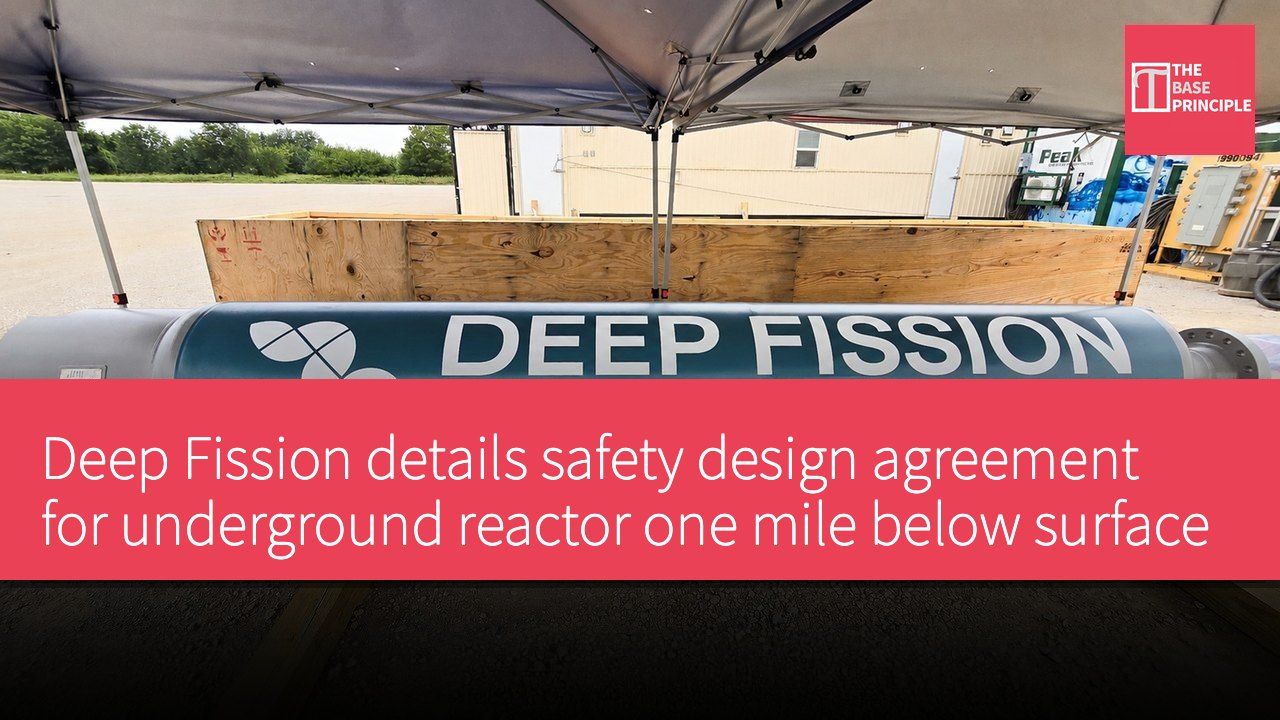
- Deep Fission has released the Nuclear Safety Design Agreement (NSDA) for its Gravity reactor.
- The NSDA covers design requirements, safety analysis methods and regulatory processes that will guide reactor development.
- The reactor will be placed in a borehole roughly one mile deep, using the underground environment for safety assurance.
- Commercial operation requires authorization from the DOE and the Nuclear Regulatory Commission and is not guaranteed.
Nuclear startup Deep Fission has released the full Nuclear Safety Design Agreement (NSDA) for its Gravity reactor, giving the public a detailed look at the safety framework for a small modular reactor it plans to operate about a mile underground in Kansas. The company is the first participant in the U.S. Department of Energy's reactor pilot program to publish a complete NSDA. The agreement has received DOE approval for Deep Fission's pilot project in Parsons, Kansas.
The NSDA sets out design requirements, safety analysis methods and regulatory processes that will guide development of the reactor. The DOE's sign-off marks an initial stage of safety review, not authorization to operate the reactor. Deep Fission says the document's publication is voluntary and is intended to provide transparency into how it plans to demonstrate reactor safety. Some security-sensitive technical details have been redacted, and other aspects of the design could change as the project moves through further review.
Contents and Purpose of the NSDA
"We are releasing the full NSDA because we believe the public should see the actual safety case behind this reactor, not just our word that the DOE has reviewed it," said Liz Muller, chief executive officer and co-founder of Deep Fission. "A project with this kind of ambition should be built in the open, and we hope more industry partners will do this with us." The Gravity reactor uses conventional low-enrichment uranium fuel and pressurized water reactor technology, a reactor design that has been in commercial use for roughly 70 years.
The Reactor's Unique Design
Deep Fission's main point of difference lies in where it plans to put the reactor. Rather than building a large containment structure on the surface, the company plans to place the reactor in a borehole roughly one mile deep. The surrounding rock and a column of water above the reactor are intended to provide pressure control, cooling and radiation shielding without heavy reliance on a conventional surface containment building. The approach is built around passive safety features, meaning the underground environment itself becomes part of the reactor's protection system.
Challenges to Commercial Operation
The Parsons project also differs from conventional reactor demonstration efforts. Deep Fission plans to install the same reactor under the DOE pilot program that, after testing, could transition to commercial power production. That transition, however, is not guaranteed. The company must complete additional documentation and review before it could receive an operating authorization from the DOE. Commercial operation would also require a license from the U.S. Nuclear Regulatory Commission. The Reactor Pilot Program was established under Executive Order 14301, allowing the DOE to oversee the design, construction and initial testing of qualifying advanced reactors, with the NRC observing the process.
Deep Fission says commercial reactors could ultimately deliver low-carbon baseload power to utilities, industrial customers and data centers. The company is developing the Parsons project in a way that would avoid having to dismantle the pilot reactor after initial testing. The release of the NSDA also gives regulators, industry observers and the public a clearer view of the safety case the company has built as it moves toward construction and testing. The company says its safety case will continue to evolve as the project advances through DOE review and subsequent regulatory steps.
Significance of Deep Fission's Innovative Safety Design
Deep Fission's Gravity reactor takes an innovative approach to safety design by placing the reactor deep underground, using surrounding rock and a water column as natural safety barriers — a first in the nuclear industry. The design not only reduces reliance on conventional containment structures but also offers some improvement in reactor safety. With growing demand for nuclear energy, such advances could become an important direction for the future of nuclear power, particularly in the context of low-carbon energy. However, reaching commercial operation will still require overcoming multiple regulatory hurdles to ensure safety and feasibility.