
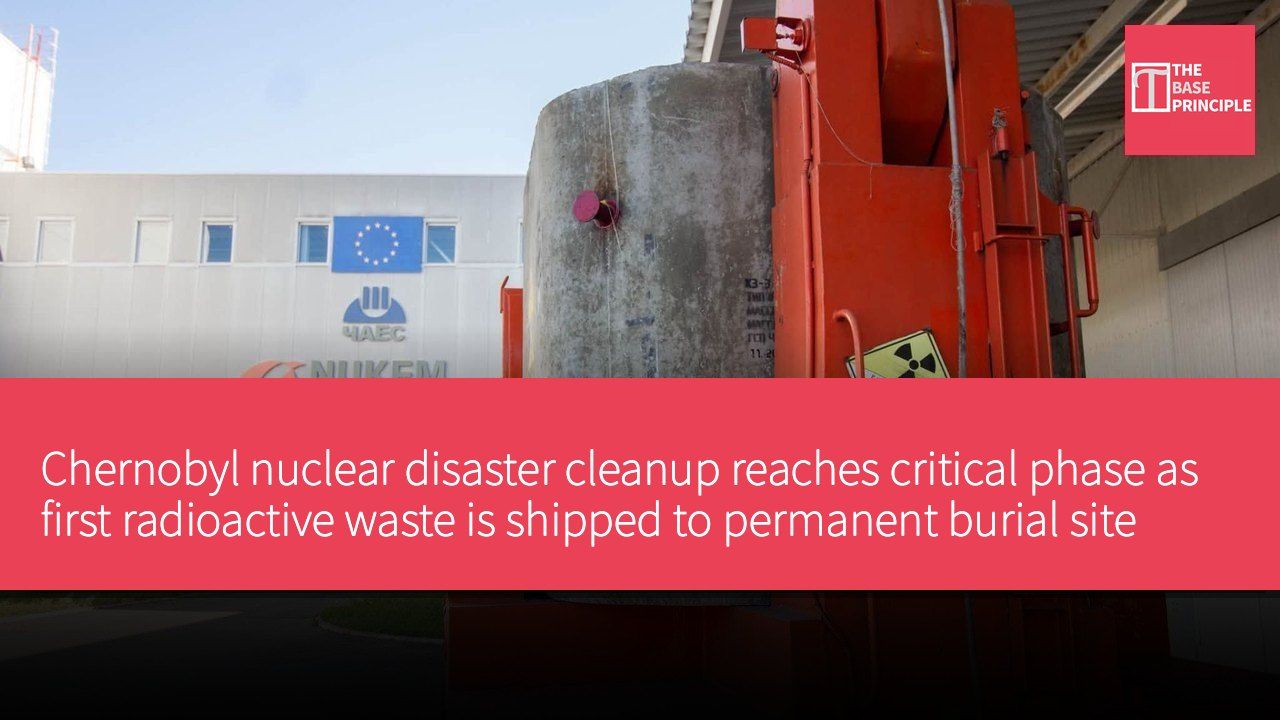
- The Chernobyl cleanup has reached a critical phase with the first shipment of radioactive waste.
- The newly commissioned Industrial Complex for Solid Radioactive Waste Management handled the transport.
- Retrieving hazardous items requires specialized remote mechanical equipment for handling.
- The long-term goal of the ICSRM is to clean up and manage radioactive waste at Chernobyl.
The large-scale cleanup of the Chernobyl disaster site has reached a critical phase. Engineers have completed the first permanent transfer of legacy solid radioactive waste to a dedicated near-surface burial facility. Seven sealed packages containing low- and intermediate-level radioactive waste have been transported directly to a specialized storage facility — the ENSDF. The repository is a core part of the Vector complex, located approximately 130 km north of Kyiv and about 20 km south of the Belarusian border. The shipment represents the first delivery from the newly commissioned Industrial Complex for Solid Radioactive Waste Management (ICSRM).
The complex received formal commissioning approval after obtaining its operating license in late May last year, issued by the Ukrainian State Nuclear Regulatory Inspectorate. Backed by significant funding from the European Commission, the facility integrates four distinct technical installations into a single industrial processing line.
Formal commissioning of the new facility
The technical management of legacy waste represents a major challenge decades after the 1986 disaster. The plant faces a substantial environmental footprint, with large quantities of hazardous materials still stored within aging enclosed repositories that have been in operation since 1978. Work crews must now systematically empty this facility. The stored materials include routine industrial waste accumulated through decades of nuclear power generation. These items consist of discarded personal protective equipment, thermal insulation, cabling, structural steel, loose soil, construction concrete, and depleted ion-exchange resins used in water filtration networks.
Retrieving these hazardous items requires specialized remote mechanical equipment. Technicians use a dedicated retrieval unit to extract the material, designed to process approximately 3 cubic meters of solid material per day.
The unit has an estimated operational lifespan of thirty years and can handle all categories of solid waste stored within the 1978 repository. Once brought to the surface, the material is placed into heavy-duty metal transport containers with a capacity of 1.3 cubic meters. These containers are moved through enclosed technical corridors to reinforced hot cells, which function as sorting centers. "At this stage, every batch of waste undergoes radiological characterization and control," the Chernobyl Nuclear Power Plant stated in a press release. Any high-level material unsuitable for standard processing is immediately separated.
Technical process of waste handling
The remaining low- and intermediate-level waste is subsequently loaded into 165-liter steel drums. A powerful industrial press compresses the drum contents, significantly reducing their volume and stabilizing the material. Once fixed, these reinforced packages travel the final journey through the exclusion zone to the Vector facility's engineered near-surface repository. The long-term goal of the ICSRM extends beyond clearing the 1978 storage site. The complex is also designed to handle waste generated from the ongoing decommissioning of Chernobyl's existing reactors, as well as operational waste produced during maintenance of the Shelter structure encasing the destroyed fourth reactor.
Day-to-day oversight of this hazardous logistics network is handled by the Central Enterprise for Radioactive Waste Management under the state-owned enterprise SSE CERWM.
Long-term challenges of the Chernobyl cleanup
Waste management following the Chernobyl nuclear disaster is an exceptionally challenging task, involving decades of accumulated material. With the commissioning of the new facility, this work has entered a critical phase, marking a commitment to addressing legacy issues from the past. The specialized remote mechanical equipment can effectively retrieve and process hazardous items, demonstrating the importance of technology in environmental remediation. The design of the ICSRM targets not only the cleanup of the old storage facility but also waste generated from future reactor decommissioning, reflecting forward-looking planning for long-term environmental impact.