
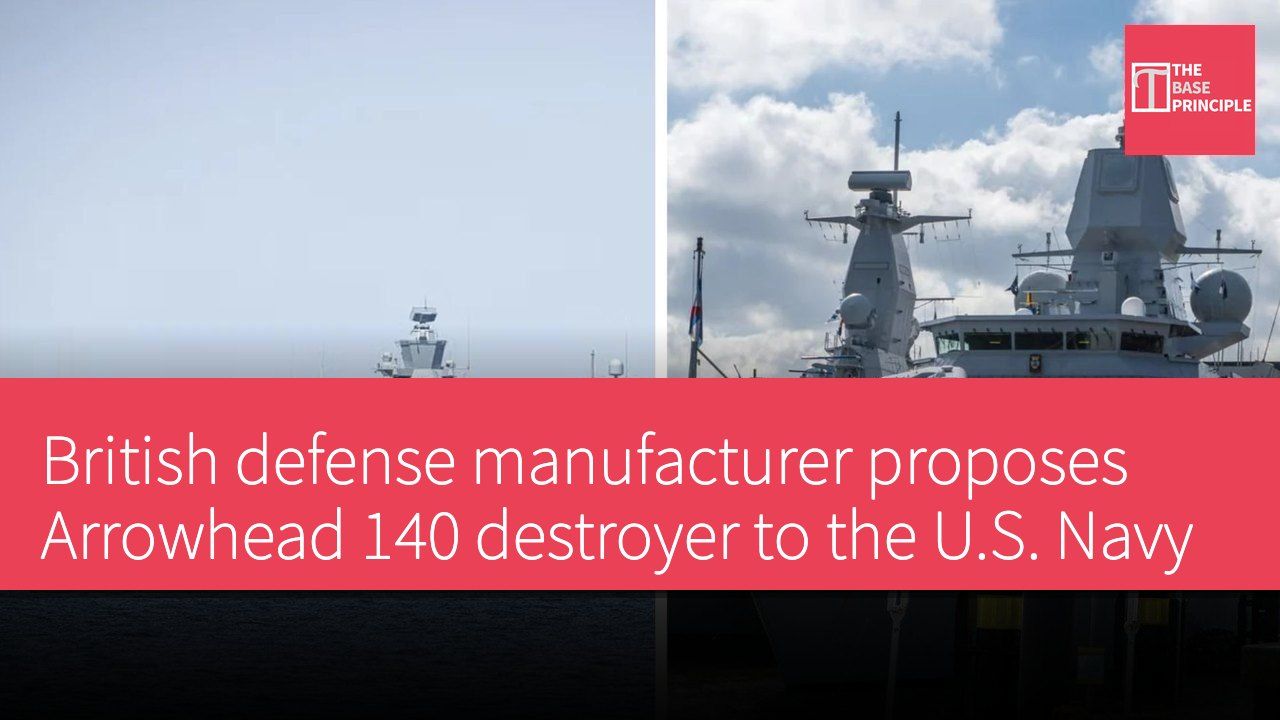
- The Arrowhead 140 destroyer is developed by Babcock and features a multi-role design.
- The vessel is being considered for inclusion in the U.S. Navy's fleet plans.
- Babcock is seeking U.S. industrial partners to advance the proposal, with Huntington Ingalls Industries as a potential option.
- The U.S. has an urgent need for destroyers, and the Arrowhead 140 could reduce reliance on new designs.
The London-based defense manufacturer has offered its powerful Arrowhead 140 destroyer to the U.S. Navy. Developed by Babcock, the vessel could potentially become part of the U.S. Navy's proposed fleet. The Arrowhead 140 is a multi-role destroyer whose design is based on Denmark's Iver Huitfeldt-class warships. It has been selected as the basis for the UK's five Type 31 vessels, which are currently being constructed at Babcock's Rosyth shipyard in Scotland.
The design has also been selected for export programs in Poland and Indonesia, increasing its influence in the international market.
The Arrowhead 140 destroyer measures approximately 138 meters in length, about 20 meters in width, and has a displacement of around 5,700-6,000 tons in its basic configuration. It employs a traditional diesel-electric propulsion system capable of exceeding speeds of 28 knots. Babcock does not own shipyards in the U.S., making the search for American industrial partners critical to its proposal. Huntington Ingalls Industries could be a potential partner due to its extensive experience in building vessels for the U.S. Navy and its established industrial infrastructure.
The two companies already have a collaborative relationship in the submarine sector, including component activities supporting U.S. and UK nuclear submarine programs.
International Impact of Arrowhead 140
For the U.S., the Arrowhead 140 represents a potential avenue to expand destroyer options and reduce reliance on new design development. If the vessel can be economically modified and produced at scale, it would help the Navy expand its surface fleet while reserving larger combat vessels for more challenging missions. Recently, Babcock hosted a UK-Indonesia Supplier Day in London, welcoming suppliers, industry partners, and relevant personnel from the Indonesian and UK governments, highlighting opportunities for UK companies to support Indonesia's ambitious Maritime Partnership Programme (MPP).
This event underscored our commitment to building a strong, collaborative supply chain to achieve economic growth, innovation, and long-term maritime capabilities for both parties. "Strong partnerships are essential for achieving growth, innovation, and capability. This Supplier Day showcased the momentum behind the Maritime Partnership Programme and demonstrated our commitment to ensuring that UK industry plays a significant role in its success," said Babcock Group CEO Harry Holt. "The programme is not just about ships, but about establishing long-term industrial partnerships, developing skills, supporting technology transfer, and creating economic opportunities for both sides."
By bringing together suppliers, industry leaders, and government stakeholders, we are helping to create a foundation for lasting collaboration and sustainable growth."
U.S. Navy's Destroyer Demand
The U.S. Navy's demand for destroyers has become more urgent as the Constellation-class program has been canceled. This program was intended to provide a modern multi-mission destroyer based on the European FREMM design but was hampered by significant delays and cost increases in meeting U.S. Navy requirements. This experience highlights a core issue in warship procurement; selecting existing designs does not necessarily guarantee faster or cheaper construction, especially when customers make substantial changes to their specifications. The U.S. Navy could utilize Arrowhead 140-class destroyers for maritime security, escort missions, independent deployments, and other tasks that do not necessarily require its more expensive destroyers.
This division of responsibilities would allow Arleigh Burke-class destroyers to focus on more challenging tasks, such as area air defense, missile defense, and long-range strike operations.
Item Specification Length 138 meters Width 20 meters Displacement 5,700-6,000 tons Speed Exceeding 28 knots
Potential Impact of Arrowhead 140 on the U.S. Navy
The proposal for the Arrowhead 140 destroyer comes at a critical time as the U.S. Navy faces a need to expand its fleet. With the cancellation of the Constellation-class program, opting for existing designs like the Arrowhead 140 may provide a solution. This vessel not only can perform multiple missions but also reduce reliance on new designs, thereby improving construction efficiency. Furthermore, Babcock's international collaboration plans demonstrate its ambitions in the global market, which is crucial for enhancing its competitiveness and technology transfer.