
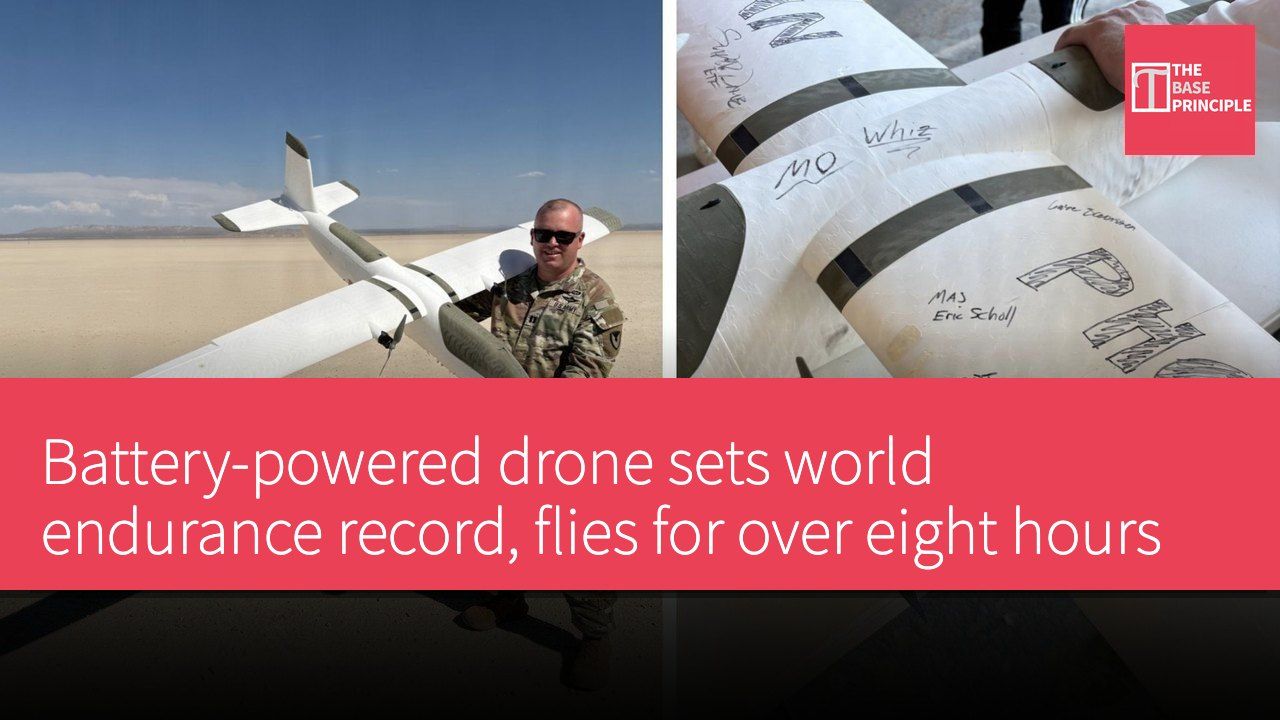
- A drone flew for over eight hours in desert heat, setting a world endurance record.
- Brushless DC motors powered the drone, surpassing previous flight time records.
- The drone was manufactured using commercial 3D printers inside a mobile container, enabling rapid assembly.
- The event highlighted a strategic shift toward domestic production, reducing reliance on foreign sources.
A battery-powered drone recently broke the world endurance record, with the small unmanned aerial vehicle flying for more than eight hours in desert heat. The drone utilized key propulsion components assembled by the Army's organic industrial base to achieve this milestone. Army Small Unmanned Aerial Systems Advanced Manufacturing Liaison Officer Capt. Lee Washburn stated, "AMC is committed to providing materiel solutions to support innovation in the unmanned systems domain. Our goal is to continue participating in events that showcase our capabilities and help optimize our components based on real-world testing to serve the warfighter."
The Birth of a Drone Endurance Record
The record-breaking eight-hour flight took place during the Drone Wars 26-2 demonstration event at Edwards Air Force Base in California, held from July 15 to 17. Two brushless DC motors assembled at the Tobyhanna Army Depot in Pennsylvania successfully powered a Group 1 small unmanned aerial vehicle, achieving a flight time of eight hours, 41 minutes, and 43 seconds. The aircraft flew approximately 300 miles before landing safely, surpassing the previous record by 50 minutes. Rapid on-site collaborative manufacturing made this achievement possible.
The drone was designed in under 10 minutes using adaptive software with computer prompts. Within 24 hours of takeoff, the aircraft was manufactured using commercial 3D printers inside a mobile container factory and integrated with Tobyhanna's brushless motors and batteries from industry partners, assembled by a three-person team on-site.
The Strategic Significance of Domestic Production
The event was sponsored by the Defense Contract Management Agency's Blue List team, highlighting a strategic shift toward domestic production. By establishing manufacturing capabilities within the Army's organic industrial base, the service is working to eliminate reliance on foreign sources for critical components. AMC Small Unmanned Aerial Systems Advanced Manufacturing Director Jon Staszelek stated, "This is a significant milestone for AMC and Tobyhanna, considering we just opened our new brushless motor production line on June 30." AMC has recently begun transforming its organic industrial base to produce and assemble various critical small unmanned aerial system components, including airframes at the Rock Island Arsenal Joint Manufacturing and Technology Center in Illinois and batteries at the Red River Army Depot in Texas.
A key focus of this initiative is developing organic industrial base capabilities to help government, industry, and academic partners gain Defense Contract Management Agency approval to include systems and components on the Blue List.
Staszelek stated, "Drone Wars demonstrated how industry and government can collaborate in innovative ways to produce outstanding results. The event embodies the Army's goal of providing opportunities for industry to partner with the Army and for the Army to leverage industry's innovation and technical depth."
The Future of Drone Technology and Defense Production
The endurance record set by this drone not only showcases technological advancement but also reflects the defense sector's emphasis on autonomous manufacturing. As reliance on foreign components decreases, the Army is committed to building its own manufacturing capabilities, which is crucial for enhancing national security. The rapid manufacturing and assembly capabilities of drones demonstrate the potential for flexible responses to changing demands in future military operations, which will help achieve an advantage on the battlefield.