
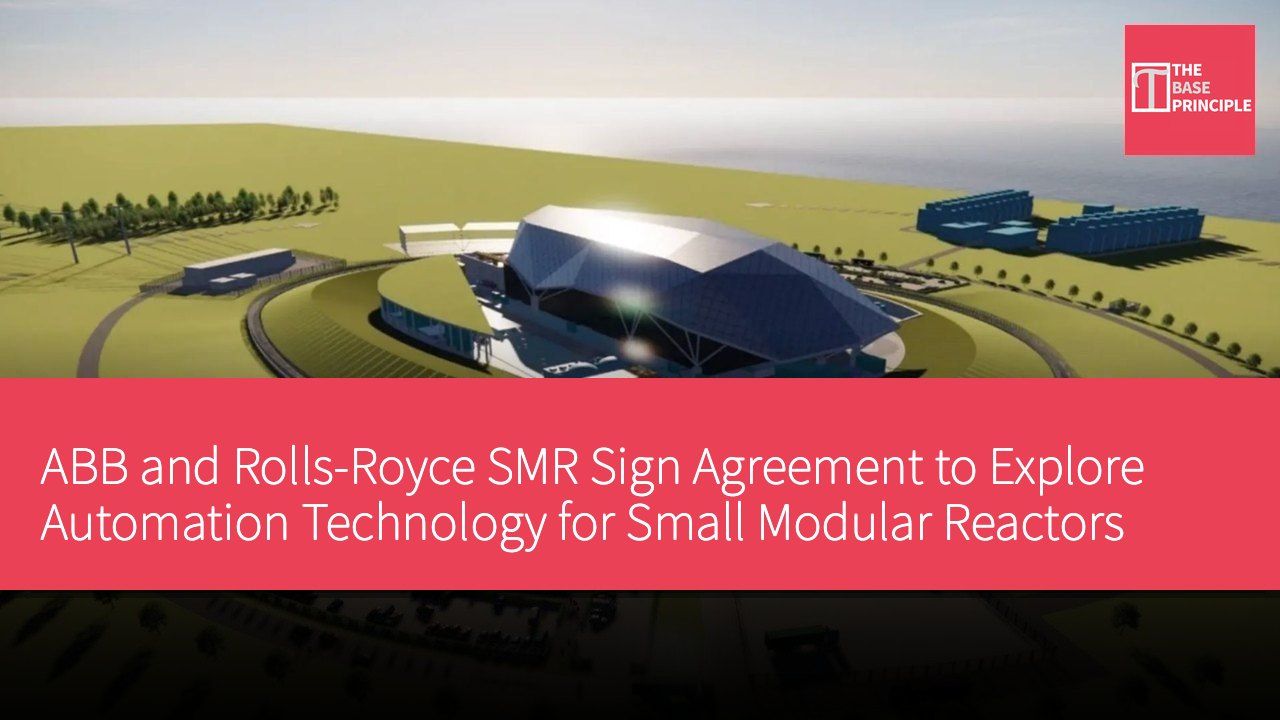
- ABB and Rolls-Royce SMR have signed an MoU to explore automation technology for small modular reactors.
- The collaboration aims to support the expansion of low-carbon baseload power, combining ABB's solutions.
- Rolls-Royce SMR plans to build reactors in factories to reduce project risks.
- Czech energy company ČEZ has also chosen this technology, planning to build small modular reactors.
Swiss engineering firm ABB and Rolls-Royce SMR have signed a memorandum of understanding to explore the latter's standardized, factory-built small modular reactor technology. The collaboration, developed through ABB's operations in Warrington, UK, will assess how automation, electrification, instrumentation, and communication solutions can help Rolls-Royce SMR expand its planned reactor fleet. This effort aims to support the expansion of reliable and affordable low-carbon baseload power.
The factory-built reactor technology agreement brings together solutions from three of ABB's business areas, as Rolls-Royce SMR is working to change how nuclear projects are delivered. Its approach involves manufacturing most of the reactor in factory conditions and then transporting the modules to the chosen site for assembly. Stacy O’Brien, Head of Corporate Procurement at Rolls-Royce SMR, said: "Rolls-Royce SMR is changing how nuclear projects are delivered to provide greater cost and time certainty and using a standardized, factory-built approach."
Collaboration Background and Goals
He added: "ABB has a long and distinguished track record of providing automation and electrification solutions for energy infrastructure projects, and this agreement provides us with an opportunity to further strengthen our delivery team."
The Rolls-Royce SMR is a 470 MWe pressurized water reactor designed to provide electricity to one million UK homes for 60 years. The unit, approximately 16 meters by 4 meters, will be manufactured about 90% in a factory. On-site work will mainly involve assembling pre-fabricated and pre-tested modules. According to the company, this approach significantly reduces project risk and could shorten the construction timeline. The UK government selected this reactor in June 2025 as the preferred technology for the country's first small modular reactor project, with Wylfa in North Wales named as the planned location, a site with the potential to accommodate up to eight units.
The final investment decision is expected in 2029.
International Collaboration and Technology Deployment
Outside the UK, Czech energy company ČEZ chose this technology in October 2024, with planned projects totaling up to 3 GW and acquiring a 20% equity stake in Rolls-Royce SMR. The first unit is planned to be built near the existing Temelín nuclear power plant, with more projects considered at coal-fired power plant sites. Early work agreements are advancing licensing, permitting, and site-specific design activities for planned deployment in the Czech Republic. Per Erik Holsten, President of ABB's Energy Industries division, said: "We are excited to explore how we can work with Rolls-Royce SMR to develop a global fleet of small modular reactors to expand reliable and affordable baseload power capacity,
meeting the growing demand for low-carbon energy."
He added: "Collaboration is also key; no single company or country can deliver the scale of energy expansion and transformation needed to meet future demands alone. Partnerships across the energy value chain are crucial to accelerating the commercialization of modern advanced nuclear technology." Additionally, ABB is also working with Swedish reactor developer Blykalla to provide automation, electrification, digitalization, and cybersecurity solutions for its lead-cooled small modular reactor technology.
The Future Potential of Small Modular Reactors
The development of small modular reactor technology is being driven by the global increase in energy demand. The collaboration between ABB and Rolls-Royce SMR not only demonstrates innovative thinking in how nuclear projects are delivered but also highlights the importance of automation and electrification in enhancing efficiency and reducing risks. As more countries and companies engage in this field, the commercialization of this technology will have a profound impact on the future energy transition, particularly in addressing climate change and achieving sustainable development goals.