
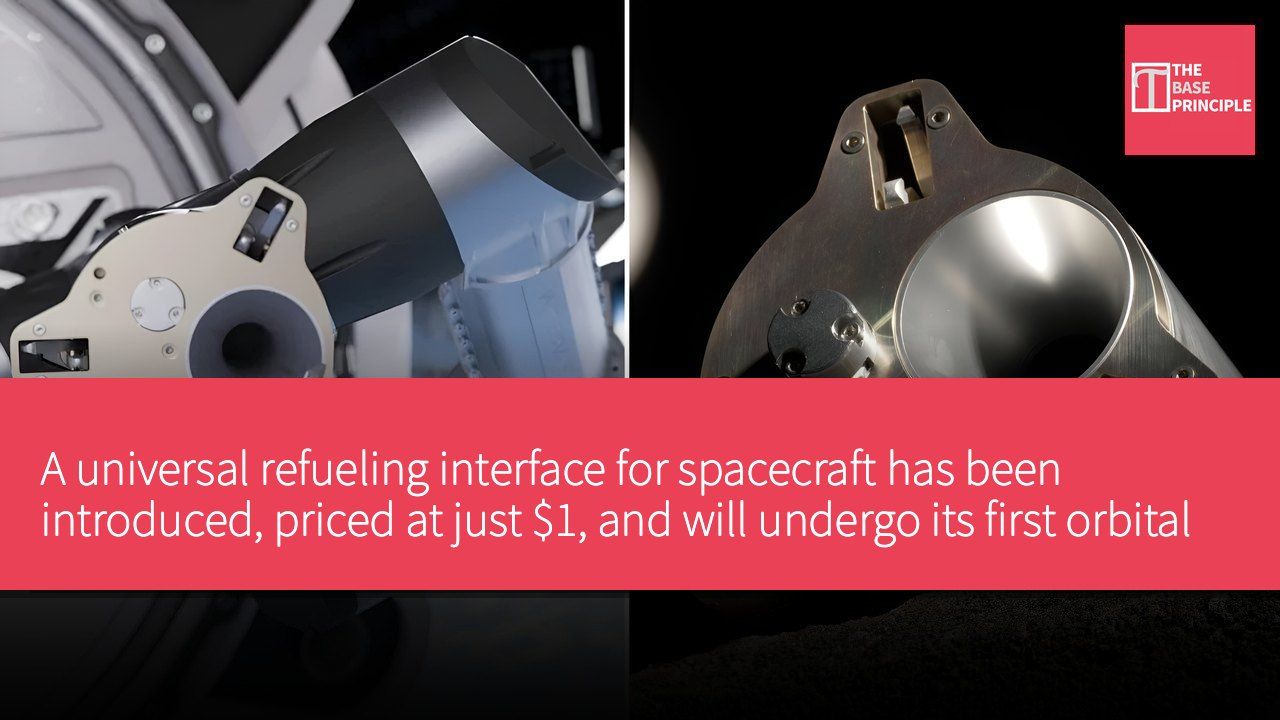
- Spaceium has launched OpenPort, providing a universal refueling interface for just $1.
- The OpenPort design allows spacecraft to receive fuel in orbit, extending their operational lifespan.
- A xenon transfer demonstration is set to take place at the International Space Station, testing propellant exchange.
- Spaceium aims for OpenPort to become the standard connection in the spacecraft industry.
Spacecraft may soon share a universal refueling connection, which promises to change how operators manage satellites in orbit. Spaceium has launched OpenPort, an open-source interface available for licensing and manufacturing by any company for just US$1 (approximately HK$8). The design allows spacecraft to receive fuel after launch, reducing reliance on their onboard reserves. It will also undergo an orbital demonstration at the International Space Station.
Most satellites carry fixed propellant supplies to support their planned missions. Once these supplies are exhausted, operators typically retire other spacecraft that are still functioning. Although their electronics and other systems may still operate, limited fuel will terminate their utility. The lack of standardized connections also complicates orbital refueling tasks. Different manufacturers develop their own interfaces, forcing operators to consider compatibility before arranging fuel transfers. A tanker built by one company may not connect with a spacecraft from another manufacturer.
OpenPort aims to address this issue by providing the same connection on two spacecraft. Its hermaphroditic design allows either ship to provide or receive propellant. This means one satellite could refuel another spacecraft without relying entirely on a dedicated tanker. The interface also replaces traditional fill and drain valves, which are typically used for ground refueling operations before launch, while OpenPort keeps the connection available after the spacecraft reaches orbit. Spaceium claims its design can handle higher pressures and greater docking misalignments than competing refueling interfaces.
These capabilities could help spacecraft establish reliable connections during demanding orbital operations.
Xenon Transfer Demonstration Set to Launch
The upcoming demonstration of xenon transfer to orbit using OpenPort will take place at the International Space Station. Spaceium plans to launch the hardware as a NASA-approved external payload through Voyager Technologies' commercial payload service. During the demonstration, the interface will transfer xenon between two tanks in orbit. Spaceium describes this as the first xenon transfer conducted in orbit. The mission will test whether spacecraft can exchange propellant through a standardized connection.
The demonstration will coincide with another mission by Spaceium in February 2026. Its precision robotic arm successfully completed its first space mission following a shared launch with SpaceX.
Vision for Establishing a Refueling Network
Spaceium hopes OpenPort will become a widely adopted connection in the spacecraft industry. Its broader business model focuses on automated orbital stations that sell propellant as a service. Co-founder and CEO Ashi Dissanayake stated that the company views these stations as its core business. Each spacecraft equipped with OpenPort could ultimately become a potential customer. "The interface is not the business; the stations are," Dissanayake said.
He believes widespread adoption will create demand for orbital refueling services, including those operated by competitors.
Spaceium was founded by aerospace and mechanical engineers Dissanayake and Reza Fetanat and joined Y Combinator's Summer 2024 batch. Its commercial clients include operators pursuing orbital transfer vehicles, lunar missions, and geostationary satellites. The company plans to establish refueling stations in low Earth orbit and geostationary orbit. Its long-term goals also include setting up refueling stations along the path to the Moon. The universal connection could ultimately help operators extend the lifespan of spacecraft. It may also allow lunar missions and orbital transfer vehicles to travel further without carrying all their propellant.
Spaceium is expanding its engineering team in preparation for the ISS demonstration and its first refueling station. The adoption of OpenPort will ultimately determine whether different spacecraft manufacturers will embrace a shared standard.
Potential Impact of the Universal Refueling Interface
The launch of OpenPort marks a significant advancement in spacecraft refueling technology, which not only enhances operational efficiency but also reduces operational costs. As the demand for space missions continues to grow, traditional methods of propellant supply will struggle to meet future challenges. The standardization of the universal refueling interface will facilitate compatibility between different manufacturers, thereby enhancing the flexibility and sustainability of the entire industry. This innovation could attract more companies to the space market, driving further development of related technologies.