
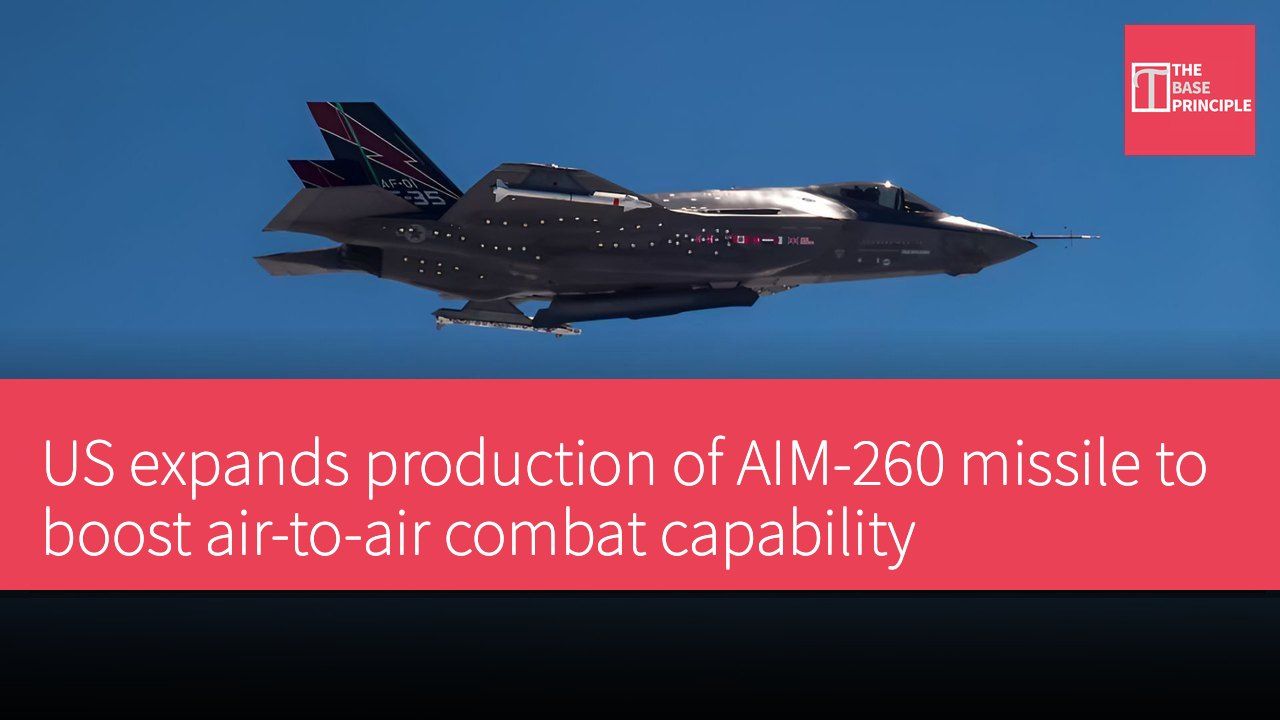
- Lockheed Martin will increase production of the AIM-260 missile to support the US expansion of its air-to-air arsenal.
- The AIM-260 has superior range and effectiveness to existing air-to-air weapons and can be integrated with multiple fighter jets.
- The Department of Defense aims to enhance weapons production capacity and acquisition speed through stable orders.
- Australia plans to procure the AIM-260, strengthening air combat capability interoperability with the United States.
Lockheed Martin is preparing to increase production of the AIM-260 Joint Advanced Tactical Missile to support the United States' expansion of its next-generation air-to-air arsenal. The defense giant has signed a framework agreement with the US Department of Defense to accelerate manufacturing and delivery of the missile. The arrangement could ultimately support a multi-year procurement deal, but would require congressional approval.
Design and capabilities of the AIM-260 missile
The AIM-260 is designed to extend the strike range of US fighter aircraft against aerial threats. Its development was aimed at addressing a key challenge in modern air combat: aircraft are able to detect and engage targets from ever-greater distances. Lockheed Martin says the missile offers superior range and effectiveness to existing air-to-air weapons. The company has described JATM as a premier air superiority capability against current and emerging threats. The missile can be integrated with multiple US fighter platforms, including the F-22 Raptor and the F-35 Lightning II. This compatibility gives US forces another option for deploying the weapon across different fighter fleets and also reflects broader efforts to improve long-range strike capability.
The AIM-260 program involves Lockheed Martin, the US Air Force, and the US Navy. The three organizations have collaborated on the weapon's development and production. Tim Cahill, president of Lockheed Martin's Missiles and Fire Control division, said the company will increase deliveries to meet the needs of the United States and its allies. "We will deliver JATM at the speed our nation and allies require," he said.
Increasing JATM deliveries requires more than additional orders. Lockheed Martin says it will make the necessary investments under the new arrangement to expand production capacity. The planned procurement structure could also give the manufacturer greater visibility into future demand. That is critical for missile programs that require specialized components, production equipment, and skilled labor. A multi-year procurement deal could provide that long-term certainty. Congressional approval remains necessary before the planned procurement contract can move forward.
The Defense Department's procurement transformation
The arrangement also reflects a shift in how the Pentagon wants to acquire weapons. The Department of Defense has identified faster acquisition and higher production capacity as central to its procurement transformation strategy. For the industrial base, stable orders can support additional manufacturing capacity. Suppliers can also make long-term decisions on equipment, labor, and component production. This is becoming increasingly important as Washington seeks to replenish and expand advanced weapons stockpiles. Air-to-air missiles are a key part of that broader stockpile.
Impact of international demand
International demand adds another dimension to the program. Australia recently announced it will invest nearly $73.6 billion to equip the Royal Australian Air Force with AIM-260 missiles. Australia's planned procurement will more closely link its fighter force with US air combat capability and could also enhance interoperability between the two countries in joint operations. Australia's commitment provides another source of demand for the program beyond US procurement and demonstrates how JATM could become part of allied air forces fighting alongside US aircraft. The next major step will depend on congressional approval of the proposed multi-year procurement.
Impact of the AIM-260 missile on air combat
The increased production of the AIM-260 missile reflects not only the United States' emphasis on enhancing air-to-air combat capability but also shifts in the Department of Defense's weapons procurement strategy. As modern air combat demands evolve, the missile's range and compatibility have become key factors. Australia's participation in particular highlights the missile's potential in the international market and further strengthens military cooperation between the United States and its allies. Such cooperation can boost combat effectiveness and promote interoperability among nations, which is essential for future joint operations.