
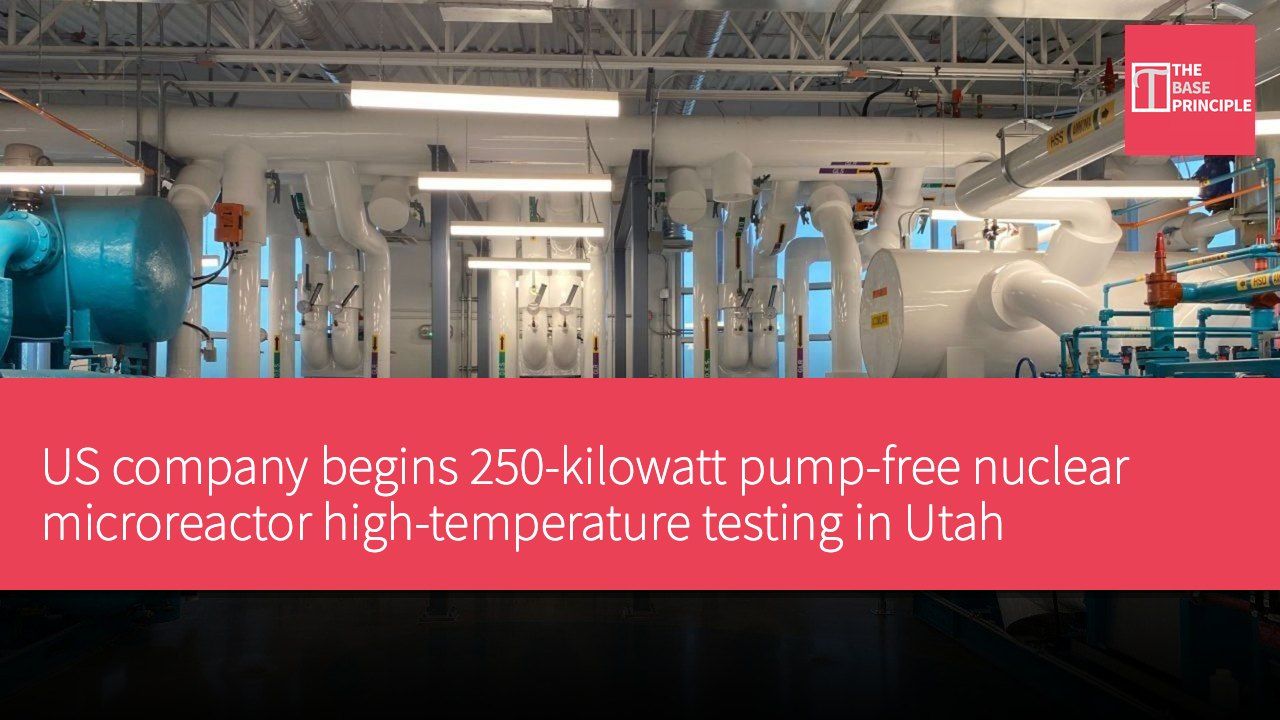
- NuCube Energy conducts high-temperature testing of pump-free nuclear microreactor in Utah.
- The reactor uses sealed heat pipes for cooling, eliminating the need for mechanical pumps and large equipment.
- Testing includes use of a 250-kilowatt induction furnace to demonstrate core power delivery capability.
- The project aims to advance commercial deployment of carbon-free electricity and heat.
Advanced nuclear developer NuCube Energy is conducting a new round of non-nuclear tests of its factory-built reactor technology in Utah. The company is collaborating with scientists at the San Rafael Energy Laboratory and Brigham Young University, using electric heating to simulate the internal operating conditions of the planned NuSun microreactor fission system. These trials focus directly on whether small modular nuclear energy can achieve decarbonization of energy-intensive production operations. Most commercial nuclear plants rely on active pumps and vast water reservoirs to manage core temperatures. If mechanical components fail or power is lost, coolant circulation can halt rapidly.
Innovative design of pump-free nuclear reactor
NuCube takes a fundamentally different approach, operating a solid-state reactor cooled entirely by sealed heat pipes. These sealed metal tubes draw heat from the core through basic physics, eliminating mechanical pumps, large pressure vessels, and complex piping networks. The result is a safety-by-design architecture that prevents fuel meltdown through fundamental physical principles, significantly reducing manufacturing costs and regulatory hurdles.
To demonstrate that the core can power a real-world plant, researchers are using an upgraded 250-kilowatt induction furnace. The electrical device can generate intense, controllable thermal energy without the need for radioactive fuel. Because of this non-nuclear setup, technicians can safely test sensitive energy-conversion hardware under realistic operating stresses. The platform gives engineers a low-risk environment to monitor heat movement until any active nuclear material is loaded into a commercial unit. Primary goals of the Utah trials include clean hydrogen synthesis and chemical production. Both sectors require large amounts of sustained high heat that renewables such as wind or solar alone struggle to provide.
Practical applications of the test platform
The team will also test a compact power turbine driven by a supercritical carbon dioxide Brayton cycle. This advanced system extracts far more electricity from thermal energy than conventional steam circuits, making the overall installation more efficient. This domestic testing links directly to cross-border research. NuCube previously partnered with Canadian Nuclear Laboratories to study heat-pipe stress at temperatures exceeding 900°C (1,652°F). Refined computational models will feed directly into the empirical results obtained in Utah. The combined dataset will build the technical safety case regulators require before authorizing commercial units for widespread public use.
Chief Executive Cristian Rabiti described the project as critical groundwork for bringing high-heat nuclear energy to practical application. He said: "We are excited to expand our collaboration with USREL and BYU to advance the infrastructure needed to demonstrate how NuCube's high-temperature reactor technology can meet real-world energy demands." Rabiti added: "USREL's new test platform will enable effective validation of energy conversion and industrial heat applications, supporting our path toward commercial deployment of reliable, carbon-free electricity and heat."
The current testing activity represents the next operational step under a formal agreement signed with the Utah Office of Energy Development in May 2025. That agreement established a framework to explore siting a NuCube-supplied reactor at the San Rafael location. The partnership aims to move the modular design from simulation to the U.S. grid.
Impact of pump-free nuclear technology on the energy future
NuCube Energy's pump-free nuclear microreactor technology represents a significant shift in the nuclear industry, enhancing safety and reducing costs by eliminating reliance on traditional cooling systems. This new technology can not only address current energy demands but also play a key role in high-heat-demand sectors such as clean hydrogen synthesis and chemical production. As reliance on renewable energy increases, the success of this technology will bolster nuclear energy's importance in the future energy mix and pave the way for achieving carbon-free electricity goals.