
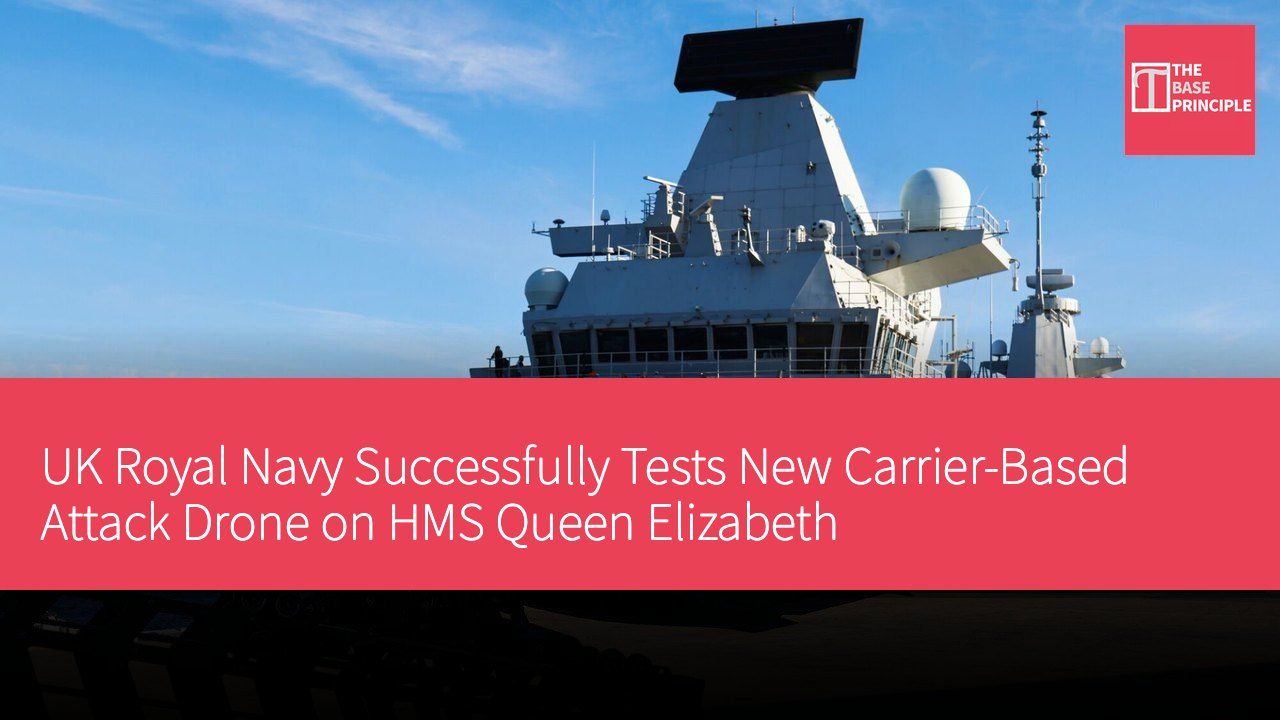
- The UK Royal Navy tested the Nyan OWE drone on HMS Queen Elizabeth, successfully hitting targets.
- The Nyan drone was developed by a subsidiary of BAE Systems, focusing on precision strikes.
- The tests were conducted during the "Siren Touch B" exercise, demonstrating how drones can support carrier operations.
- The Royal Navy is exploring the potential of drones to enhance strike resources and maritime operational capabilities.
The UK Royal Navy has tested a new carrier-based attack drone, the Nyan One-Way Effector (OWE), on its largest aircraft carrier, HMS Queen Elizabeth, successfully completing four launches in the North Atlantic, each hitting its designated target. HMS Queen Elizabeth has a displacement of approximately 71,650 tons, making it the largest warship ever built for the Royal Navy. Operating the Nyan from such a large aircraft carrier provides valuable insights for the fleet on integrating unmanned attack aircraft into significant maritime operations.
This drone was developed by Callen-Lenz, a subsidiary of BAE Systems, designed to utilize unmanned aircraft for precision strikes. Its successful carrier trials mark an important step in operating disposable attack drones alongside manned aircraft and other naval platforms.
Background of the Drone's Carrier Testing
The tests were conducted during the "Siren Touch B" exercise, which explored how unmanned weapons can support future UK carrier strike operations. The Royal Navy has now confirmed that the Nyan can be launched from large aircraft carriers and perform its designated strike missions. The challenges of operating unmanned attack aircraft from an aircraft carrier extend beyond merely launching from a runway; the system must operate in complex maritime environments and integrate with the carrier's aviation operations. According to BAE Systems, the Nyan successfully conducted four independent launches from HMS Queen Elizabeth during the North Atlantic exercise, with all four drones reaching their designated strike points.
The Nyan has a wingspan of 2.9 meters, designed to be relatively compact for maritime operations. Its one-way configuration focuses on precision strikes rather than returning to the launch platform. These carrier demonstrations follow earlier maritime launch tests conducted earlier this year on the Royal Navy's experimental vessel XV Patrick Blackett. This test took place during the "Siren Touch A" exercise. HMS Queen Elizabeth also hosted trials for the Heavy Lift Challenge 3, marking the first operation of the Tekever AR5 fixed-wing drone from an aircraft carrier.
The drone has a wingspan of 23 feet and can carry a payload of up to 176 pounds, with potential roles including logistics, intelligence, surveillance, target acquisition, and reconnaissance (ISTAR). These trials provide UK defense planners with more information on launching unmanned attack systems from various naval platforms.
The Role of Drones in the Navy
The UK Royal Navy is exploring how unmanned aircraft can enhance available strike resources without fully relying on traditional manned platforms. The Vantage program coordinates these efforts across the Royal Navy, British Army, and Royal Air Force, aiming to accelerate testing and inform future decisions on maritime one-way effectors. Royal Navy Capability Leader Commander David Burton stated that "Siren Touch B" provided important insights into future carrier strike operations. He added that these trials will help determine how unmanned attack drones can operate alongside other capabilities in maritime task groups.
These results will also guide the UK's maritime aviation transformation program, which has broader goals of developing a mixed navy with more operational options.
Matt Foster, CEO of Callen-Lenz, described the aircraft carrier launch as another demonstration of the Nyan's potential. He noted that affordable and scalable operational capabilities can enhance the effectiveness of existing military assets. BAE Systems is developing the Nyan and integrating it into a broader unmanned aircraft portfolio. Its FalconWorks research and technology center supports the development of emerging aviation systems and autonomous platforms. The company has over 25 years of experience in unmanned and autonomous technology.
Its current strategy focuses on systems that can complement existing frontline aircraft and future platforms. The carrier trials of the Nyan provide initial indications of how relatively small attack drones can be integrated into naval aviation. The four successful launches lay the groundwork for further testing. The Royal Navy has not yet announced an operational deployment date for the system, and future assessments will help determine how these aircraft can support carrier operations and the UK's broader maritime strike capabilities.
Item Specifications Drone Name Nyan One-Way Effector (OWE) Wingspan 2.9 meters Payload Up to 176 pounds
Impact of Drone Technology on Naval Operations
The UK Royal Navy's testing of the Nyan OWE drone marks the significance of unmanned technology in modern naval operations. As drone technology advances, the Navy can enhance its strike capabilities without fully relying on manned aircraft. These tests not only showcase the precision strike capabilities of drones but also highlight their potential for integration with traditional naval platforms. In the future, this will help the UK Navy improve operational flexibility and efficiency in a dynamic maritime environment.