
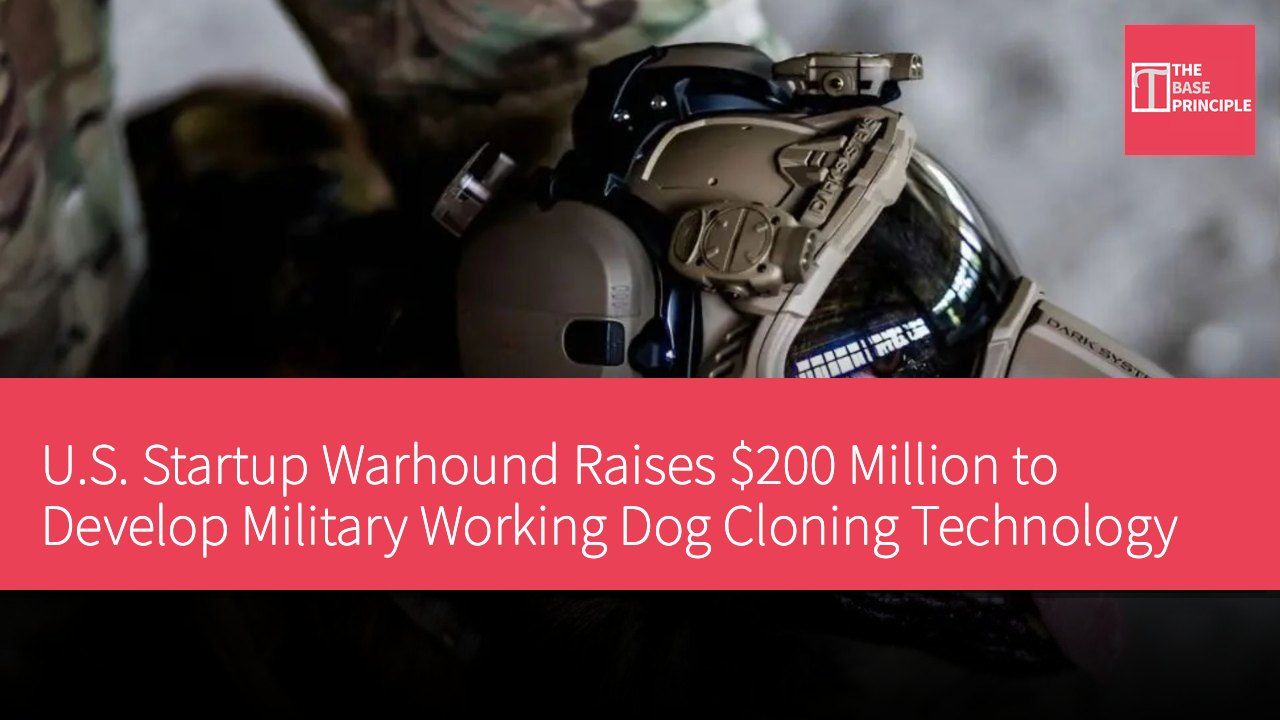
- Warhound plans to enhance military working dog quality and address the shortage of dogs.
- The company hopes to bring the military working dog supply chain back to the U.S. and clone high-performance dogs.
- U.S. military working dogs rely on international suppliers, with domestic breeders accounting for only a small fraction.
- Warhound plans to establish a biobank for genetic materials and standardize puppy training.
U.S. defense startup Warhound plans to enhance the quality of military working dogs through cloning, genetic research, and early training. The company aims to develop superior breeds for military units, law enforcement agencies, and emergency services. Warhound was founded by Ben Lamm, the founder of biotech company Colossal Biosciences, and defense technology entrepreneur Palmer Luckey, and has reportedly raised $200 million in funding. The startup seeks to address the shortage of suitable dogs for specialized roles in the U.S.
Warhound's Plans and Goals
In an interview with Military Times, Lamm and Warhound co-founder and CEO David Spirk discussed the project's origins, goals, and the products they hope to develop. Their ambitions extend beyond bringing the military working dog supply chain back to the U.S.; they also plan to clone high-performance dogs, edit genes related to health issues, and introduce standardized training for puppies as young as two weeks old.
As the demand for reliable military working dogs continues to rise, the U.S. remains heavily reliant on international suppliers for these animals. According to Warhound's data, only about 13% of dogs entering military training programs come from domestic breeders, while approximately 80% are purchased from overseas, primarily from Europe. The training process can last up to three years and is costly, with over half of the purchased dogs potentially failing to meet operational standards. The company estimates that around 200 dogs need to enter training to yield 100 working dogs. Lamm noted that discussions with Luckey began in April 2025 when they met at the Moonshots Summit, focusing on how biotechnology could help military units acquire suitable working dogs.
Colossal Biosciences is expected to provide technical expertise, having acquired Viagen Pets and Equine in Texas last year, thus gaining access to established animal cloning technology.
"We plan to leverage Viagen's experience," Lamm said. Cloning technology creates a genetic copy of an animal, while gene editing alters specific areas of DNA. Warhound plans to collect samples from selected dogs and analyze their genomes to identify genetic traits associated with health, performance, and longevity. This research could also help identify genetic issues and assess whether certain traits can be improved before cloning.
Standardization of Puppy Training
Warhound plans to identify breeds and individual dogs suitable for specific missions and intends to establish a biobank for genetic materials, consulting with government agencies about the needs of different operational environments. "Not all military dogs are suited for the same skill requirements. If you place a dog in a security role at an air force base, its requirements may differ from those of a dog accompanying personnel on helicopter operations," Spirk said. The company also hopes to standardize the rearing and preparation methods for puppies. Spirk indicated that Warhound is exploring introducing work environments starting from around two weeks old, gradually familiarizing puppies with different terrains and settings.
For example, dogs raised specifically on hard surfaces may face challenges when working on grass or sand, and early exposure to different terrains can help them adapt more easily.
Spirk anticipates that the first dogs from the program could be ready in about two years. Warhound also sees potential applications beyond military service. The U.S. currently has approximately 98 million dogs, and the company believes its research could enhance canine health and development. While the program has yet to prove its ability to mass-produce healthier and more reliable working dogs, Warhound aims to address long-term challenges in the supply and preparation of military working dogs through a combination of cloning, genetic research, and structured training.
Potential Impact of Cloning Technology on Military Dogs
Warhound's cloning technology not only aims to improve the quality of military working dogs but could also change the U.S. reliance on dog supplies. As demand increases, the return of the domestic dog supply chain will help reduce dependence on foreign suppliers. Through genetic research, Warhound hopes to breed healthier and more adaptable dogs, which could significantly enhance the operational capabilities of military and law enforcement agencies. Additionally, standardizing puppy training methods may provide new directions for future dog breeding, further promoting canine health development.