
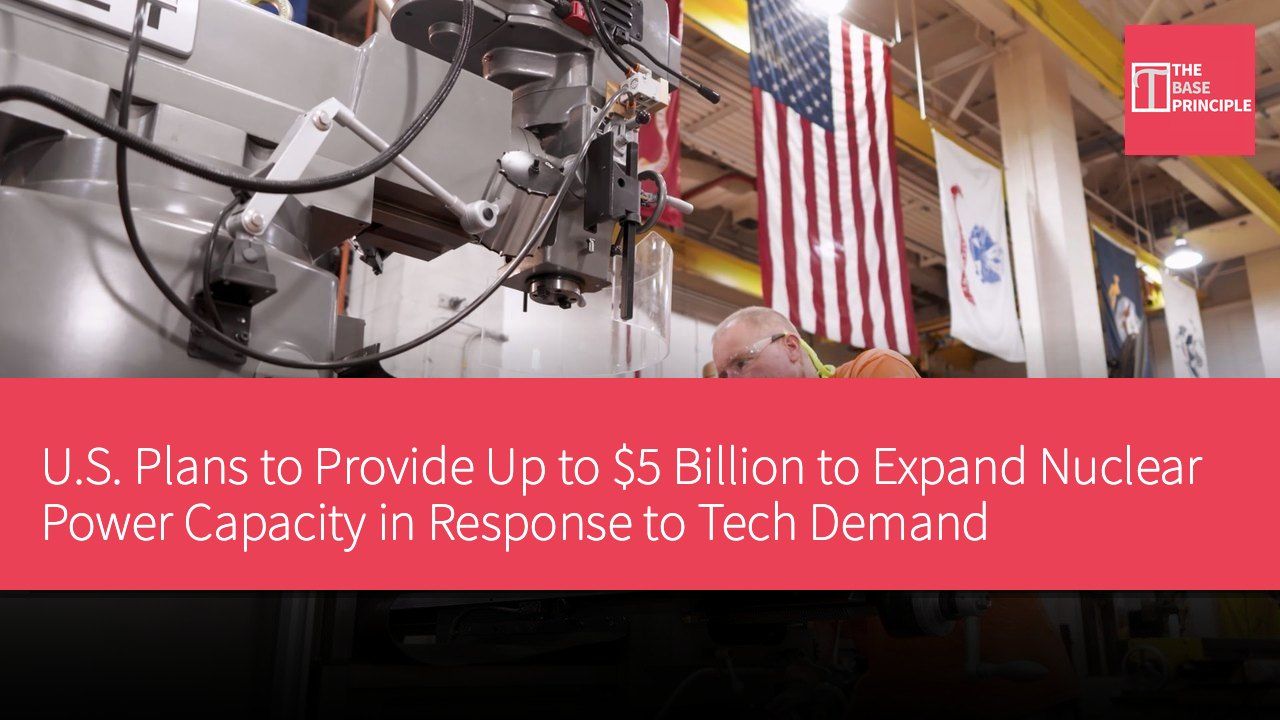
- The U.S. plans to provide up to $5 billion to expand nuclear power capacity.
- The upgrades will add nearly 1.1 gigawatts of power capacity, equivalent to the output of a new reactor.
- This initiative will create over 10,000 engineering and construction jobs.
- The federal loan proposal requires technical assessments and environmental reviews before disbursement.
The United States is preparing to offer up to $5 billion in federal loan funding to expand its existing nuclear power capacity. This initiative is a response to the surge in demand for clean, reliable power driven by the rise of artificial intelligence. The U.S. Department of Energy has announced a temporary funding agreement with Constellation. Under the plan, the energy company will receive federal support to fully refurbish and upgrade eight nuclear facilities. The selected plants include eight sites in Illinois, Maryland, and Pennsylvania, which house multiple reactor units.
The upgrades will add nearly 1.1 gigawatts of power capacity to the power system, equivalent to the output of a new commercial reactor, achieved entirely through improved efficiency and hardware at existing plants.
Background and Impact of Nuclear Expansion
Gregory A. Beard, director of EDF, stated, "These investments will add more reliable baseload power to the grid, help lower electricity costs, strengthen our nation's energy security, and promote long-term prosperity in the U.S." This expansion comes at a crucial time as the tech industry competes to secure stable power for large data centers. Running advanced artificial intelligence models requires continuous baseload power. While wind and solar power are rapidly expanding, their output fluctuates with weather changes. In contrast, nuclear reactors can operate around the clock and do not emit carbon during power generation.
Energy planners estimate that the additional 1.1 gigawatts of power will be able to supply over 930,000 households. The plan also forecasts the creation of over 10,000 engineering and construction jobs.
This power will be directly supplied to two major regional grids: the PJM Interconnection in the East and the Midcontinent Independent System Operator across the Midwest. Six plants in Illinois will undergo equipment upgrades, including Braidwood, Byron, Clinton, Dresden, LaSalle, and Quad Cities. The Limerick site in Pennsylvania and the Calvert Cliffs plant in Maryland are also slated for upgrades.
Collaboration Between Government and Tech Giants
The federal loan proposal has not yet been finalized. Before any funding is disbursed, Constellation must pass rigorous technical assessments and complete formal environmental reviews. It must also finalize legal agreements with the Department of Energy's financing office. Nevertheless, this commitment highlights the growing support for existing nuclear infrastructure. Earlier this month, Constellation entered into a commercial partnership with Amazon to modernize Maryland's only nuclear plant, Calvert Cliffs. This commercial agreement aims to unlock over $3 billion in private infrastructure spending.
The plan will upgrade the 1,790-megawatt plant and add approximately 190 megawatts of new zero-carbon capacity between 2030 and 2032.
Crucially, the power from Calvert Cliffs will continue to be part of the public grid rather than being exclusively supplied to server farms. Amazon will draw power from the regional grid while helping to bear the costs of capital improvements. Federal officials noted that the loan program also includes funding options for further reactor upgrades at other Constellation sites in the future. Currently, this push demonstrates a shared commitment between the government and tech giants to support existing nuclear plants, aiming to power computing infrastructure without compromising emission reduction goals.
Strategic Significance of Expanding Nuclear Power Capacity
As demand for artificial intelligence grows, the need for stable power is becoming increasingly urgent. Nuclear energy, as a clean and sustainable power source, can provide reliable baseload power around the clock, which is crucial for supporting large data centers. Despite rapid advancements in renewable energy, its instability remains a significant challenge. This expansion plan not only enhances energy security but also promotes economic development and creates numerous job opportunities. The collaboration between government and industry underscores the importance of nuclear infrastructure and contributes to achieving emission reduction targets.