
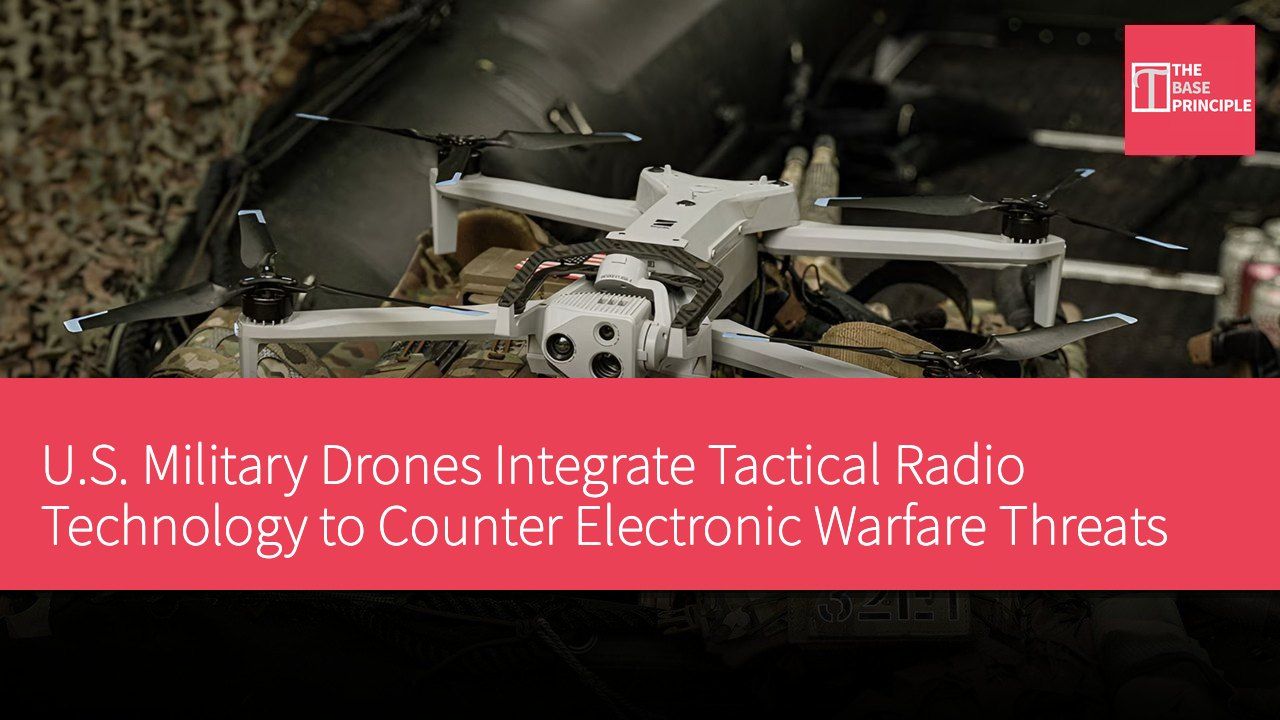
- L3Harris and Skydio are integrating drones with tactical radio technology.
- The X10D drone provides aerial perspectives while reducing personnel risk.
- The integrated system aims to reduce vulnerability to electronic interference.
- The Wraith Shield technology can detect and neutralize enemy drones.
L3Harris Technologies and Skydio are integrating military drones with tactical radio technology to assist U.S. forces in maintaining communications amid electronic warfare threats. This collaboration combines Skydio's X10D drone with L3Harris's radios and specially designed waveforms, aimed at protecting the command chain in challenging environments. This integration helps U.S. forces operate unmanned aerial systems (UAS) when adversaries attempt to disrupt battlefield communications. Additionally, the system connects drone operations with tactical radio networks already deployed in U.S. and allied forces.
Electronic Warfare Capabilities of Drones
The X10D is a compact drone designed for military reconnaissance, allowing troops to gain aerial perspectives on potential threats without exposing personnel to the same risks. The drone integrates L3Harris's Falcon IV embedded radio and Wraith waveform, providing multi-layered interference protection and enhancing the aircraft's electronic warfare capabilities. The radio integration enables the drone to access communication technologies specifically designed for military operations. The importance of maintaining command and control links is paramount when troops rely on aerial sensors to gather information beyond their immediate location.
Electronic interference can disrupt the connection between operators and unmanned aerial vehicles, complicating flight control and limiting the transmission of useful battlefield information.
L3Harris and Skydio aim to reduce this vulnerability through their integrated system. This configuration is designed to help combat personnel continue flying drones and communicating in environments where electronic warfare threatens these capabilities. Furthermore, this collaboration relies on a significant amount of existing military communication equipment. According to L3Harris, there are over 150,000 tactical radios in the inventories of the U.S. and its allies that support the Wraith waveform. This compatibility aids defense forces in integrating this capability into existing communication networks and provides a pathway for connecting autonomous aircraft to already deployed military equipment.
Protective Layers of Integrated Technology
These companies have also integrated Wraith Shield, a waveform technology designed to scan the radio spectrum and identify threats. This technology can detect and neutralize enemy drones, adding another layer of protection to the integrated electronic warfare capabilities. These features ensure that the partnership not only maintains the connection between drones and operators but also addresses the electromagnetic environment in which military aircraft and communication systems must operate. This collaboration relies on an open system architecture, allowing different technologies to work together. Such designs can help militaries integrate new equipment without having to rebuild entire communication infrastructures.
Faisal Munir, President of L3Harris's Mission Critical Communications Division, stated that this collaboration combines complementary technologies with robust networks. He added that this integration can assist combat personnel in communicating and operating unmanned aerial vehicles in environments constrained by electronic warfare. This approach reflects the growing engineering challenges faced by modern militaries. Autonomous aircraft require reliable connections to provide information and support operations, but adversaries can target these connections through electronic interference. Integrating drones with established tactical radios offers a solution.
The effectiveness of this approach will depend on the system's performance under combat conditions and in the face of evolving electronic warfare threats.
Synergy Between Drones and Tactical Radios
This collaboration illustrates the close integration of drones and communication technologies in modern military operations. As electronic warfare threats increase, ensuring stable connections between drones and operators becomes crucial. By integrating L3Harris's radio technology, drones can not only gather intelligence but also maintain effective communication in complex electromagnetic environments. The development of this technology not only enhances operational efficiency but also provides greater flexibility and security for future military actions.