
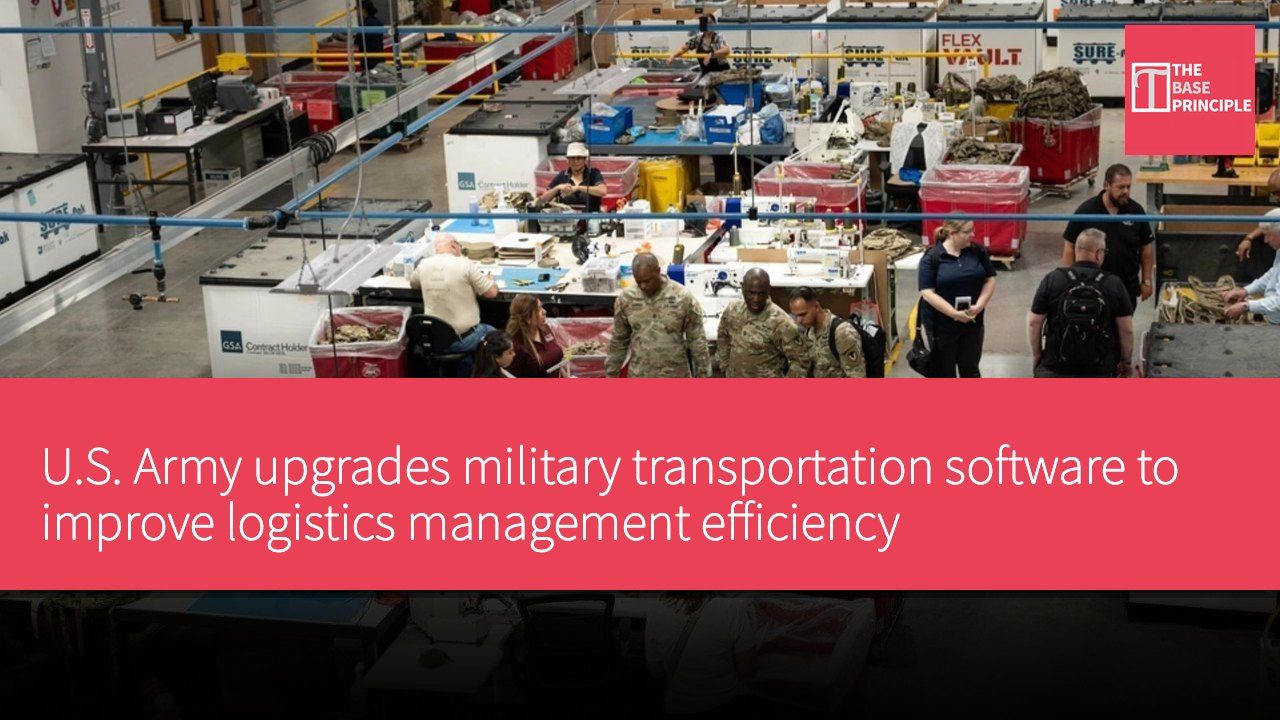
- The U.S. Army upgrades military transportation software to improve logistics management efficiency.
- The new LOADOUT system provides real-time visibility of cargo locations and available transport capacity.
- Priority tags help distinguish urgent movements from routine needs.
- The Army plans to connect LOADOUT with the ARTEMIS capability suite to enhance functionality.
Drawing on lessons from Operation Epic Fury, the U.S. Army has upgraded its military transportation software to give commanders a clear picture of cargo locations, available transport capacity, and which movements need urgent handling. The updated system, called LOADOUT, manages requests to move military personnel, equipment, and supplies. The Army's Combined Arms Support Command (CASCOM) developed the latest enhancements with theater sustainment commands and other operational partners after identifying a recurring problem: soldiers were spending too much time tracking transportation updates instead of coordinating movements.
Challenges of digital dashboards in military logistics
Digital dashboards for military logistics involve more than assigning trucks or aircraft; requests must be submitted, coordinated, matched with available transport, executed, and finally closed. When information is scattered across different tools or requires repeated phone calls and emails, delays accumulate. To manage this process, transportation movement requests flow through a shared workflow. The latest version introduces customizable dashboards, line-by-line cargo manifest exports, and improved tools for uploading and allocating organizational equipment lists and unit deployment lists. A key addition is an upgraded transportation board that provides real-time visibility of available transport capacity.
A new Priority 1 tag also highlights mission-critical requests, helping users distinguish urgent movements from routine needs.
The goal is to give units and sustainment planners a common view of transportation requirements and available capacity, rather than forcing each theater to rely on independent ad hoc solutions. The changes draw on experience from Operation Epic Fury, which placed significant demands on the U.S. military's global logistics network. During major operations, transportation assets and supplies must be coordinated across services, geographic commands, transportation hubs, and multiple supply routes. The Army said the LOADOUT updates were developed in collaboration with the 1st Theater Sustainment Command supporting Middle East operations, the 8th Theater Sustainment Command, U.S. Army Japan, and other stakeholders.
Faster, data-driven logistics planning
The broader effort also underscores the value of faster, data-driven logistics planning. In April, reports indicated that U.S. Transportation Command is expanding its use of real-time data and AI-driven visualization to maintain visibility across the logistics network and assess alternative transport options when conditions change. Separately, Air & Space Forces Magazine reported that TRANSCOM used AI agents to evaluate alternative air bases after Spain restricted U.S. military access to its bases and airspace in March. These are separate efforts from the Army's LOADOUT upgrade, but they reflect a larger push to make military logistics more responsive when routes, access, and transport availability shift unexpectedly.
CASCOM held the software's first functional review working group on Sept. 24, bringing together leaders from the 1st and 8th Theater Sustainment Commands to review completed changes and identify future priorities. The Army plans regular monthly reviews with theater partners. Potential additions include ad hoc tracking of diplomatic and customs clearances, which affect how quickly cargo crosses international borders. Longer term, the Army also plans to connect LOADOUT with its ARTEMIS capability suite so that transportation information can move automatically between systems.
The current upgrade focuses on visibility, coordination, and workflow rather than automating transportation or AI-driven cargo movement. Its value will depend on whether it reduces administrative friction and helps logistics teams make better-informed decisions. For a military operating across vast distances, a clear picture of transportation requests and available capacity can be as important as the vehicles that move the cargo. The next test for LOADOUT is whether these improvements translate into faster, more predictable movement of personnel and equipment when operational demands intensify.
Impact of LOADOUT upgrade on military logistics
The U.S. Army's LOADOUT system upgrade reflects a focus on military logistics management efficiency, particularly under complex transportation demands. By providing real-time visibility and priority tags, these improvements aim to reduce the time soldiers spend tracking movements so they can focus more on coordinating transportation. As global military operational demands continue to evolve, these upgrades not only enhance transportation efficiency but also strengthen collaboration among units, ensuring rapid response in emergencies.