
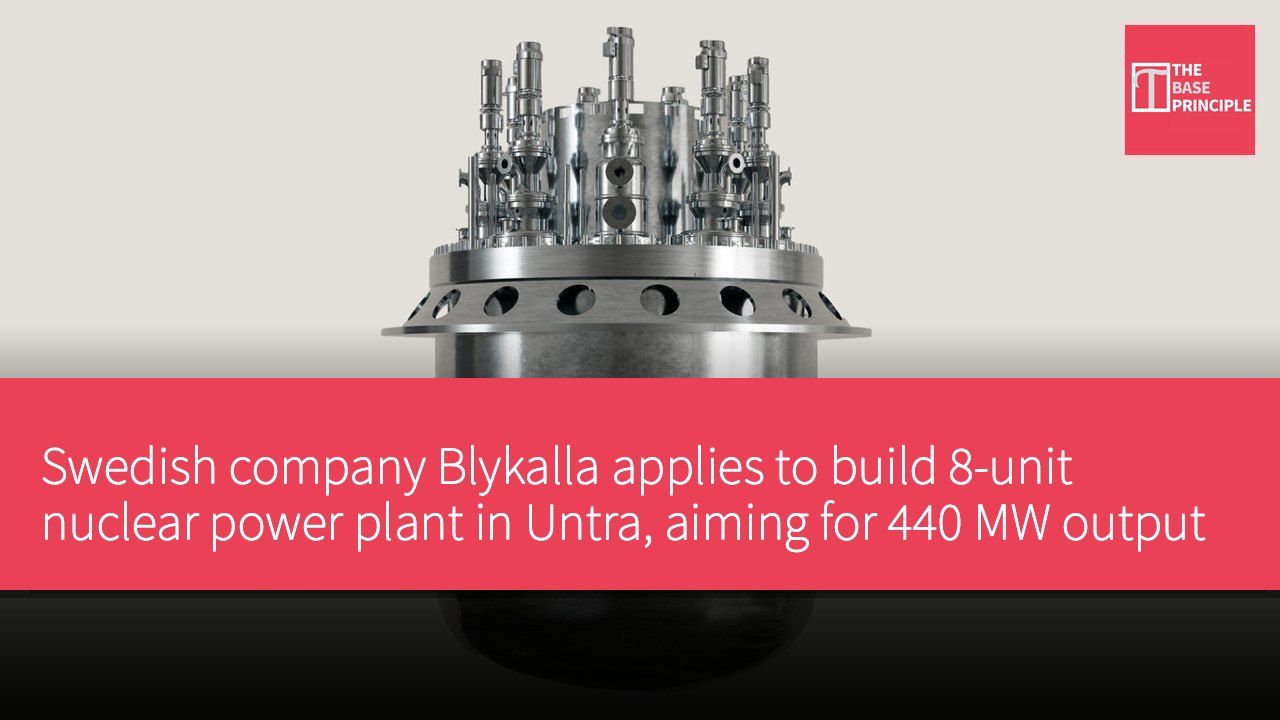
- Blykalla plans to build an eight-unit nuclear power plant in Untra, with a maximum output of 440 MW.
- The SEALER reactor uses molten lead as a coolant and operates at normal atmospheric pressure.
- A new aluminum alloy steel prevents molten lead from corroding the reactor structure.
- The project aims to help Sweden achieve its national target of adding 2,500 MW of new nuclear power capacity.
Swedish nuclear energy developer Blykalla has submitted an application to the government to build an eight-unit power plant in the town of Tierp. If approved, the facility, located in Untra, will utilize small modular reactors to supply up to 440 MW of power. The project centers around the Swedish Advanced Lead Reactor, known as SEALER. Unlike commercial light water reactors that operate under high water pressure, each SEALER unit, with an output of 55 MW, uses molten lead as its primary coolant. The boiling point of liquid lead exceeds 1,700°C, and since this temperature is far higher than the core operating temperature, the coolant cannot instantaneously vaporize into steam.
This physical characteristic eliminates the problem of internal pressure buildup, allowing the main circuit to operate at normal atmospheric pressure and thus obviating the need for the high-pressure steel containment vessel required in standard nuclear power plants.
The Safety Mechanism of Molten Lead
Molten lead also drives the reactor's passive safety mechanism. In the event of a complete power outage, the plant removes residual heat through natural convection rather than emergency electric pumps or manual intervention. When the high-density liquid metal surrounding the fuel rods heats up, it expands and rises, flowing to external heat exchangers to release thermal energy before returning to the core solely by gravity. Historically, high-temperature, high-density liquid metal has eroded the structural steel of reactors, limiting the commercial viability of lead-cooled systems. Blykalla has addressed this issue through the use of an aluminum alloy steel developed in Sweden. As the reactor operates, the aluminum dissolved in the alloy migrates to the outer layer of the metal components and reacts with the controlled amount of oxygen in the liquid lead pool, forming a continuous, self-healing aluminum oxide film on the surface of the structural components and fuel cladding.
This oxide layer forms a physical barrier that prevents corrosive molten lead from coming into contact with the underlying structural steel.
Reasons for Choosing Untra as the Site
Due to the small size of the reactor units, the entire module can be manufactured at a central factory and then transported to inland locations via standard road and rail networks. To simplify the power transmission process, Blykalla is collaborating with Hitachi Energy to establish a standardized power system. Blykalla chose Untra as the site because it is located in the SE3 electricity bidding area, which has the highest electricity demand in Sweden. Placing the reactor next to the existing hydroelectric power station on the Dalälven River will create a power generation hub that combines baseload nuclear power with adjustable hydroelectric power.
The facility will be connected to Svenska kraftnät's 400 kV transmission line, which is currently being expanded in Tierp through the Uppsalapaketet regional grid project.
Project and Swedish Nuclear Energy Legislation
The project is being advanced in accordance with the 2026 amendments to Swedish nuclear energy legislation, aiming to help achieve the national target of adding 2,500 MW of new nuclear power capacity by 2035. The eight reactors in Untra will account for approximately 18% of this medium-term target. Meanwhile, Blykalla plans to operate a test reactor in the United States to collect operational data, with the goal of preparing for the commercial operation of the Untra power plant in the early 2030s. In a press release, Blykalla stated that the company has offices in both Sweden and the United States and is planning to build its first nuclear demonstration reactor in the US.
Project Specifications Number of units 8 Output per unit 55 MW Total installed capacity Up to 440 MW Reactor type SEALER lead-cooled small modular reactor Coolant Molten lead (boiling point above 1,700°C) Main circuit pressure Normal atmospheric pressure Connected transmission line Svenska kraftnät 400 kV
The Potential and Challenges of New Nuclear Power Technology
Blykalla's nuclear power project demonstrates the potential of new small modular reactors, particularly their use of molten lead cooling technology, which allows them to operate at normal atmospheric pressure, reducing the safety risks associated with traditional nuclear power plants. However, despite the technological innovations, the project still faces challenges on multiple fronts, including environmental, social, and policy issues. The Swedish government's policy changes regarding nuclear energy and the public's acceptance of nuclear power will directly affect the project's progress. The successful implementation of this project could not only provide Sweden with a stable power supply but also serve as a reference example for the development of global nuclear power technology.