
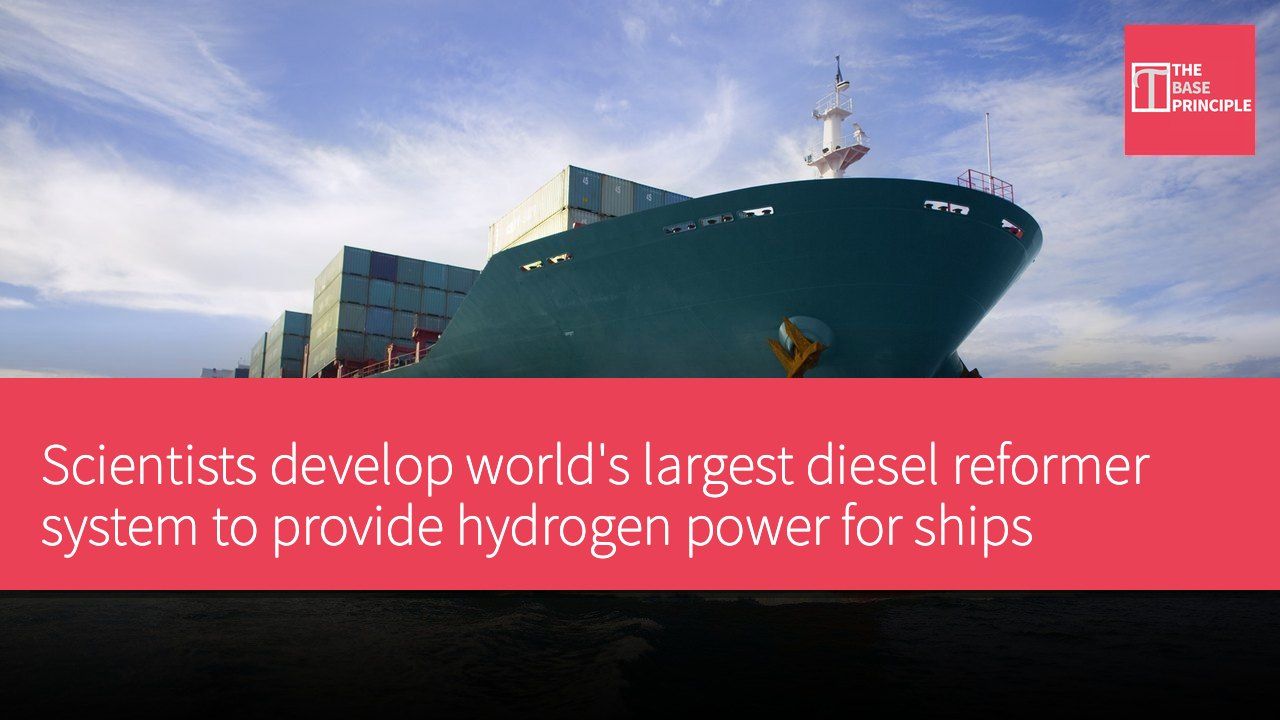
- The diesel reformer is the world's largest fuel cell system, capable of generating 25 kilowatts of power.
- The system can power vessels without the need for additional hydrogen storage tanks.
- This technology has practical value for military operations because it produces less noise and heat.
- The team plans to showcase this technology at the Hydrogen Technology Expo.
[Original article]
Scientists have built a diesel reformer, describing it as the world's largest reformer fuel cell system, which converts fuel into hydrogen-rich gas to generate 25 kilowatts (kW) of electricity for vessels. The technology was developed by the Fraunhofer Institute for Microengineering and Microsystems (IMM) in Mainz, Germany, with funding from Germany's Central Innovation Program for SMEs (ZIM), and is part of the DIMARIT research project, which focuses on fuel cell power generation for maritime applications.
The system enables vessels to generate electricity without the need for additional hydrogen storage tanks. The team plans to showcase the reformer at the Hydrogen Technology Expo in Hamburg from October 20 to 22, 2026.
Potential for Military Applications
According to the team, the technology may also have practical value for military operations because it produces less noise and heat. Researchers stated: "The reformer converts onboard fuel into gas, which after further processing is supplied to the fuel cell."
Hydrogen fuel cells generate electricity through an electrochemical reaction of hydrogen and oxygen, without combustion. Unlike conventional engines, hydrogen fuel cells do not produce electricity by burning fuel. However, supplying them with hydrogen can be challenging, especially on vessels where space is limited. Moreover, hydrogen requires specialized storage tanks, which occupy valuable space and add complexity to onboard power systems.
The team's reformer addresses this problem by converting diesel stored on board into hydrogen-rich gas. The gas must undergo further processing before use in the fuel cell. This allows the fuel cell to generate electricity without separately storing hydrogen. During the project, the team studied how different stages of the conversion process work together and explored how to manage heat to ensure system components operate reliably under varying conditions. Additionally, they are evaluating the possibility of using synthetic diesel fuel in the reformer. This means the system could ultimately run on both conventional diesel and suitable synthetic fuels.
Advantages and Challenges of the Technology
Fraunhofer IMM states that the technology may have application potential in the military sector, as military equipment often needs to provide reliable power in locations with limited conventional power infrastructure. Traditional diesel generators produce significant noise and heat, making military positions easier to detect, while the new diesel reformer fuel cell system offers a quieter alternative. This is because it has fewer moving parts, significantly reducing noise and thermal emissions. The research team elaborated in a press release: "Compared to engine-driven diesel generators, the system requires fewer moving parts, lowering acoustic and thermal signatures."
Potential applications include powering command and surveillance vehicles or field camps.
Fuel availability and equipment weight are also critical for military use. Since diesel is already widely used by the military, converting it into hydrogen-rich gas offers several advantages. The team summarized: "Besides fuel availability, low noise emissions, low heat generation, and light weight are also crucial in this regard." At the expo, Fraunhofer IMM will showcase this technology alongside its methanol reformer, ammonia-to-hydrogen production technology, and carbon dioxide methanation technology.
Item Specification Power output 25 kilowatts (kW)
Impact of New Technology on Military and Maritime Applications
The development of this diesel reformer technology not only enhances the efficiency of power supply for vessels, but may also bring significant advantages in the military field. The noise and heat from traditional generators expose military positions, while this new technology can reduce these risks, providing a more covert power solution. Additionally, using diesel already widely used by the military as fuel can effectively address the challenge of hydrogen supply, which is especially important for military equipment operating in confined spaces. As the technology further matures, more application scenarios may be developed in the future.