
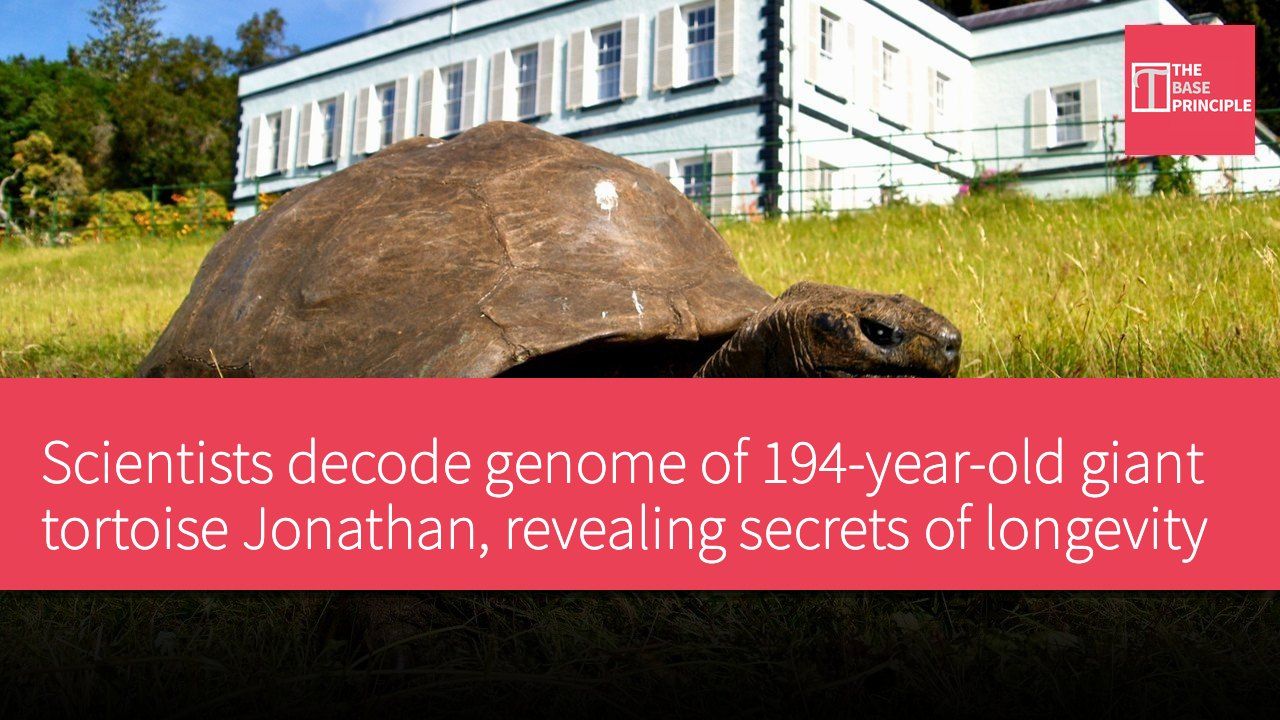
- Jonathan is the world's oldest living land animal, aged approximately 194 years.
- Research found Jonathan carries multiple genetic variants associated with aging.
- Jonathan's genome shows low methylation entropy characteristics linked to longevity.
- Research team cautiously framed conclusions, emphasizing high-fidelity gene transcription may be linked to longevity.
Scientists have completed genome sequencing of Jonathan, an Aldabra giant tortoise estimated to be 194 years old and the world's oldest known living land animal, to explore genetic and epigenetic clues to his extraordinary lifespan. Research conducted by Benjamin Vaisvil and colleagues found that Jonathan carries genetic variants associated with multiple known aging pathways. Aldabra giant tortoises are known for longevity, but Jonathan's age exceeds the typical upper limit for his species by about 100 years.
Earlier analysis placed this upper limit at 93.68 years. Jonathan lives on the island of St. Helena in the South Atlantic.
The research team compared Jonathan with Tank, a 36-year-old captive Aldabra giant tortoise, and built a reference genome based on Tank's DNA. Collecting Jonathan's DNA required careful consideration. Due to concerns for his health and his iconic status on St. Helena, blood draws were not permitted. Researchers instead collected cheek swabs and saliva, coaxing him to open his mouth with food.
Unique features of Jonathan's genome
Jonathan's genome carries variants associated with DNA repair, telomere maintenance, insulin regulation, mitochondrial function, and cancer, the research team reported. Researchers found 770 genes showing signs of positive selection in Jonathan. These genes are primarily concentrated in areas including DNA repair, mitochondrial function, insulin regulation, oxidative stress response, and cardiac muscle contraction. Jonathan shares several genetic variants related to DNA repair, telomere function, insulin regulation, and mitochondrial function with Lonesome George, the Galápagos giant tortoise studied in earlier research.
Additionally, he possesses 287 genetic variants found only in him, including DNA repair genes and a gene associated with telomerase.
Jonathan also carries extra copies of certain genes. One gene, LAMTOR4, helps regulate the mTOR pathway, which the paper describes as playing a key role in human longevity. His perforin gene copy number is 10, while Lonesome George had only 7. Perforin is used by immune cells to kill target cells, and the authors say the extra copies may enhance surveillance against senescent and cancer cells.
Link between methylation entropy and longevity
Vaisvil and colleagues also examined Jonathan's methylome, the overall methylation landscape of his genome. Methylation refers to the addition of tiny methyl chemical tags to DNA, which affects gene expression. Methylation entropy is a hallmark of aging. Over time, random changes in methylation patterns accumulate, leading to increased methylation entropy. Analysis showed that Jonathan has lower methylation entropy in specific gene promoters related to mitochondrial function, RNA processing, and genome repair. The researchers noted that the observed low methylation entropy regions "suggest that high-fidelity transcription of genes in these pathways is crucial for long-lived species."
The research team compared Jonathan with four other Aldabra giant tortoises ranging in age from a 5-year-old juvenile to older adults. Compared to the juvenile, Jonathan showed lower overall methylation. The researchers cautiously framed their conclusions, stating that these findings "suggest" a role for high-fidelity gene transcription in longevity rather than proving it. The study was first published in Science Advances.
Implications of Jonathan's genome research for longevity
Jonathan's genome research reveals potential genetic mechanisms of longevity, particularly genetic variants and methylation patterns associated with aging. These findings not only enhance our understanding of Aldabra giant tortoises but may also provide important clues for longevity research in other species. The study highlights the potential role of high-fidelity gene expression in longevity, which holds significant implications for future aging research and the exploration of healthy aging.