
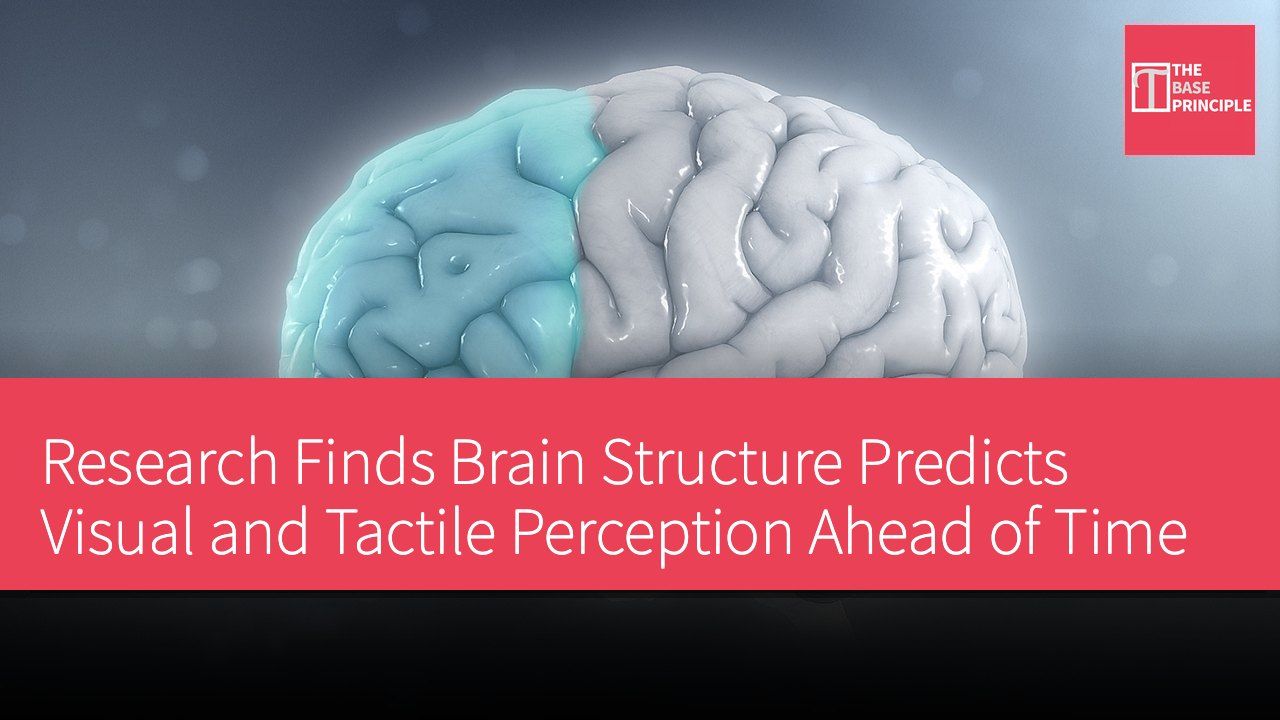
- The study found that the superior colliculus begins to predict visual and tactile stimuli before perception.
- The concept of predictive processing suggests that the brain is continuously preparing for sensory input.
- The research utilized 7 Tesla fMRI to examine superior colliculus activity, achieving a resolution of about 1 millimeter.
- The results challenge traditional neuroscience understandings of prediction, showing that deeper structures are also involved in predictive processing.
Scientists have discovered that a tiny structure in the midbrain begins to predict visual and tactile sensations before they occur, which aligns with the view that the brain does not merely wait for sensory input but anticipates what is about to happen. A new study from MIT and Northeastern University published in Nature Neuroscience suggests that brain regions responsible for processing sensory information also help prepare for these impending stimuli. The superior colliculus, described by researchers to Medical Xpress as "one of the most studied brainstem structures," exhibited distinct activity patterns before subjects saw images or felt physical pressure.
Researchers further explained that this study is rooted in a known concept in neuroscience called predictive processing. The brain is not just passively waiting for input but is continuously predicting and preparing, as "reacting after the fact is costly," the researchers noted.
Research Methods and Participants
Researchers used ultra-high-field 7 Tesla functional magnetic resonance imaging (fMRI) to examine 80 adults. With this technology, they observed activity in the superior colliculus at approximately 1 millimeter resolution. Half of the participants viewed images, while the other half felt mechanical pressure on their left thumb. The researchers told Medical Xpress that these methods were driven by two questions: "We wanted to answer two questions. First, is the human superior colliculus organized as shown in animal studies, with its upper layers focused on vision and its lower layers on touch?"
“Second, how does it respond when a certain sensory stimulus is anticipated?” Before the stimuli, these participants performed a shape-based decision task. The researchers then compared changes occurring between the two activity states. Visual stimuli generated more activity in the upper layers of the superior colliculus, while tactile stimuli triggered more activity at deeper levels. "Importantly, even before the stimuli arrived, when people were merely anticipating an image or a touch, this layer-specific pattern was already evident," according to Medical Xpress.
Neural Mechanisms of Predictive Processing
The study indicated that the nature of the anticipated sensory experience resulted in different activity patterns in the superior colliculus. Researchers employed machine learning to determine whether brain activity patterns could distinguish between visual and tactile experiences. They observed similar patterns during both anticipated and actual stimuli, corroborating initial brain scan findings. The researchers also detected these predictive responses in two sensory processing areas of the thalamus, indicating that anticipation involves multiple structures located beneath the cerebral cortex. This research challenges traditional understandings in neuroscience. Typically, prediction is viewed as a "higher-order function occurring in the cortex," according to Medical Xpress.
However, the study suggests that deeper brain structures that relay information to the cortex are part of a broader network preparing for incoming inputs. The researchers acknowledged some limitations, such as the lack of eye movement tracking during the scanning process and uncertainty. Some observed activities may simply be general expectations related to the experiment itself. Nevertheless, these findings indicate that the superior colliculus is involved in predictive processing rather than merely reacting to incoming information. "In summary, this study suggests that subcortical nuclei are not passive recipients of sensory input, but they both respond to sensory input from the external world and engage in prediction," the researchers concluded.
The researchers summarized in the study.
The Role of the Superior Colliculus in Perceptual Prediction
This study reveals the active role of the superior colliculus in the perceptual process, overturning the traditional notion that sensory input is processed solely by the cortex. The research indicates that the superior colliculus not only responds to impending stimuli but also participates in prediction, which may have significant implications for understanding how the brain processes sensory information. This finding could have far-reaching effects not only in the field of neuroscience but may also inspire future applications in artificial intelligence and machine learning, particularly in simulating human perceptual processes.