
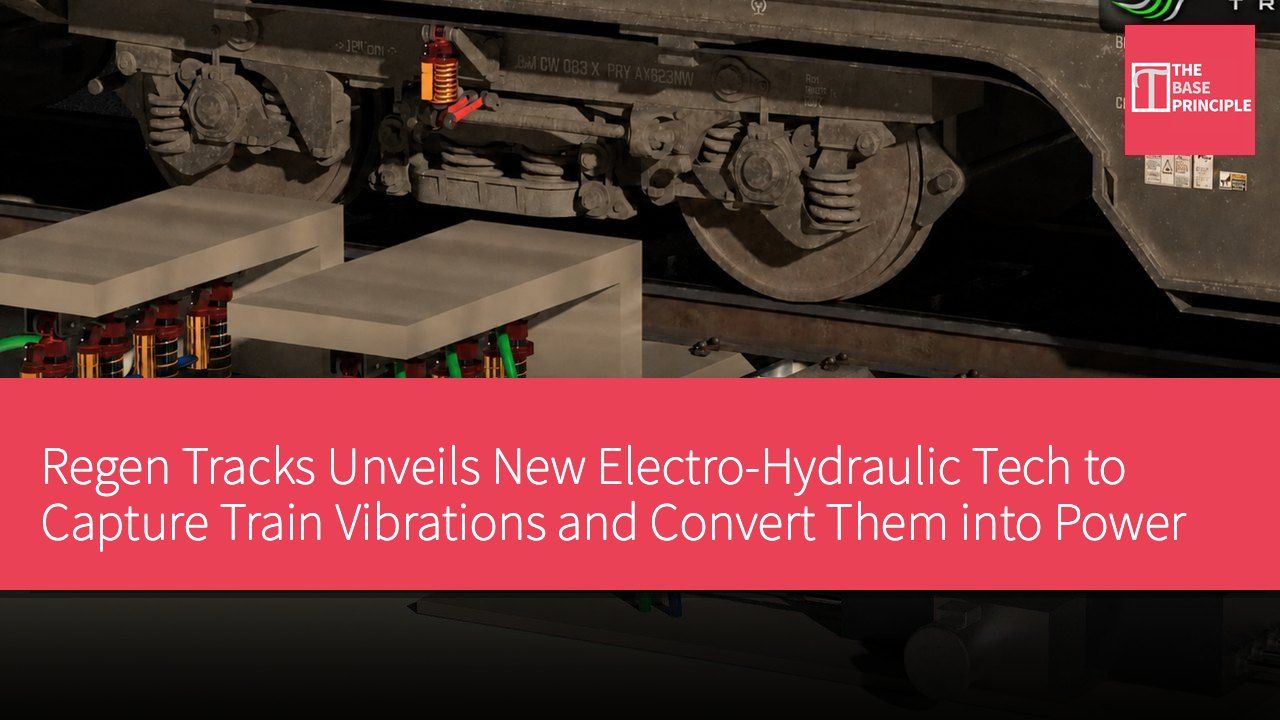
- Regen Tracks introduces new electro-hydraulic technology to convert train vibrations into power.
- The technology can continuously harvest energy from rail vibrations and dynamic loads of trains.
- Plans to transform isolated transport lines into a distributed power grid to meet energy needs.
- Challenges include the need for new power line construction to connect to the high-voltage grid.
The US company Regen Tracks has recently launched a new electro-hydraulic technology aimed at converting the mechanical energy generated by heavy freight trains into usable power. This system is capable of capturing the raw mechanical force produced by passing trains and converting it directly into electricity. Each train's movement generates significant dynamic weight, causing the rails to bend. Traditional energy recovery systems mainly rely on regenerative braking technology, capturing energy only when trains decelerate, but Regen Tracks takes a different approach. Its platform can continuously harvest energy from rail vibrations, structural bending, and the dynamic loads created by trains traveling at high speeds.
A spokesperson for Regen Tracks stated, "We are capturing the kinetic energy produced by the movement of trains, freight cars, and vehicles, and converting it into useful power output through an electro-hydraulic system designed for multiple applications." The technology leverages the continuous vertical motion, dynamic vibrations, and force fluctuations generated by heavy trains passing over the tracks. Through a precisely engineered hydraulic system, the platform can absorb these repeated compression and rebound cycles without interfering with train operations, converting the collected mechanical kinetic energy into power, thereby establishing a scalable distributed energy source for heavy rail environments.
Applications and Potential of the Technology
With the growing demand for energy, the launch of this technology is well-timed. The rising need for AI infrastructure, with high-density GPU clusters and cooling systems, requires a substantial and uninterrupted supply of power. The plan aims to transform isolated transport lines into a distributed power grid by embedding kinetic energy harvesters along thousands of miles of active freight corridors, enabling decentralized power generation. These corridors are located near industrial areas, logistics hubs, and potential data center sites.
The technology can capture and reuse transport energy on heavy rail routes, offering a variety of applications. According to the official website, the main uses include providing power for local rail infrastructure and onboard auxiliary systems, as well as supplying distributed energy to the broader grid. It may also enable localized energy recovery along transport corridors and can be scaled to directly supply high-demand industrial facilities and data centers. The company is currently prioritizing the continuous improvement of prototypes, engineering validation, and strategic industry alignment, with plans to integrate the extensive freight rail network into a larger distributed energy ecosystem before wider commercial deployment.
Challenges Facing the Technology
However, the technology also faces several challenges. For example, extending tail lines to thousands of miles of rural areas and connecting collectors alongside the tracks to the high-voltage grid or remote users (such as data centers) typically requires the construction of new power lines, which could offset the economic value of the generated electricity. The deployment of this technology in industrial corridors could generate local energy to supply neighboring logistics hubs, rail infrastructure, and high-demand data centers. As part of its brand promotion focused on regenerative rail technology, the company plans to collaborate with rail operators, engineering firms, and transportation stakeholders to help shape the future of distributed energy recovery and smart transportation infrastructure.
For instance, Perpetuum has long utilized vibration-based electromagnetic collectors installed on train axles and tracks. These miniature collectors do not generate large-scale grid power but continuously produce low-power electricity to power wireless condition monitoring sensors, thereby eliminating the need to replace batteries in remote areas.
The Future and Challenges of Distributed Energy
Regen Tracks' new technology not only effectively captures the energy produced by train operations but also provides a scalable distributed energy source for heavy rail environments. As the demand for energy increases, particularly in the operation of AI and data centers, the introduction of this technology is particularly significant. However, the implementation of the technology also faces challenges, including how to effectively connect collectors in remote areas to the high-voltage grid, which may affect its economic viability. Future success will depend on collaboration with rail operators and engineering companies to overcome these challenges and drive the development of distributed energy.