
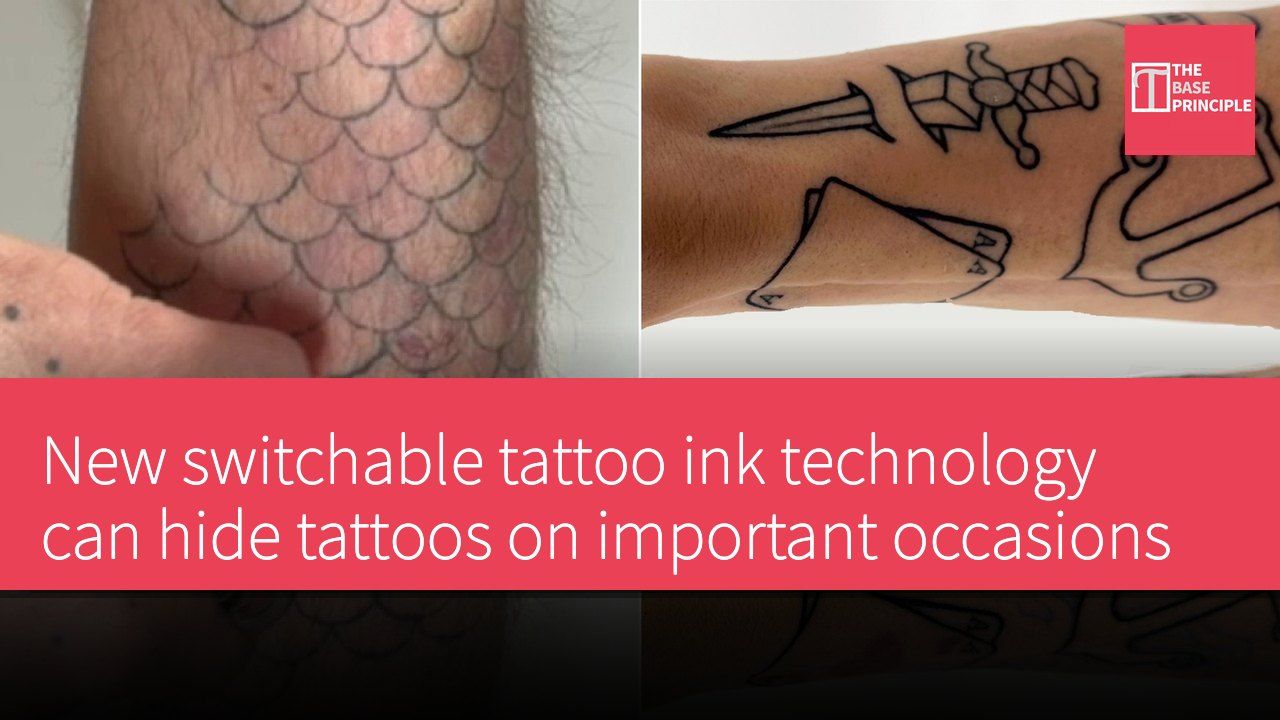
- New PhotoTat tattoo ink changes color with light source, hiding tattoos.
- PhotoTat ink is made from dyes and a material similar to organic glass.
- This technology could improve medical tattoo issues for cancer patients.
- PhotoTat is not yet commercialized; safety remains to be confirmed.
Engineers have designed a series of new multicolored tattoo inks that change with the switching of different light sources, a technology that could in the future allow people to hide tattoos during important business meetings. These inks, called PhotoTat, are described in research published in the Cell Press journal Matter & Light. Researchers say users can even use a simple laser pointer to doodle on their own skin. "Tattooing is a very old technology that remains underutilized as a platform for today's technology," said lead author Carson Bruns of the University of Colorado Boulder.
PhotoTat ink works on the basis of dyes and a material similar to organic glass, a material common in many medical technologies on the market today, including dermal fillers. The team used poly(methyl methacrylate) (PMMA), which forms tiny particles that look as if made of glass. Researchers then embedded various color-changing dyes into the particles. "By mixing these primary colors, we can generate full-color images," Bruns said. These dyes are normally completely invisible to the human eye. Under ultraviolet (UV) light, they change color within seconds, turning into vivid blue, magenta, or yellow.
How PhotoTat ink works
The color fades gradually over several hours, but switches off faster under bright LED light.
"PhotoTat is like a switch. When you turn it on with UV light, you can turn it off again when you go to grandma's house," Bruns said. Beyond cosmetic uses, Bruns envisions practical applications. Many people undergoing cancer radiotherapy must receive small tattoos on their bodies to help doctors guide radiation beams. These markers can cause psychological and physical harm. "These markers are not aesthetically pleasing and become a permanent reminder of a traumatic experience," Bruns said. He added: "With PhotoTat, we can turn an involuntary medical tattoo into something only the doctor can see when you walk into the clinic, and invisible the rest of the time."
Future application potential
Currently, PhotoTat is not available at any tattoo shop. Bruns and his colleagues hope to continue refining the design over the coming years, eventually making these inks available to body art enthusiasts nationwide. Bruns has not determined whether these inks are safe for the human body, but he has already tested them on himself. He has a black fish-scale outline on his leg that he filled with PhotoTat ink. Under the right light source, Bruns can turn those scales red, orange, blue, and more — almost like "magic mermaid scales." For now, PhotoTat remains unavailable to the public, and its safety has not been established.
Bruns sees potential uses ranging from temporary designs and skin doodling to medical markers. This research is a passion project for Bruns, who has many tattoos himself, including a green lion on his arm. "I love body art because it's so personal," he said. He also views this work as a pushback against social attitudes. "There's a stigma against body art in the scientific community and in many cultures," Bruns said. "I'm proud to be able to fight that perception."
Social impact of PhotoTat technology
PhotoTat ink technology not only offers the convenience of hiding tattoos, but could also change how people view tattoos. Traditionally, tattoos have been seen as permanent body art, but the emergence of this technology provides a new option for those who wish to hide tattoos on specific occasions. In addition, for patients who need medical markers, this technology has the potential to reduce psychological trauma and improve their quality of life. As social acceptance of body art increases, PhotoTat's applications could drive broader cultural change.