
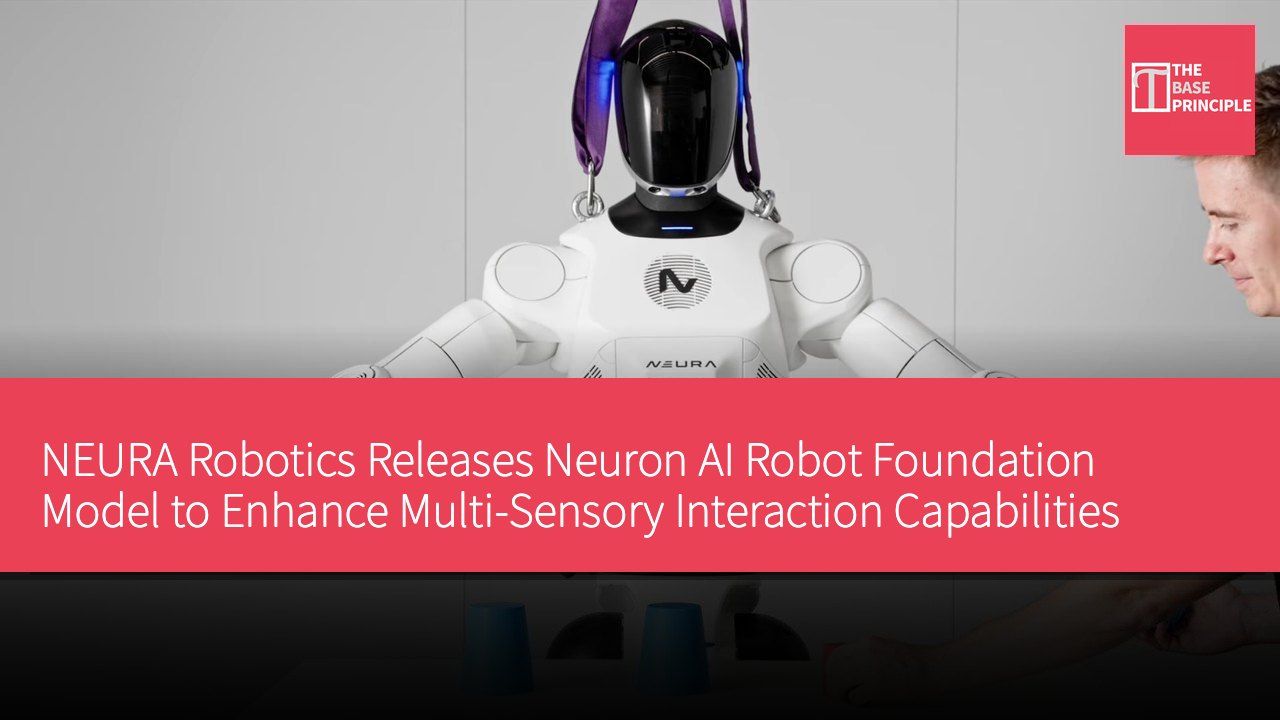
- Neuron AI integrates multiple sensory inputs to enhance robot interaction capabilities.
- The model supports multiple robot platforms, adapting to various application needs.
- NEURA plans to demonstrate the automation process of Neuron AI, emphasizing context retention.
- The training process combines real-world experiences with simulated variations.
NEURA Robotics has launched Neuron AI, a foundational robot model designed to help robots understand and interact with their environment using multiple sensory inputs. The system combines visual perception, touch, sound, language, robot state information, and memory to support the execution of various tasks. The German company plans to deploy the model across different robot platforms, allowing customers to adjust its functionalities according to specific application needs. NEURA also intends to showcase this technology through its humanoid robots, illustrating its concept of developing adaptive robotic systems to respond to real-world environments.
Features and Design of Neuron AI
Neuron AI is designed to integrate visual perception, touch, sound, language, and memory into a foundational robot model aimed at helping robots perform complex tasks. The German robotics company describes the system as a perception-language-action (PLA) model capable of processing sensory information and translating it into physical actions. The architecture is intended to support multiple robot platforms, allowing skills to adapt to various applications without needing to develop separately for each machine. Neuron AI integrates various sources of information, including 3D vision, tactile and force measurements, audio, robot state data, and language.
According to NEURA, the model aligns these inputs over time, helping robots interpret their surroundings and maintain context throughout the execution of tasks.
The inclusion of tactile and force data may assist robots in determining whether physical interactions achieve the desired outcomes. For example, variations in contact force can indicate whether a screw is correctly installed, while audio cues can help identify if a mechanical lock has engaged properly. These examples illustrate the expected capabilities rather than independently verified performance results. Memory is another component of the architecture. NEURA notes that the system can retain information about past events and objects that have moved out of sight, which may help robots coordinate actions across multiple stages of a task. This approach combines perception, contextual information, and actions within a unified model.
However, the company has not released benchmark comparisons to demonstrate the performance improvements of memory or additional sensory inputs over visual systems.
Training Infrastructure and Partnerships
NEURA states that Neuron AI supports five robot implementations, including the 4NE1 Gen 3 and Gen 4 humanoid robots, a wheeled 4NE1 platform, and two additional dual-arm robot platforms. This approach aims to transfer learned capabilities across different hardware configurations while allowing customers to tailor skills to their specific needs. The company's product information indicates that reasoning runs locally on the robot without requiring cloud connectivity. On-device processing enables robots to execute learned skills without continuous access to remote computing infrastructure.
The training process for Neuron AI combines real-world robotic experiences, simulated variations, and human demonstrations recorded using sensor-equipped suits.
NEURA's training infrastructure, known as NEURA Gyms, supports data collection, skill training, and benchmarking. The company has also established industrial data partnerships with Schaeffler and Bosch. NEURA plans to leverage its Neuraverse platform to help customers fine-tune robotic capabilities for specific workflows and distribute these capabilities among multiple robots. Customers can keep their trained skills private or choose to share capabilities and deployment data with a broader ecosystem.
The company views "skill time" as a key progress indicator, which refers to the time required to teach robots to perform tasks and achieve reliable execution. However, the announcement did not include measurements for this metric.
NEURA plans to showcase Neuron AI at NVIDIA GTC Berlin from October 20 to 22, with an anticipated 11-minute automation process demonstration that includes sorting laundry, loading a washing machine, turning the washing machine off and on, unloading clothes, and transferring laundry to a dryer without human intervention. This demonstration aims to illustrate how the system coordinates multiple actions while maintaining context throughout the task execution process. The announced process involves laundry handling rather than a complete washing and drying cycle.
Item Specifications Supported Robot Implementations 4NE1 Gen 3, 4NE1 Gen 4, humanoid robots, wheeled 4NE1 platform, dual-arm robot platforms Reasoning Processing Runs locally Training Infrastructure NEURA Gyms
How Neuron AI is Changing the Future of Robotics Technology
NEURA Robotics' Neuron AI model represents a significant advancement in robotics technology, enabling robots to better understand and adapt to their environment through the integration of multiple sensory inputs. This multi-sensory interaction not only enhances the execution capabilities of robots but also allows them to maintain context in more complex tasks, which is crucial for future automation applications. Additionally, NEURA's training infrastructure and collaborations with industrial partners will further promote the development and application of this technology, bringing new opportunities and challenges to the robotics industry.