
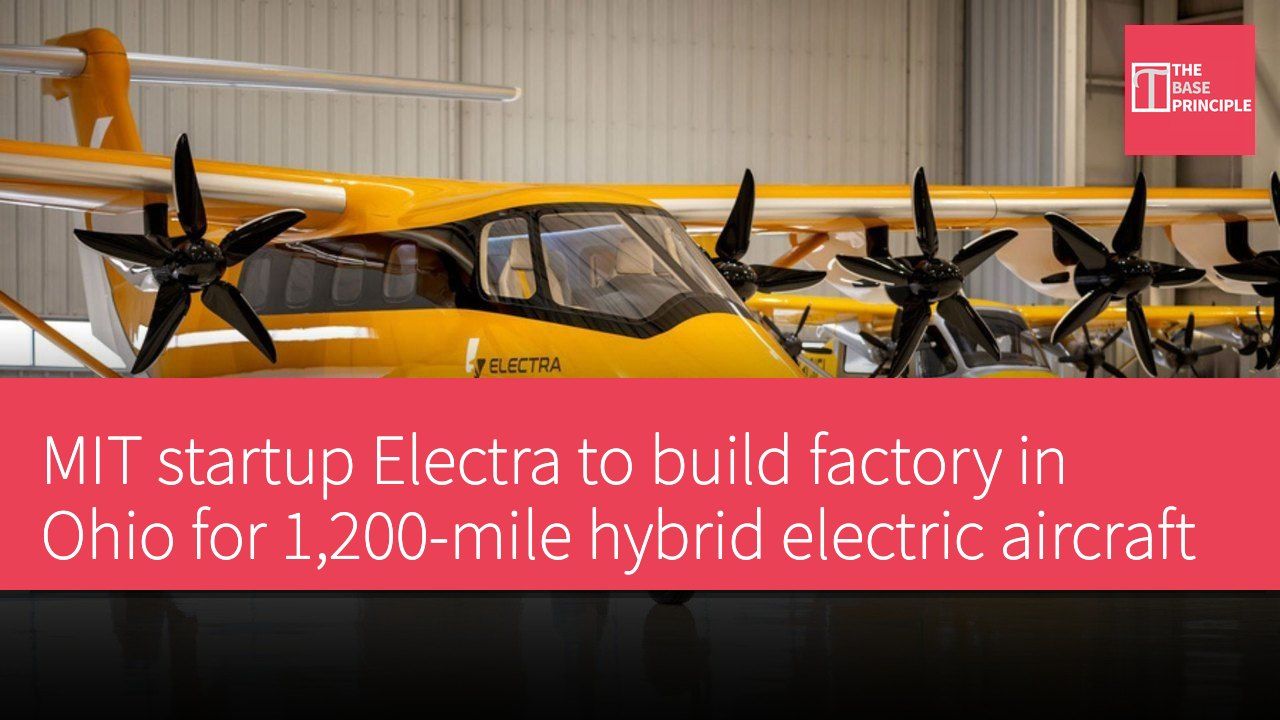
- Electra will establish a new facility in Ohio to produce hybrid aircraft.
- The aircraft has a range of 1,200 miles and is designed for short runway takeoffs and landings.
- Electra's design overcomes traditional air transport barriers, offering convenient service.
- The new facility is expected to create nearly 2,000 jobs, boosting the local economy.
In 1903, two brothers from Dayton, Ohio, proved that flying was no longer a fantasy. More than a century later, a quiet revolution in regional transportation is taking root on the same ground. Aerospace startup Electra, which originated from a 2017 classroom project at the Massachusetts Institute of Technology, is preparing to manufacture a new hybrid aircraft in Springfield, Ohio. The project has secured up to US$850 million (approximately HK$6.63 billion at an exchange rate of 1:7.8), and the newly built production facility spans 96 acres, expected to create nearly 2,000 jobs in the area.
This hybrid aircraft is specifically designed for short runway operations, equipped with eight wing-mounted electric motors and powered by a small, highly efficient gas-driven generator.
Design Features of the Hybrid Aircraft
The fixed-wing aircraft has a range of 1,200 miles and a cruising speed of about 200 miles per hour. Its extremely low runway requirements allow it to operate from unconventional locations such as soccer fields, parking lots, and barges, aiming to provide cleaner and more direct regional connectivity to communities beyond major airport hubs. Chris Courtin, Electra's Director of Technology Development, stated, "Helping people travel within a 50 to 250-mile range is where this technology shines. For many journeys, using this mode of transport is more appealing than driving or flying commercially."
He added that there is a significant number of people traveling within this distance range, and the existing road and air transport systems have many barriers, making this technology highly beneficial for them.
Electra's Production Plans and Applications
The aircraft's eight motors enable it to take off and land within a space roughly the length of a soccer field. The company has opted for an electric short takeoff and landing (eSTOL) design rather than the currently popular electric vertical takeoff and landing (eVTOL) concept, aiming to reimagine regional air transport. Driving 150 miles often means dealing with heavy traffic; taking a commercial flight for the same distance requires driving to a major airport, going through cumbersome security checks, and facing potential flight delays. Electra's design overcomes both of these obstacles.
The company's hybrid system combines a micro-high-efficiency gas generator at the front of the aircraft with batteries stored under the floor to power the eight electric motors on the wings.
This configuration creates additional airflow above the wings, resulting in a physical phenomenon known as "blown lift," allowing the aircraft to take off and land in very tight spaces. Because the batteries provide extra thrust for takeoff, the main engine only needs to maintain steady flight, which not only saves fuel but also gives the aircraft a longer range than purely electric planes. Notably, due to the power being distributed across eight smaller propellers, the aircraft operates much more quietly than other planes or helicopters. This low-noise characteristic makes it more cost-effective to operate and suitable for noise-sensitive urban and suburban areas.
After completing tests on a smaller version at MIT and officially founding the company in 2019, Electra has validated its technology concept with its EL2 two-seat demonstrator aircraft, which has conducted over 200 flight tests since 2023. The company is now leveraging new investment to scale up production for a nine-seat commercial model in Springfield and Clark County. Electra will break ground on a 96-acre production facility next year, with an initial target of producing 400 nine-seat aircraft annually, and plans to gradually increase the annual output to 800.
In addition to shuttle flights to and from major hubs, the company also hopes to make use of spaces roughly the size of a soccer field for low-cost passenger transport, cargo delivery, military logistics, and humanitarian aid, effectively replacing the traditional airport operating model.
Item Specifications Power System Hybrid (small gas generator + batteries) Number of Electric Motors Eight (distributed on wings) Range 1,200 miles Cruising Speed 200 miles per hour Passenger Capacity Nine Takeoff and Landing Distance Approximately soccer field length Production Facility 96 acres (Springfield, Ohio) Initial Annual Production 400 aircraft (target to increase to 800) Intended Use 50 to 250-mile regional transport, passenger, cargo, military logistics, humanitarian aid
Electra's Impact on Regional Air Transport
Electra's new hybrid aircraft aims to address the shortcomings of the existing air transport system, particularly in short-haul travel. With its ultra-short takeoff and landing capabilities, the aircraft can operate from unconventional sites, providing more direct connectivity to communities, which is especially important in congested areas. Furthermore, Electra's technology not only enhances transport efficiency but also reduces operational costs and noise, which has positive implications for environmental protection and urban planning. As the new facility is established, the local economy will also benefit from the creation of new jobs.