
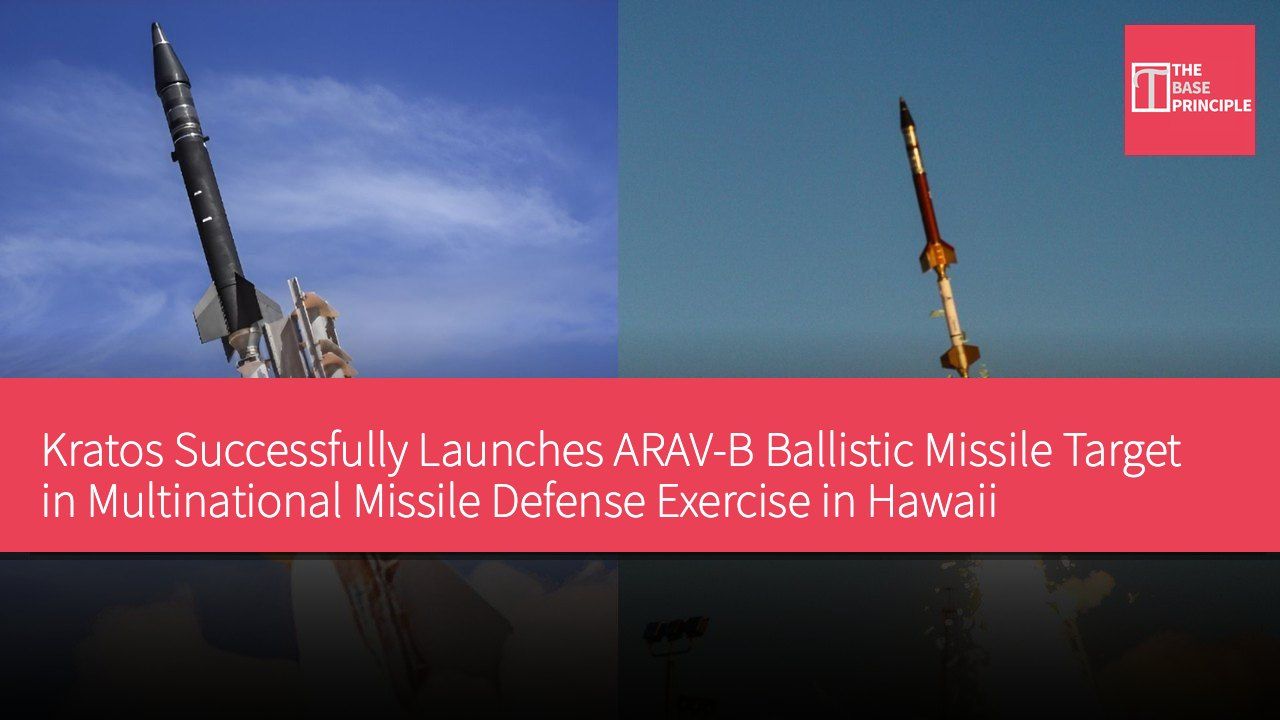
- Kratos successfully launched the ARAV-B ballistic missile target in support of a multinational exercise.
- The ARAV-B target is designed to simulate physical threats and has completed 43 missions.
- The exercise tested how allied forces share tactical information to enhance missile defense capabilities.
- Kratos is extending its modular approach to other target configurations, supporting hypersonic testing.
Kratos has successfully launched its ARAV-B ballistic missile target as part of a multinational missile defense exercise around Hawaii. The target was launched from the Pacific Missile Range Facility on August 6 in support of the "Pacific Dragon 2026" exercise led by the U.S. Third Fleet. The exercise brought together the U.S. military and partners from Australia, Chile, Italy, Japan, South Korea, and Spain, focusing on coordinating missile defense and tactical data sharing.
Design and Functionality of the ARAV-B Target
The ARAV-B target is designed to simulate various threats, providing missile defense teams with physical targets that radar and combat systems can track within the flight environment, which simulations cannot replicate. The system has completed 43 successful target missions to date, supporting the Naval Surface Warfare Center, White Sands Division, and the Missile Defense Agency. The ARAV-B uses two stages and spin stabilization during flight, with its upper stage powered by the Kratos commercially developed Oriole rocket engine. This design is part of a configurable ballistic missile target family.
Kratos offers Type C and Type TTO variants alongside the Type B target. Each configuration can produce different flight characteristics for defense testing. Engineers can use these differences to recreate specific threat profiles in missile defense trials. Additionally, these target families can support missions beyond traditional ballistic missile testing. Kratos states that its system can be adapted for demanding hypersonic flight testing.
Tactical Information Sharing in the Exercise
One of the key systems in the "Pacific Dragon" exercise was aboard the USS Jack H. Lucas destroyer. The destroyer is equipped with the Aegis Baseline 10 combat system and AN/SPY-6 radar, which require representative targets to verify their performance against incoming threats. Live targets expose tracking and interception systems to conditions that cannot be fully replicated in laboratory tests. Kratos Defense and Rocket Support Services division President Dave Carter directly linked the launch to this testing need, stating that Kratos designed the ARAV-B to provide cost-effective targets representing real threats, specifically mentioning the Baseline
10 system and SPY-6 radar on the destroyer.
The exercise also tested how allied forces share tactical information during missile defense operations. This is particularly important when multiple ships and sensors must work together to build a comprehensive picture of incoming threats. The "Pacific Dragon" exercise took place from August 6 to August 15 in the waters around the Hawaiian Islands, thus combining actual target activity with a broader multinational defense scenario.
Kratos is applying the same modular approach to other target configurations. Its three-stage TTO device uses Terrier, Terrier, and Oriole rocket stages. The company states that its proven target systems can support hypersonic tests exceeding Mach 10, with these missions potentially involving low-altitude flight trajectories and longer flight durations. The Oriole engine also ties the target program to Kratos' wider rocket product portfolio, including the larger Zeus rocket series and the Erinyes hypersonic test vehicle.
Kratos CEO Eric DeMarco stated that the investment is hardware-focused rather than developing concepts. He said the company uses internal funds to accelerate the transformation of defense technology into practical systems. This approach also provides missile defense developers with targets based on commercially developed propulsion technology, reducing the need to create new target architectures for each test scenario. "Pacific Dragon" provides a demanding operational environment for these systems, and the ARAV-B launch adds a real ballistic target to promote the coordinated operation of allied missile defense systems.
ARAV-B's Contribution to Missile Defense Exercises
The successful launch of the ARAV-B ballistic missile target demonstrates Kratos' innovation in the field of missile defense. By providing targets that simulate physical threats, ARAV-B enables multinational partners to conduct more realistic tests during exercises, thereby enhancing the reliability of their missile defense systems. Furthermore, the emphasis on tactical information sharing in the exercise underscores the importance of multinational collaboration in modern warfare, which has profound implications for future defense strategies.