
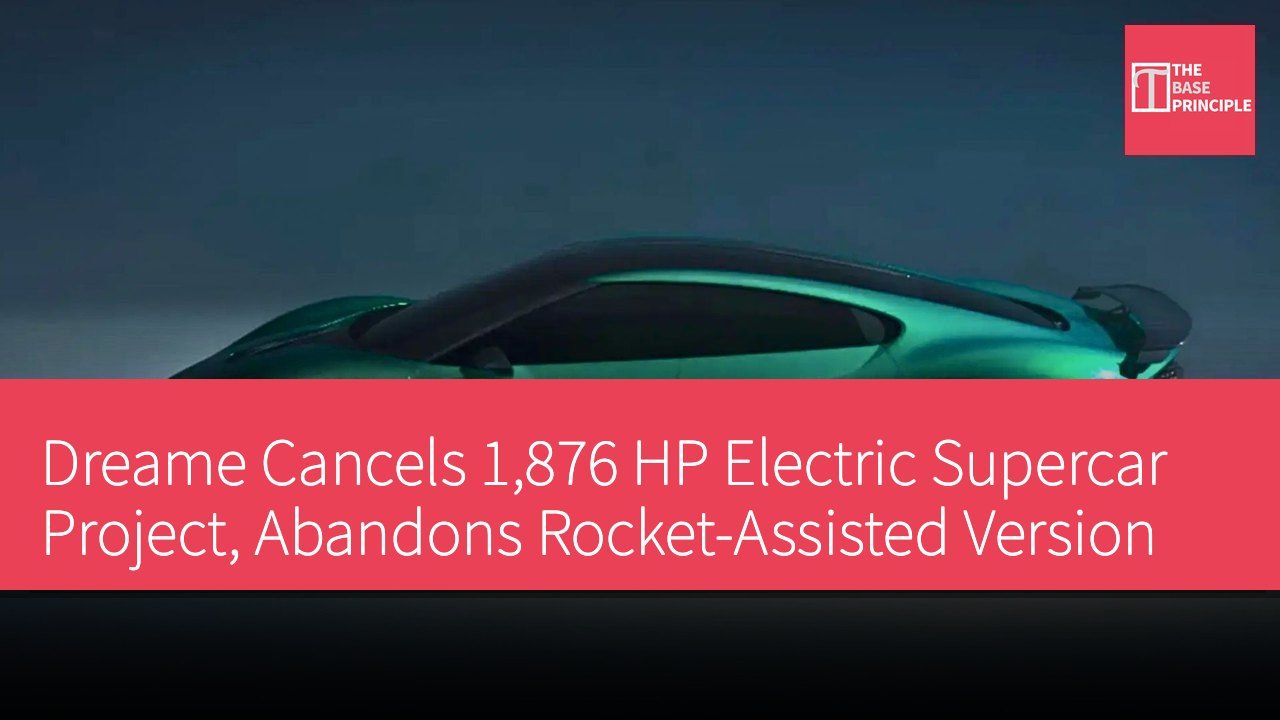
- Dreame has announced the cancellation of its electric supercar project, marking a dramatic reversal.
- The company had showcased a rocket-boosted version of the electric supercar but faced practical obstacles.
- Dreame has decided to exit the luxury electric vehicle business, citing reasons including fierce competition.
- The electric vehicle industry attracts non-traditional companies, but success comes with challenges.
Dreame's brief foray into the automotive industry has come to an end. The Chinese company, known for its robotic vacuum cleaners and other smart appliances, has reportedly canceled its electric supercar project, including the rocket-boosted version unveiled just months ago. The company had previously showcased an electric supercar inspired by Bugatti, boasting 1,876 horsepower, and had even planned to develop a luxury SUV. Now, the situation has taken a dramatic turn. According to Electrek, the related automotive business plans have been shelved.
Dreame first announced its automotive business plans in 2025, and later unveiled the Nebula NEXT 01 concept car at CES 2026. This four-motor electric supercar claimed to deliver 1,876 horsepower, with Dreame initially stating that the 0 to 62 mph acceleration time would be around 1.8 seconds. Subsequently, the company proposed a more ambitious version during a virtual event in San Francisco, showcasing the "Jet Edition" equipped with rocket boosters, claiming that the solid-fuel rocket booster could accelerate the car from 0 to 62 mph in 0.9 seconds.
The concept was based on a real engineering idea: traditional cars are ultimately limited by tire grip, and additional wheel power may not translate into faster acceleration. Rocket thrust, being independent of tire grip, could theoretically bypass this limitation. However, Dreame's approach faced significant practical obstacles, and the entire project was canceled before reaching production.
Dreame Decides to Exit Electric Vehicle Business
Chinese media reports indicate that Dreame's automotive division, internally known as the Star Project, expanded rapidly, employing nearly 1,000 people at its peak. The company later conducted layoffs, with the remaining team reportedly reduced to handling project closure, supplier settlements, and company deregistration. Reuters cited that Dreame has exited the luxury electric vehicle business due to fierce competition, lengthy development and production cycles, and the massive ongoing investment required for mass-producing cars. Dreame stated that the technologies and research assets developed during the project could be integrated into other business areas, which currently include smart home products, outdoor technology, smart mobility, and embodied AI.
The cancellation of the project also casts a new light on Dreame's previous high-profile car showcases. Reports citing former employees suggest that some of the exhibited vehicles were far from reaching the level of a producible prototype. These claims remain allegations and have not been independently verified, but they provide context for the project's rapid unraveling. What is certain is that Dreame never advanced its electric vehicles to the stage of large-scale production, nor did it make the heavy asset production investments typical of a car manufacturer. Reuters reported that the termination of the project is not expected to have a significant impact on the company's financial status.
Challenges and Opportunities in the Electric Vehicle Industry
Dreame's pivot serves as a reminder to the industry that the electric vehicle sector holds a rare allure for companies outside the traditional automotive realm: the electric powertrain has fewer moving parts than internal combustion engines, and advancements in batteries, motors, software, and contract manufacturing have lowered some entry barriers. An increasing number of companies with expertise in electronics, software, robotics, or consumer technology are considering whether they can enter the automotive market. While a few have achieved success, many more have discovered that designing a striking concept and mass-producing safe and reliable vehicles are two entirely different challenges. Dreame's automotive journey lasted about a year, from promising a Bugatti-inspired 1,876 horsepower electric supercar to proposing a rocket-boosted version, and ultimately abandoning the car-making plan altogether.
Item Specifications Concept Car Model Nebula NEXT 01 Motor Configuration Four motors (all-wheel drive) Maximum Horsepower 1,876 HP 0–62 mph Acceleration (Standard Edition) Approximately 1.8 seconds 0–62 mph Acceleration (Jet Edition Rocket-Boosted Version) 0.9 seconds Jet Edition Propulsion Method Solid-fuel rocket booster Project Internal Name Star Project Peak Employee Count Nearly 1,000 people First Announcement Time 2025 CES Debut Time CES 2026 Jet Edition Launch Location San Francisco
Market Lessons from Dreame's Exit from Electric Vehicles
Dreame's electric vehicle plans, while initially ambitious, ultimately succumbed to competitive pressures and resource constraints. This highlights the dual nature of the electric vehicle market's appeal and challenges for newcomers. Although advancements in electric powertrain technology have lowered entry barriers, the gap between design and production often prevents many companies from realizing their goals. Dreame's experience serves as a reminder to other companies that they must thoroughly assess their technical capabilities and the competitive landscape before entering the automotive market.