
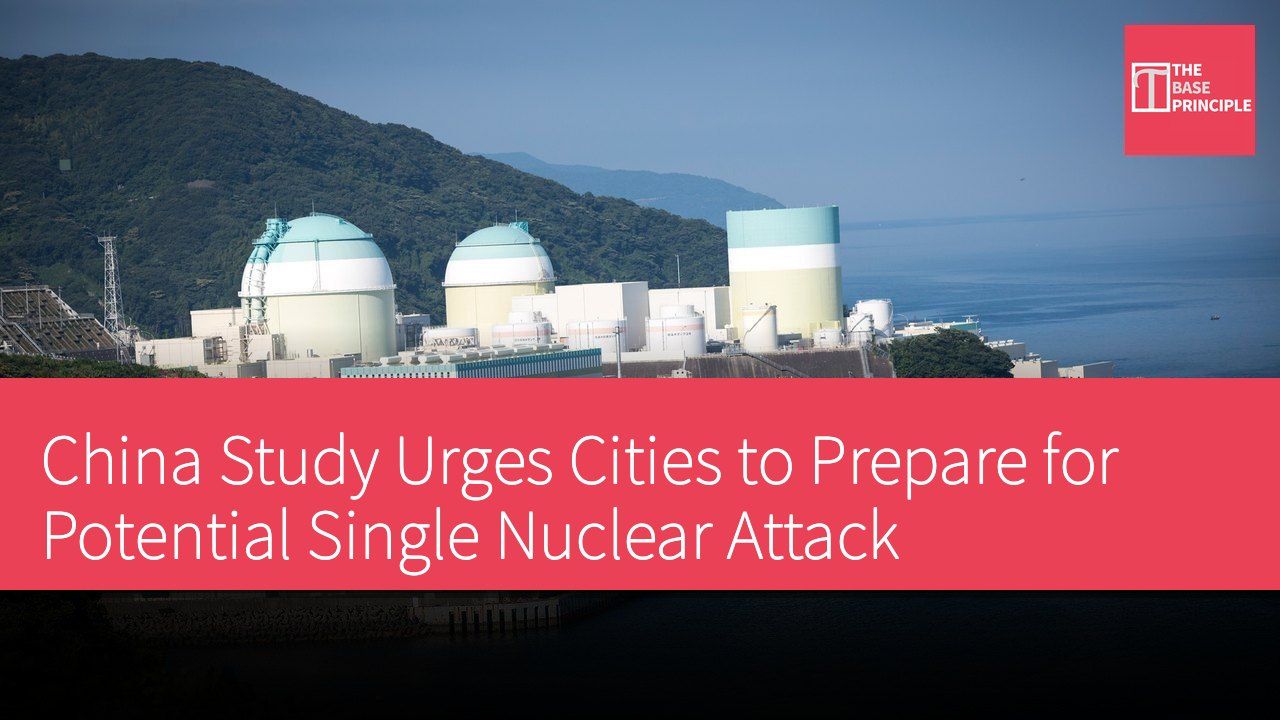
- Chinese cities should prepare for the possibility of a nuclear attack.
- Small nuclear-armed states may launch nuclear terror attacks.
- Japan's non-participation in the Treaty on the Prohibition of Nuclear Weapons raises concerns.
- China has established over 30 emergency rescue bases for nuclear attack casualties.
According to a new study by a medical team from the People's Liberation Army of China, Chinese cities should prepare for the possibility of a nuclear attack. The report specifically highlights Japan as sending a "major danger signal" to the world. The study assesses the likelihood of a large-scale global nuclear war as relatively low but warns that smaller, more localized nuclear incidents remain a real possibility. The research comes from the PLA Rocket Force Characteristic Medical Center and was published in the Chinese Journal of Radiological Health last Friday.
The Threat of Small Nuclear States
The researchers point out that small or medium-sized nuclear-armed states, or states with the potential to become nuclear-armed, may still launch a nuclear terror attack. Such an attack could target key cities in neighboring countries or major powers and may be driven by geopolitical or religious conflicts.
The researchers specifically mention Japan, noting that Tokyo has not joined the Treaty on the Prohibition of Nuclear Weapons, an international agreement passed in 2017 that bans the possession of nuclear weapons. The study also mentions that Japan is reportedly considering changing its long-standing "three non-nuclear principles," under which Japan has committed to not possessing, producing, or allowing nuclear weapons into the country.
The study's concerns about Japan echo a separate official Chinese report released in January 2026, which claimed that Japan might be secretly producing weapons-grade uranium. The report also noted that Japan has the technical, industrial, and economic capacity to relatively quickly develop nuclear weapons.
China's Emergency Preparedness
In addition to assessing broader geopolitical risks, the PLA study also simulated a scenario involving a low-yield nuclear weapon strike on a major Chinese city. The researchers used historical data from the 1945 Hiroshima bombing, combined with broader international simulations. These data helped identify the medical response challenges posed by such an event, including hazardous ground conditions, mass casualties, and complex combined injuries among survivors.
According to the study, China has established more than 30 emergency rescue bases specifically for handling nuclear attack casualties. These existing infrastructures form the backdrop against which the researchers assess the current state of the national medical response system.
The overall framework of the study distinguishes between two very different threats. One is the relatively unlikely scenario of a large-scale nuclear war between major powers, and the other is the relatively more credible scenario of a smaller-scale nuclear attack, which could be carried out by state or non-state actors against a single city. The researchers believe that this distinction is crucial for how medical and emergency response systems are designed and resourced in the future.
The Real Threat of Small Nuclear Attacks and Response Measures
As geopolitical tensions rise, the risk of small nuclear attacks is increasingly being taken seriously. The study points out that while the likelihood of a large-scale nuclear war is low, small nuclear incidents remain a real threat. Particularly, Japan's non-participation in the Treaty on the Prohibition of Nuclear Weapons and the potential for a change in its nuclear policy have raised concerns among neighboring countries. China's emergency preparedness, including the establishment of nuclear attack emergency rescue bases, demonstrates the importance attached to potential threats and emphasizes the importance of the national medical response capability in the face of a nuclear attack.