
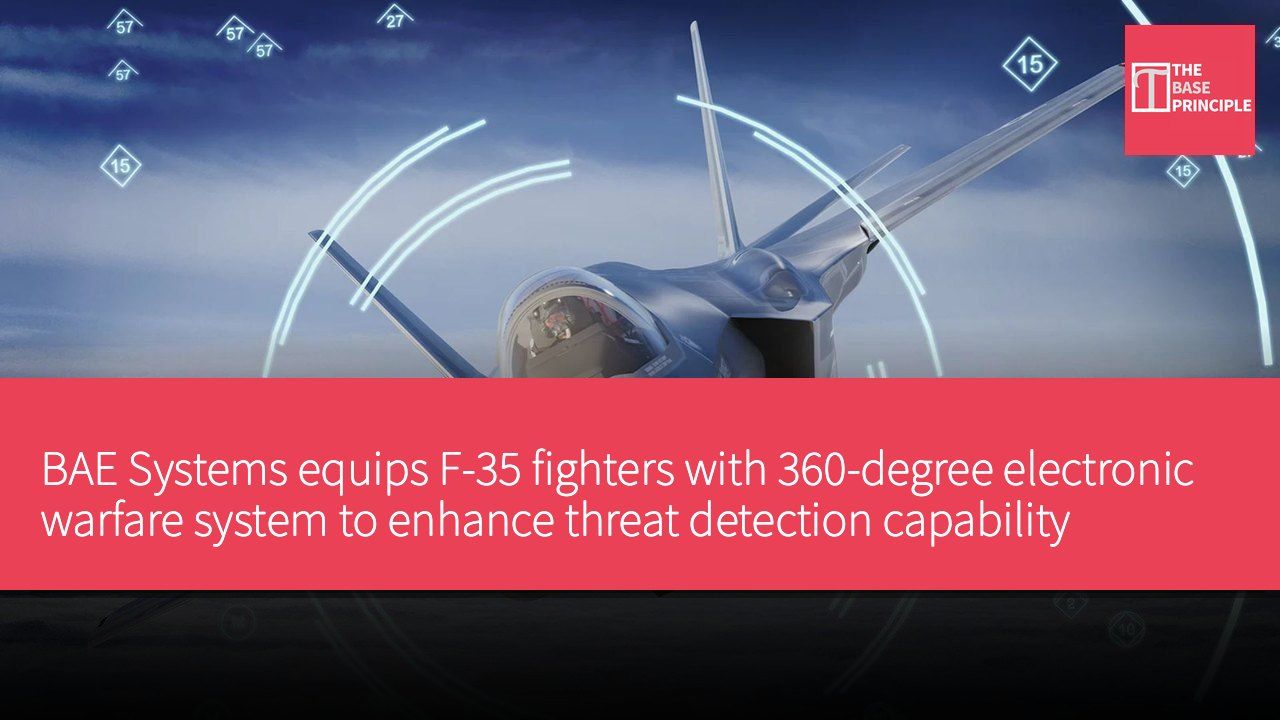
- BAE Systems will equip more F-35 fighters with the AN/ASQ-239 electronic warfare system.
- The system provides a 360-degree view of the electromagnetic battlefield, enhancing threat identification capability.
- Hardware upgrades reduce system size, improve performance, and support future upgrades.
- Automated manufacturing methods increase output, supporting more F-35s entering service.
BAE Systems will equip more F-35 Lightning II fighters with the AN/ASQ-239 electronic warfare system under a new order from Lockheed Martin. The award covers three upcoming F-35 production lots, designated Lots 20 through 22, and includes equipment to upgrade existing older aircraft in service. The AN/ASQ-239 provides the F-35 with a dedicated system for sensing and responding to activity across the electromagnetic spectrum. Long-range detection helps pilots identify potential threats before they become immediate dangers.
Reading radar emissions on the electromagnetic battlefield can reveal the presence of fighters or expose air defense systems preparing to launch an attack. Rapid identification is critical as the aircraft approaches enemy sensors and missile systems. Passive sensors allow the AN/ASQ-239 to monitor the surroundings without continuously emitting its own signals. The system can identify and analyze electromagnetic activity across various frequencies. Early warning gives F-35 pilots more time to assess threats and select countermeasures.
360-degree electromagnetic battlefield view
BAE Systems says the system provides a 360-degree view of the electromagnetic battlefield. Electronic countermeasures add another layer of protection. Depending on the threat, the F-35 can use its electronic warfare capabilities to support evasion or jam enemy sensors. The system also combines rapid signal processing with advanced algorithms. Quickly processing incoming data helps separate potentially dangerous emissions from the sheer volume of activity on the modern battlefield. Electronic warfare systems face an unusual upgrade cycle. Adversaries can change radar behavior or introduce new emitters at any time. Software updates to the AN/ASQ-239 allow it to adapt to these changes.
New capabilities can be integrated into the aircraft without replacing the entire electronic warfare architecture. "We continuously improve our electronic warfare hardware and software," said Amber Dolan, vice president of F-35 Solutions at BAE Systems. She noted the company is focused on scaling production and delivering software-based capabilities faster.
Hardware upgrades and future development
Hardware upgrades also improve system performance. BAE Systems' digital channelized receiver technology generator and tuner insertion program adds new capabilities while reducing the overall size and power requirements of the system. More efficient hardware leaves more room for future upgrades. The architecture also helps reduce the volume and power required for electronic warfare equipment. BAE Systems will manufacture systems for the three upcoming F-35 production lots covered by the order. The equipment will also support modification and modernization work on early aircraft. As a result, older F-35s can receive updated electronic warfare capabilities without waiting for aircraft replacement.
This approach also helps keep different parts of the fleet consistent as threats evolve.
As aircraft upgrades progress, production is also expanding. Automation and newer manufacturing methods are helping BAE Systems increase output. Facility investments will support higher production rates as more F-35s enter service. The company is also using updated system designs to simplify manufacturing and sustain production at higher volumes. Ultimately, the AN/ASQ-239 gives the F-35 another way to understand its surroundings before combat becomes visible. In contested airspace, early identification of enemy signals can influence what happens next.
Item Specification Electronic warfare system AN/ASQ-239 Detection range 360 degrees Processing capability Rapid signal processing
Importance of electronic warfare system to the F-35
As the complexity of modern warfare increases, the electronic warfare capabilities of the F-35 fighter become ever more critical. The AN/ASQ-239 system not only provides comprehensive electromagnetic environmental awareness but can also respond to various threats in a timely manner, which is vital for pilot survival and mission success. As adversary technology evolves, BAE Systems' continuous upgrade strategy ensures the F-35 can maintain a competitive edge on an ever-changing battlefield. Automated production processes also mean these advanced technologies can be deployed more quickly in the future, further strengthening the air superiority of the United States and its allies.