
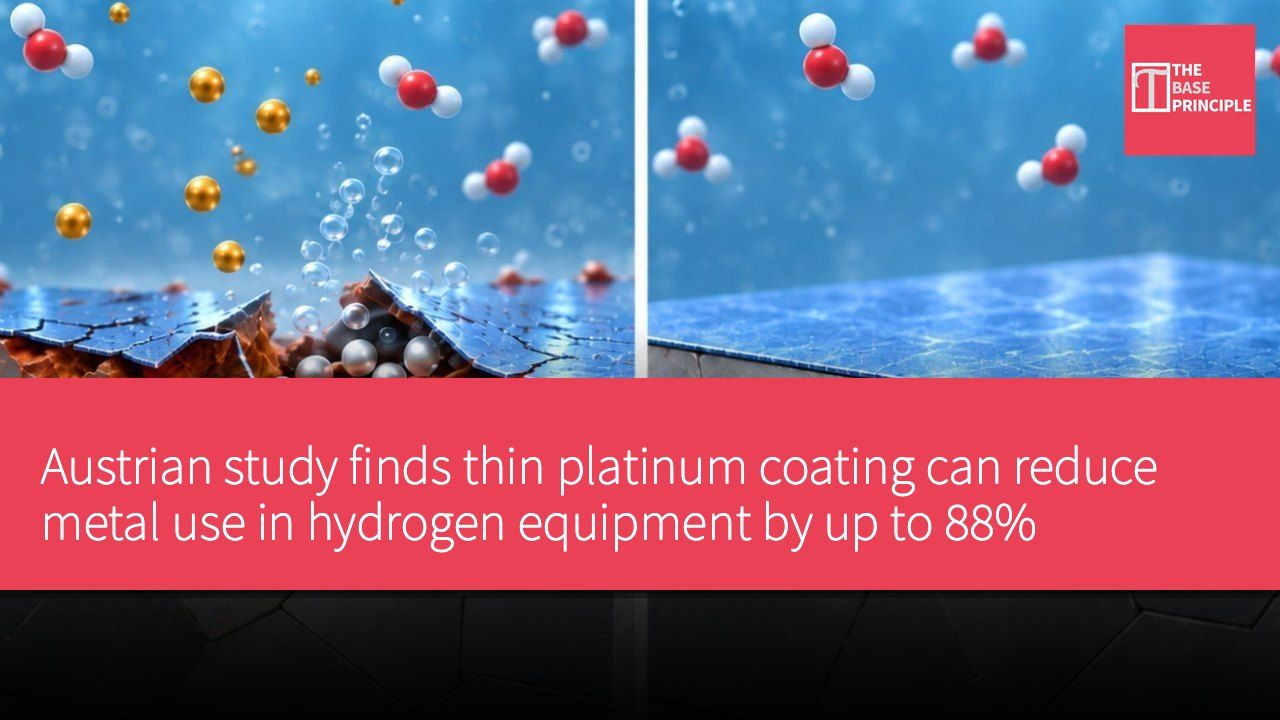
- Thin platinum coatings can reduce precious metal use in hydrogen equipment by approximately 88%.
- Metal components face chemical environment challenges during PEM water electrolysis.
- Bipolar plates account for up to 30% of total cost in hydrogen equipment.
- 24-nanometer thin platinum coating maintains good electrical conductivity in testing.
Platinum demand for hydrogen equipment
"If the system is to operate long-term, the individual components must be carefully matched. The bipolar plate plays a particularly important role here, accounting for up to 30% of total system costs." These plates not only mechanically support the equipment but also conduct current and help transport water and gases. Titanium has good corrosion resistance, but an oxide layer forms on its surface that impedes current flow. A thin platinum coating solves this problem, protecting the titanium while effectively conducting current. Thin coatings survive testing. The Vienna University of Technology team systematically investigated how thick the protective layer needs to be.
Thin platinum coating test results
Testing showed that a 24-nanometer-thick coating was sufficient under the conditions tested, while an 8-nanometer coating showed clear problems. Compared to the 200-nanometer coatings currently used in industry, the successful thin coating represents a potential reduction in platinum consumption of approximately 88%. The researchers also examined how these coatings withstand electrochemical stress, rather than merely assessing their initial performance. "We used high-resolution methods to analyze the coatings before and after electrochemical stress. A particularly important question is whether microscopic defects appear in the coating."
Riedl-Tragenreif said. Small defects can accelerate damage. Defects in the platinum layer can expose the underlying titanium to attack. The titanium oxidizes, and small oxygen bubbles can form at the interface, creating mechanical stress that further damages the coating. As larger areas delaminate, more titanium is exposed, and the damage accelerates. The 8-nanometer coating showed clear signs of this process. After electrochemical stress, the researchers observed larger defects and found a significant increase in the amount of titanium and platinum ions entering the electrolyte. The 24-nanometer coating, by contrast, remained largely intact under the conditions studied, maintained good conductivity, and kept metal ion release at very low levels.
Impact of thin platinum coatings on hydrogen production
In hydrogen production, the amount of platinum used has a significant impact on costs. The study shows that thin platinum coatings can effectively reduce precious metal demand, which not only reduces production costs but also improves equipment durability. The design and material selection of bipolar plates are crucial to overall system performance, especially when facing the challenge of chemical corrosion. The findings of this study could promote the commercialization of hydrogen technology and drive more sustainable energy solutions.