
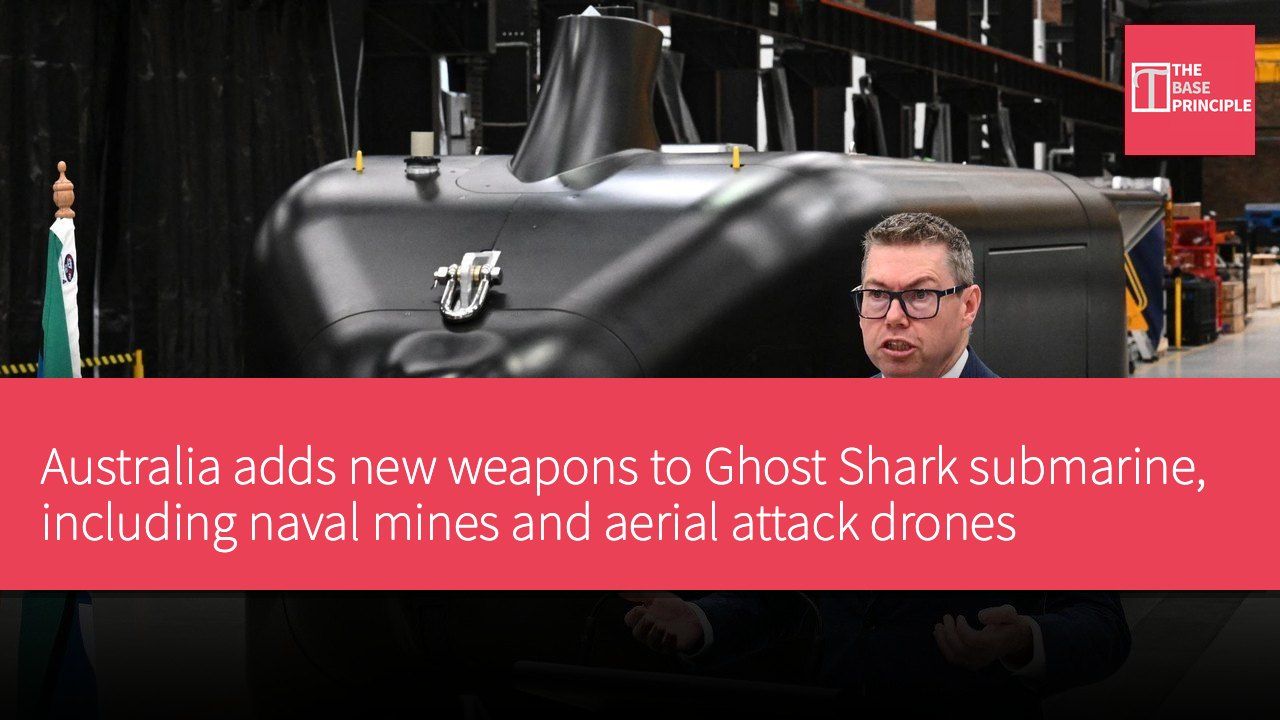
- Australia adds new weapon systems to the Ghost Shark submarine, including naval mines and drones.
- The submarine can be deployed from small vessels, expanding its naval operational role.
- The new equipment can deploy devices underwater to support special forces operations.
- Australia plans to acquire nuclear-powered submarines under the AUKUS partnership, with unmanned submarines operating in parallel.
The Australian government recently unveiled new weapon systems for its Ghost Shark robotic submarine, including naval mines, explosive aerial drones, and an underwater supply depot, aimed at enhancing its automated warfare capabilities. Defense Industry Minister Pat Conroy announced these previously classified assets on October 19 (Monday), noting that the country is accelerating the production of domestically manufactured underwater devices. These submarines can deploy up to 12 naval mines per mission and can conduct aerial strikes on targets far from Australia's shores. These capabilities are part of a AUD 5.8 billion investment in automated underwater warfare over the next decade, providing the Australian Navy with more options in hostile waters.
Functions of the New Weapon Systems
The Ghost Shark submarines are being produced at a factory in Sydney, as part of a AUD 1.7 billion contract with U.S. defense technology company Anduril. These automated submarines can be launched from shipping containers at the dock or deployed from relatively small vessels. The newly disclosed equipment will expand their role in naval operations. Naval mines can be used to block critical shipping routes or restrict enemy warships, while Anduril's Altius loitering munitions will enable the submarines to launch small aerial drones for surveillance and strikes.
Conroy did not disclose how many armed drones each submarine can carry, citing operational security concerns.
"The Ghost Shark now has teeth, and we will be able to inflict damage on any potential adversary," Conroy stated. The third type of equipment will allow these devices to deploy supplies and equipment underwater for later retrieval. This will assist special forces operating in hostile areas to obtain critical military supplies without exposing personnel to additional risks.
Submarine Production and Collaboration
The program has progressed from initial development to large-scale production in just three years. The Australian Navy has received its first production submarine, and over 40 Australian companies have participated in building the supply chain. "The Ghost Shark is a flagship example of Australia's success, showcasing the value of our defense industry's innovative capabilities and investment sovereignty," Conroy emphasized. "Our government opened this factory in less than a year, and now the Ghost Shark submarines, capable of executing multiple complex missions, are being delivered to the Australian Navy at an increasing pace." Anduril also indicated plans to equip the submarines with heavy and lightweight torpedoes and explore export opportunities with allies such as the United States and the United Kingdom.
Australia also disclosed the submarine detection capabilities of its BlueBottle automated surface vessels. This system will use towed sonar arrays to detect underwater threats, adding another tool to the country's maritime surveillance network. These technologies will be showcased this week at the "Naval Large Toys Pacific Exercise" in San Diego, which involves Australia, the United States, and the United Kingdom. The event highlights the growing role of automated systems in collaboration among the three AUKUS partners.
Relationship Between Unmanned Submarines and Nuclear Submarines
As Australia prepares to acquire nuclear-powered submarines under the AUKUS security partnership, the Ghost Shark program is also advancing. The first U.S. Virginia-class submarines are expected to arrive in the early 2030s, and Canberra is also advancing a AUD 368 billion nuclear submarine program. Conroy dismissed suggestions that automated systems might reduce the demand for nuclear-powered vessels. He believes unmanned submarines can perform dangerous missions alongside the existing Collins-class fleet and support future Virginia-class and AUKUS submarines. Navy Vice Chief of Staff Matt Buckley stated that automated systems will help the Navy operate across Australia's vast maritime domain and protect critical underwater infrastructure.
"Given the vastness of our maritime geography, the ability to rapidly deliver unmanned systems adds to the numbers of our fleet and complements our manned vessels and submarines."
Impact of Automated Weapon Systems on the Navy
The Australian government's investment in the automated weapon systems of the Ghost Shark submarine underscores their importance in modern naval warfare. With the vast maritime geography, the rapid deployment capability of unmanned submarines will significantly enhance the Navy's operational flexibility and efficiency. Furthermore, these new technologies will not only support the operational needs of special forces but will also play a crucial role in the AUKUS security partnership, strengthening cooperation with allies. The development of automated systems will contribute to enhancing Australia's defense capabilities and will have a profound impact on future naval strategies.