
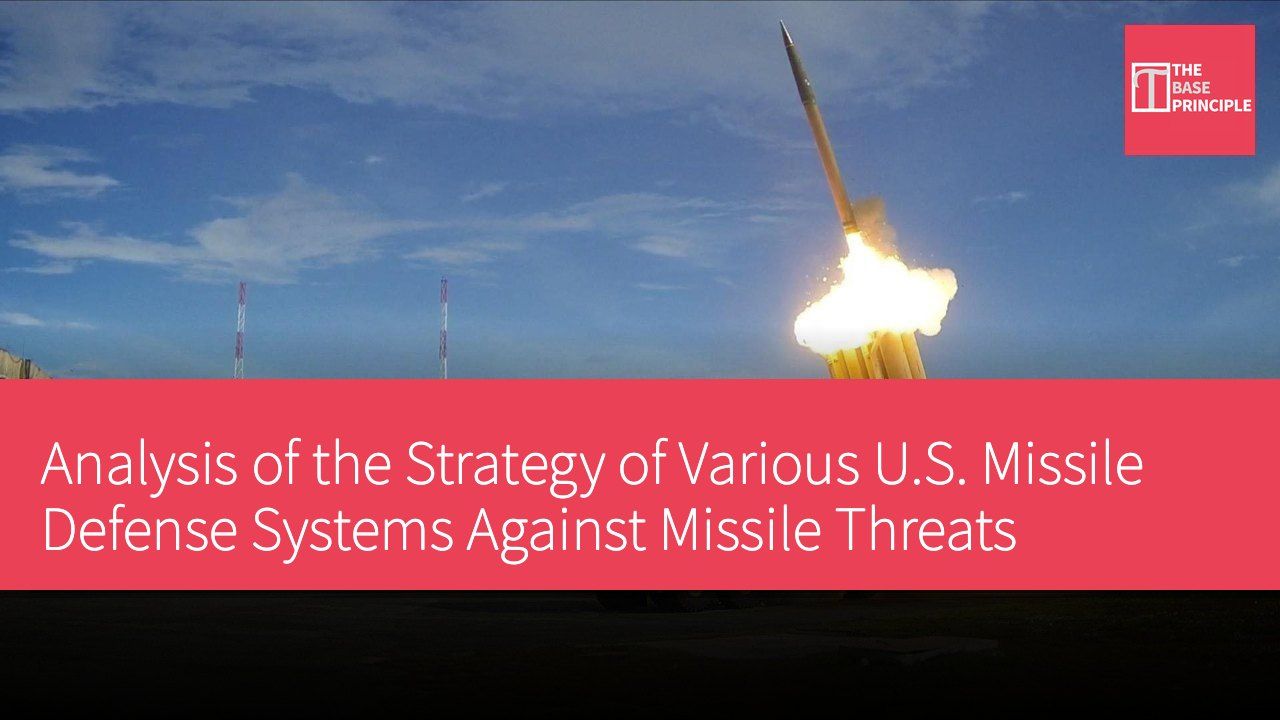
- The U.S. employs various air defense systems to counter different missile threats.
- The THAAD system focuses on intercepting ballistic missiles in their terminal phase.
- The Aegis system can intercept short- to medium-range ballistic missiles.
- The PAC-3 interceptor targets tactical ballistic missiles and cruise missiles.
The process of intercepting a missile begins before the interceptor leaves the launch device. Radar and other sensors must detect threats, track their flight paths, and provide the information necessary for interception. This challenge varies depending on the missile's flight path, whether it is traveling through space or flying at low altitude. The United States employs various air and missile defense systems to address these different threats. Some systems protect the homeland from long-range ballistic missile attacks, while others safeguard troops, infrastructure, or naval vessels from closer-range attacks. From the high-altitude intercepting THAAD system to the ship-based defense SeaRAM system, these six systems demonstrate how different weapons contribute to the U.S. missile defense strategy.
The Terminal High Altitude Area Defense (THAAD) system focuses on intercepting ballistic missiles in their terminal phase, when the missile is descending toward its target. THAAD can intercept within or outside the Earth's atmosphere, giving it a unique role in regional missile defense. This truck-mounted system combines a launcher, interceptors, AN/TPY-2 radar, and fire control equipment, with its interceptors employing hit-to-kill technology to destroy targets through direct impact. THAAD is used to counter ballistic missile threats and should not be confused with defenses against low-altitude cruise missiles.
Complementary Roles of Different Defense Systems
Its ability to intercept at high altitudes complements lower-tier defense systems such as the Patriot.
The Aegis Ballistic Missile Defense system enables U.S. Navy ships equipped with the system to intercept ballistic missiles. It combines the Aegis weapon system with specialized interceptors, including the Standard Missile-3 (SM-3) and Standard Missile-6 (SM-6). These interceptors perform different missions, with the SM-3 addressing short- to medium-range ballistic missile threats, while the SM-6 provides terminal defense against short-range ballistic missiles. The land-based Aegis Ashore facilities also contribute to ballistic missile defense.
Identifying interceptors is crucial: Aegis is a multi-capable weapon system, not a single-model missile.
The PAC-3 interceptor family of the Patriot system is designed to counter tactical ballistic missiles, cruise missiles, and aircraft. PAC-3 stands for Patriot Advanced Capability-3, while the newer MSE designation indicates an enhanced missile segment. These interceptors are part of the broader Patriot air defense system, which includes radar, launchers, and interceptor control equipment. PAC-3 destroys incoming threats through direct impact. Its role in ballistic missile defense overlaps with that of THAAD, allowing these systems to provide complementary protection.
This distinction explains why both systems are present in the U.S. defense architecture, as they offer different interception capabilities rather than merely duplicating each other's functions.
Unique Mission of Ground-based Midcourse Defense Systems
The mission of the Ground-based Midcourse Defense (GMD) system is different: to protect the U.S. homeland from limited long-range ballistic missile attacks. Its ground-based interceptors are deployed in Alaska and California. The interceptors carry an exo-atmospheric kill vehicle, which separates from the booster in the midcourse phase and engages incoming warheads in space. Destruction relies on collision rather than explosive warheads. The GMD mission distinguishes it from regional systems that protect individual bases or deployed forces. Its explicit mission requires careful wording: protecting against limited ballistic missile attacks does not imply guaranteed protection against every possible missile strike.
The National Advanced Surface-to-Air Missile System (NASAMS) includes cruise missile defense in this list. Developed by Norway's Kongsberg and the U.S. Raytheon, it is a short- to medium-range ground system that can also counter aircraft, helicopters, and drones. NASAMS connects radar, fire distribution centers, and dispersed launchers. Its baseline interceptor is the AMRAAM, a missile also carried by fighter jets. According to Kongsberg, NASAMS has been protecting Washington, D.C. since 2005.
Its role here involves defending against cruise missiles and other aerial threats, rather than intercepting intercontinental ballistic missile warheads in space.
Close-in Defense of the SeaRAM System
The SeaRAM system provides ships with close-in defense against anti-ship cruise missiles. It combines the search and tracking radar and electro-optical sensors of the Phalanx Block 1B close-in weapon system with an 11-round Rolling Airframe Missile launcher. The distinction between RAM and SeaRAM is clear; RAM is the missile, while SeaRAM integrates these missiles with sensors and engagement equipment in a single installation. The Navy describes SeaRAM as an independent detection-to-intercept capability.
Its mission is self-defense for vessels, providing point protection that operates alongside other naval defense systems, rather than executing the wide-area ballistic missile missions associated with Aegis BMD.
The Necessity of Diverse Defense Systems
As missile technology advances, missile threats from various countries are also increasing, and the U.S. air defense strategy must encompass multiple defense systems to address different types of attacks. These systems each have specific functions and advantages, forming a multi-layered defense network from high-altitude interception to close-in protection. This diversification, especially in the face of threats from ballistic and cruise missiles, not only enhances defensive effectiveness but also increases flexibility in responding to emergencies.