
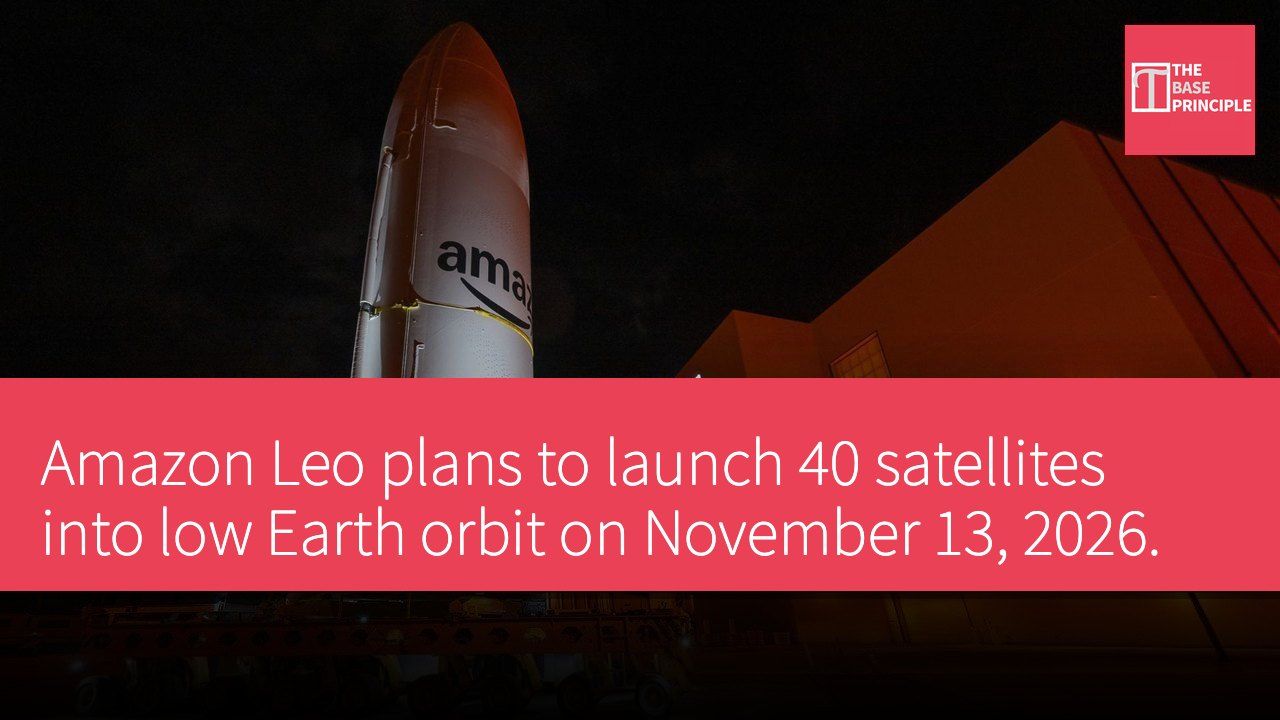
- Amazon Leo plans to launch 40 satellites to low Earth orbit in 2026.
- This launch is part of a 38-mission contract between Amazon and ULA.
- The Vulcan rocket will deliver over 1,500 satellites, accounting for 50% of the primary constellation.
- Amazon has secured partnerships with multiple launch providers.
Amazon Leo has scheduled the deployment of 40 satellites to low Earth orbit on November 13, 2026, using the United Launch Alliance (ULA) Vulcan launch vehicle. This mission, named Leo Vulcan 1 (LV-01), marks the first Vulcan flight specifically dedicated to Amazon's satellite internet initiative, with the launch set to take place at Cape Canaveral Air Force Station in Florida, specifically from Launch Complex 41.
This launch is part of a 38-mission contract between Amazon and ULA aimed at establishing the first generation of the Amazon Leo satellite infrastructure. Under this agreement, the Vulcan rocket is expected to deliver over 1,500 satellites, approximately 50% of the total number in the primary constellation. As of early September 2026, the company disclosed that it has produced over 1,000 first-generation satellites, a significant portion of which are ready for orbital insertion. The 40 satellites for the LV-01 mission will supplement the existing inventory awaiting launch.
Technical Configuration of the Vulcan Rocket
The LV-01 mission will utilize a configured Vulcan rocket equipped with six solid rocket boosters and an upgraded Centaur V upper stage. This upper stage has been streamlined to meet the technical requirements of Amazon Leo's orbital objectives. The Vulcan system was selected for its versatility in payload logistics and mission requirements, being one of several platforms identified for launching broadband network hardware into orbit. Melissa Wuerl serves as the launch system director for Amazon Leo, stating that the Vulcan program aims to provide increased rocket capacity and launch frequency to expand its satellite network and reach more users.
She noted that Vulcan will deploy nearly 50% of the initial constellation, establishing it as the primary launch vehicle for the foreseeable future, and expressed excitement about collaborating with ULA as they enter this intensive phase.
Infrastructure Improvement Projects
Meanwhile, infrastructure improvement projects at Cape Canaveral are underway. ULA is constructing a second Vulcan integration facility named VIF-A, while simultaneously establishing a mobile launch platform funded by Amazon. These enhancements aim to improve the efficiency of the company's rocket preparation operations. The introduction of these facilities allows ULA to handle two Vulcan vehicles simultaneously. While VIF-A prepares the LV-01 rocket, the next mission, LV-02, is being assembled at the established VIF-G site.
The second launch is expected to occur within weeks of the inaugural flight.
To facilitate the deployment of its initial constellation, Amazon has secured partnerships with multiple launch providers, including ULA, Arianespace, Blue Origin, and SpaceX. These agreements leverage a diverse fleet of rockets to deliver hardware to low Earth orbit. Notably, Europe's Ariane 6 is scheduled for an upcoming launch no earlier than November 23, 2026, from the Guiana Space Centre in French Guiana. The organization has arranged for over 100 launches to complete its first-generation orbital network.
Each mission will deliver a batch of specific satellites, gradually building the infrastructure necessary for global broadband delivery. Amazon Leo aims to provide high-speed internet access through an extensive low Earth orbit satellite network, with initial services expected to begin by the end of 2026. The November 13 launch will kick off the Vulcan-based Amazon Leo deployment phase, with subsequent missions continuously filling this network to assist Amazon in achieving the full realization of its first-generation constellation.
Strategic Significance of the Amazon Leo Satellite Program
The Amazon Leo satellite program aims to provide global high-speed internet access through a low Earth orbit satellite network, which is crucial for enhancing network coverage in remote areas. The collaboration with ULA not only ensures rocket launch capabilities but also accelerates satellite deployment, which is significant for Amazon's further business expansion and market competitiveness. Additionally, partnerships with multiple launch providers demonstrate Amazon's flexibility in supply chain management, enabling launches within various time windows and further strengthening its position in the satellite internet market.