
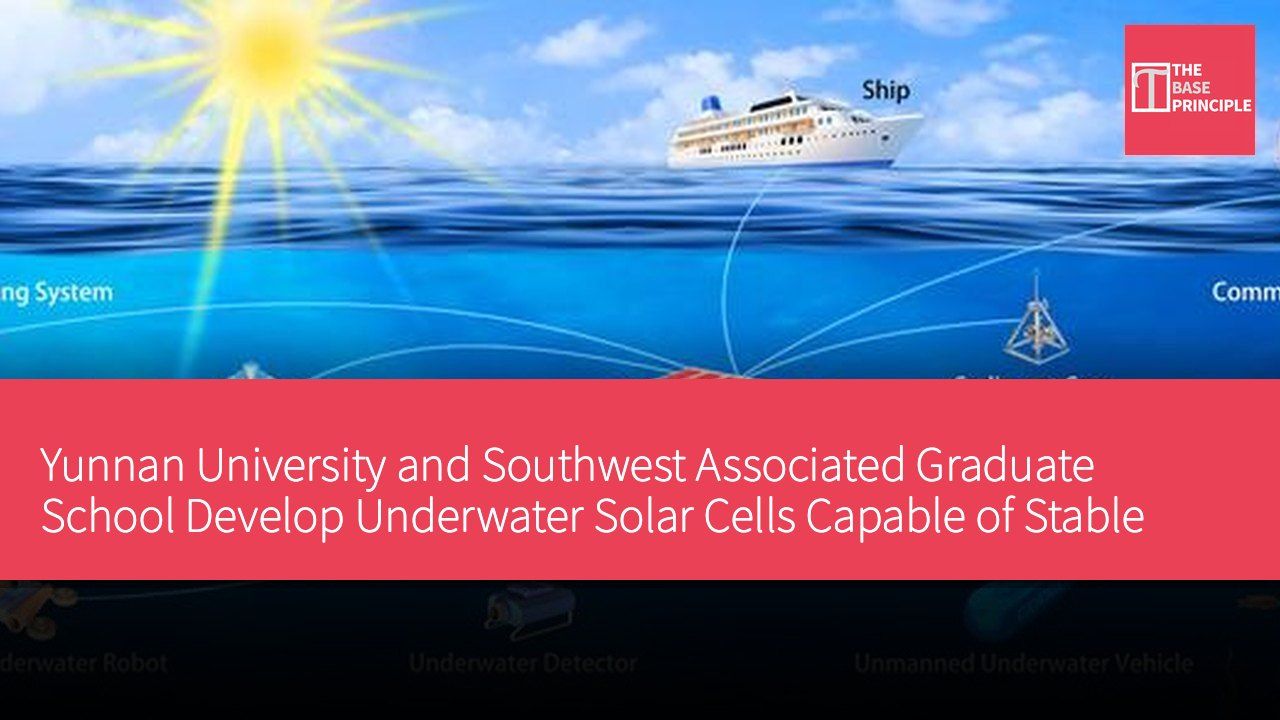
- Underwater solar cells can operate at a depth of 10 meters in the South China Sea, breaking previous limits.
- This technology can provide a reliable long-term power source for remote marine systems.
- Specially designed cells demonstrate exceptional durability under simulated conditions.
- Future challenges include balancing high durability with light transmission.
Researchers from Yunnan University and Southwest Associated Graduate School have successfully demonstrated functional underwater solar cells capable of operating at a depth of 10 meters (approximately 33 feet) in the South China Sea. This achievement surpasses previous limits. Early attempts at underwater solar energy collection failed in shallow waters less than 2 meters deep, despite the abundance of sunlight, due to limited practical applications. With an estimated operational lifespan of about 5.5 years, this technology could ultimately provide a reliable long-term power source for remote marine systems. Research indicates that underwater photovoltaic systems could offer a viable power source for underwater sensors, cameras, and communication systems in the future.
Lead researcher Zhang Wenhua stated, "There are very few research reports on underwater solar cells, and existing studies focus on very shallow waters of only 2 meters deep, a scenario that falls far short of practical application needs." He added, "This work marks the first functional verification of underwater solar cells at a depth of about 10 meters, greatly expanding their range of applications."
Technological Breakthrough of Underwater Solar Cells
Standard commercial silicon solar cells are designed to capture a broad spectrum of sunlight, particularly infrared light. Underwater, silicon cells lose much of their efficiency. Typically, underwater solar cells struggle to collect energy due to the rapid attenuation of light intensity underwater, posing a barrier for marine monitoring applications such as aquaculture. To address this issue, Zhang's team designed optimized wide-bandgap solar cells to capture the blue to orange wavelengths of light that best penetrate marine waters. By capturing ambient light beneath the surface, underwater solar cells provide a transformative solution to the long-standing power limitations of marine technology.
These cells generated 324 mWh of power in just two hours at a depth of 10 meters, enough to charge a standard lithium-ion battery. Underwater solar cells offer a self-sustaining power source suitable for environmental sensors, monitoring cameras, and communication hardware in offshore environments, eliminating the need for expensive wired connections and frequent battery replacements.
Tested under simulated conditions, these specially designed cells demonstrated exceptional durability, maintaining about 96% efficiency after 300 days of storage. Additionally, the prototype cells showed almost no degradation over 1,160 hours at a simulated depth of 10 meters. Zhang noted, "The most surprising thing is that our large-area modules produced so much electricity in just two hours under actual 10-meter deep water conditions. Moreover, we have achieved the scaling up from small laboratory cells to large modules. The combination of laboratory research and field experiments provides strong evidence for the operation of underwater photovoltaics."
Future Challenges and Development Directions
One of the future challenges is that these cells must balance high durability with clear light transmission to maintain long-term effectiveness. Additionally, the deployment of underwater solar power needs to overcome extreme conditions such as corrosive salt, high pressure, and water ingress. Next, the team plans to delve deeper into the darkness, testing how deep solar technology can go, while laying the groundwork for standardized testing protocols for underwater photovoltaics. The research has been published in the journal Joule.
Item Specification Water Depth 10 meters Power Generation 324 mWh Efficiency Retention About 96% Storage Time 300 days Operating Time 1,160 hours
Application Potential and Challenges of Underwater Solar Cells
The successful development of underwater solar cells marks a significant advancement in marine technology, particularly in the energy supply for remote areas. This technology not only overcomes the limitations of traditional energy supplies but also provides lasting power support for underwater sensors and monitoring equipment. However, facing the challenges of extreme environments, such as corrosive salt and high pressure, future research and development work will need to find the best balance between durability and light transmission efficiency, which is crucial for the practical application of the technology.