
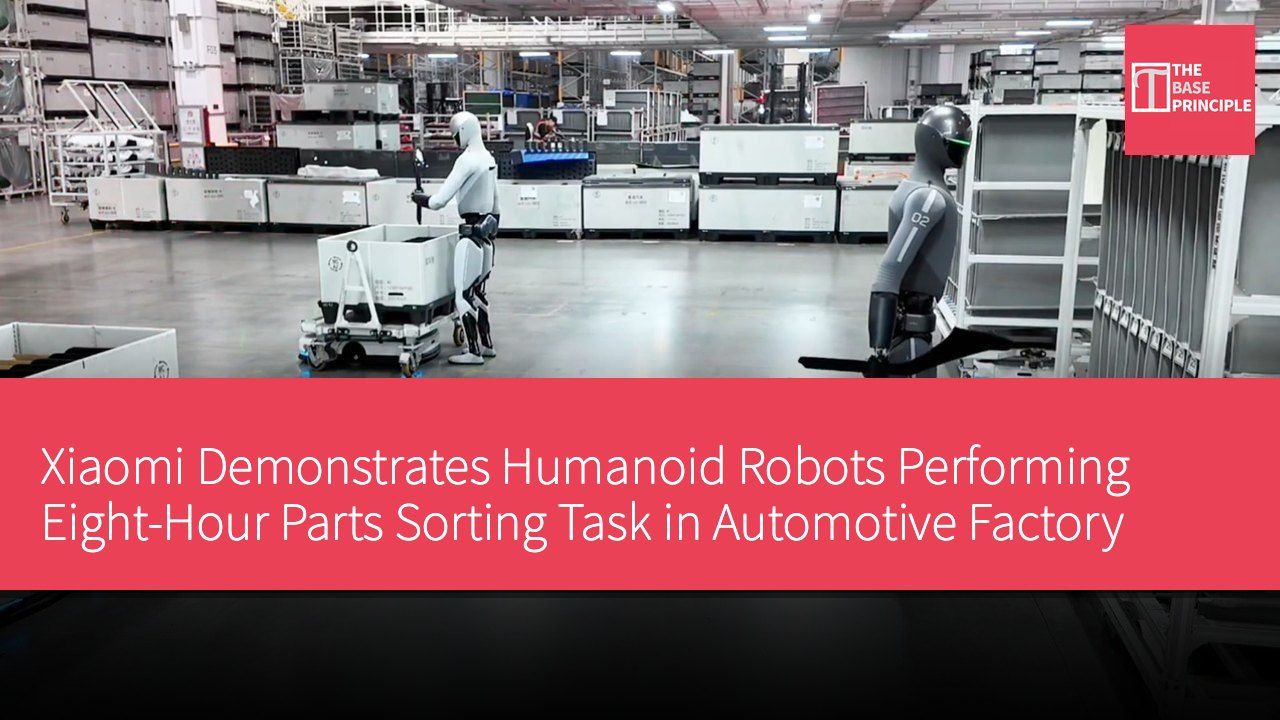
- Xiaomi showcased humanoid robots performing an eight-hour parts sorting task in an automotive factory.
- The robots can autonomously detect and correct anomalies, coordinating with the production line system.
- Xiaomi did not disclose key performance metrics, including processing throughput and battery management.
- The tests reflect a growing interest in humanoid robots for automotive production.
Xiaomi recently released a video showcasing two humanoid robots engaged in an eight-hour automotive parts sorting task at its factory. The demonstration focused on a workstation where the robots were responsible for handling and sorting side covers for the central control console, a component of the automotive production process. According to the company, its full-sized humanoid robots can independently detect and correct anomalies while coordinating with the factory's production line system. However, Xiaomi did not disclose key performance metrics, including parts processing throughput, human intervention rates, or how the robots manage battery power during extended operation.
The video released by Xiaomi shows two humanoid robots performing parts sorting tasks in an automotive factory in China. In the demonstration on November 3, the robots focused on sorting side covers for the central control console, repeatedly handling parts and moving them between containers and storage racks. The company stated that its full-sized humanoid robots can autonomously detect and correct anomalies while coordinating actions with the factory's production line system. This test highlights Xiaomi's efforts to develop humanoid robots capable of performing repetitive industrial tasks over extended periods.
Complexity of the Robot Task
Xiaomi's full-sized humanoid robots undertook an eight-hour task at the workstation for sorting side covers for the central control console in its automotive factory. The video released by Xiaomi on social media shows the two humanoid robots working between a mobile platform and a vertical rack containing individual storage slots. They repeatedly retrieved parts from containers and placed them in designated rack positions as part of the sorting process. Throughout the demonstration, a cumulative work time counter continuously tracked the duration, while an overlay on the screen indicated that the operation was being conducted autonomously. The video also included accelerated playback of up to 100 times, compressing the lengthy operation into a shorter clip.
The task at the workstation involves more than simply picking and placing individual parts. The robots must identify and handle the appropriate parts, positioning themselves around containers and racks while coordinating their movements with the surrounding production environment. According to the company, these humanoid robots can independently identify and correct anomalies while coordinating with the production line system. This indicates that their work goes beyond basic object manipulation to include fault detection and recovery during factory operations. However, Xiaomi did not explain what types of anomalies the robots can identify or how they perform corrections.
The company also did not disclose metrics such as sorting throughput, success processing rates, instances of human intervention, or the number of parts processed during the eight-hour operation. Battery management remains another unresolved issue. The demonstration did not clarify whether these robots operated continuously on a single charge or if they switched batteries or recharged during the task. The latest demonstration is part of Xiaomi's ongoing efforts to introduce humanoid robots into automotive manufacturing. In March, the company reported a 90.2% success rate for dual-side self-tapping nut installation during a three-hour autonomous pilot at its electric vehicle factory in Beijing, meeting a production cycle requirement of 76 seconds.
This trial focused on precision assembly, while the latest demonstration concentrated on parts sorting and material handling.
Trends in Humanoid Robot Applications
These two tests highlight the different manufacturing tasks Xiaomi is exploring. The company also showcased the CyberOne V2 humanoid robot during its investor day, demonstrating its interaction with visitors and its ability to handle gift bags. Xiaomi's latest tests come amid a growing interest in deploying humanoid robots in automotive production. For example, Audi is testing mobile humanoid robots developed by Agile Robots for parts sorting at its Ingolstadt production lab. Other automakers, including BMW, are also exploring the application of humanoid robots in factory operations.
Importance of Evaluating Robot Performance
For Xiaomi, showcasing an eight-hour task marks a step toward assessing how humanoid robots perform beyond short, controlled demonstrations. However, merely the duration of operation is insufficient to determine production readiness. More detailed data on parts processing speed, task accuracy, error recovery capabilities, and instances of human intervention will help establish how effectively these robots can work in conjunction with existing factory automation systems.
Item Specification Battery Management Uncertain if operates continuously on a single charge Success Processing Rate 90.2% Production Cycle Requirement 76 seconds
Xiaomi's Efforts to Advance Automation in Automotive Production
Xiaomi's humanoid robots demonstrate its progress in automotive production automation, particularly in their ability to perform repetitive tasks over extended periods. This eight-hour task not only showcases the robots' operational capabilities but also reflects the industry's growing interest in the application of humanoid robots. As other automakers explore similar technologies, Xiaomi's tests may provide important insights for future factory automation. However, the lack of key performance data makes it difficult to assess the actual effectiveness of these robots, which remains a crucial area for future focus.