
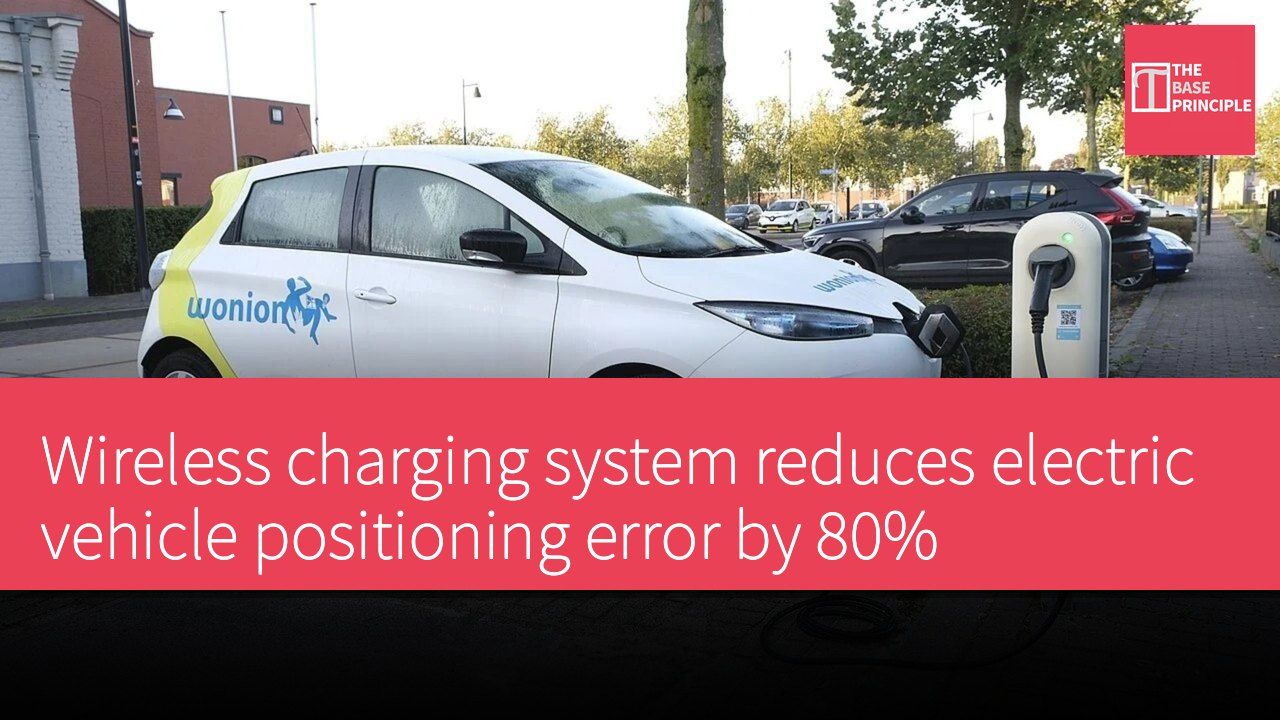
- The radio system reduces electric vehicle positioning error by approximately 80%.
- The system uses ultra-wideband signals to measure the position of the coil and the vehicle's orientation.
- After calibration, the median error in vehicle angle is 0.25 degrees.
- The research aims to provide a simple charging method for electric vehicles.
A radio system based on certain digital key technologies has reduced the median error in locating wireless charging coils for electric vehicles by approximately 80% after researchers calibrated signal distortion during laboratory tests. The system can estimate the position of the coil relative to the charging pad and the vehicle's orientation. Researchers from Osaka University in Japan collaborated with Tokai Rika and the University of California, San Diego to develop this system, which was tested on a scaled-down vehicle model using ultra-wideband (UWB) signals to measure the position of the coil.
The wireless electric vehicle charger operates by sending power from a charging pad on the ground to a receiving coil installed at the bottom of the vehicle. If the coil is a few centimeters off-center from the charging pad or parked at an incorrect angle, it can reduce the efficiency of power transfer, potentially causing the vehicle to remain on the charging pad longer to achieve the same amount of charge. Magnetic positioning systems typically work best when the coil is already close to the charging pad. While cameras can assist in guiding parking, rain, dirt, or insufficient light can make it difficult to see the charging pad. Therefore, researchers used radio measurements to estimate the position of the coil and the vehicle's angle.
How the Radio System Works
The research team placed four UWB devices around the model's receiving coil and set up antennas near the charging pad. These devices send short-range wireless signals between themselves and the antennas. The system first measures the time it takes for the signal to travel between the two to roughly determine the vehicle's position, then compares the phase differences of the waves arriving at different devices. These slight differences allow the system to refine its estimates of the coil's position and the vehicle's orientation. Researchers also pre-measured installation-specific distortions and used these measurements to calibrate the readings.
Laboratory tests showed that the team conducted multiple measurements while the model was stationary in one position. After calibration, the median error in estimating the vehicle's angle was 0.25 degrees. Without calibration, the median error in estimating the coil's position was approximately five times that of the calibrated readings. Researchers demonstrated how to display position and angle readings to guide the vehicle's parking on the charging pad. This method could also assist robotic taxis and other autonomous electric vehicles in aligning for charging without human intervention.
Future Applications of the Research
Ryotaro Hada, the lead author of the research, stated, "Transforming the computational methods into a functional system requires a lot of trial and error. We hope this research can provide a simple charging method for future electric vehicles, similar to placing a smartphone on a wireless charger." The system still needs to be tested outdoors and evaluated on full-sized vehicles while the charger transmits power. This research has been published in the IEEE Open Journal of Vehicular Technology.
Breakthroughs in Positioning Technology for Wireless Charging Systems
This research demonstrates the potential of radio technology in electric vehicle charging, particularly with significant improvements in positioning accuracy. Traditional magnetic positioning systems have limited effectiveness in certain environments, while radio measurement technology can overcome these challenges to provide more accurate positioning. As electric vehicles become more prevalent, the development of this technology can not only enhance charging efficiency but also improve user experience, making the charging process more convenient. The efforts of the research team pave the way for future charging methods for autonomous electric vehicles, showcasing the broad application potential of wireless charging technology.