
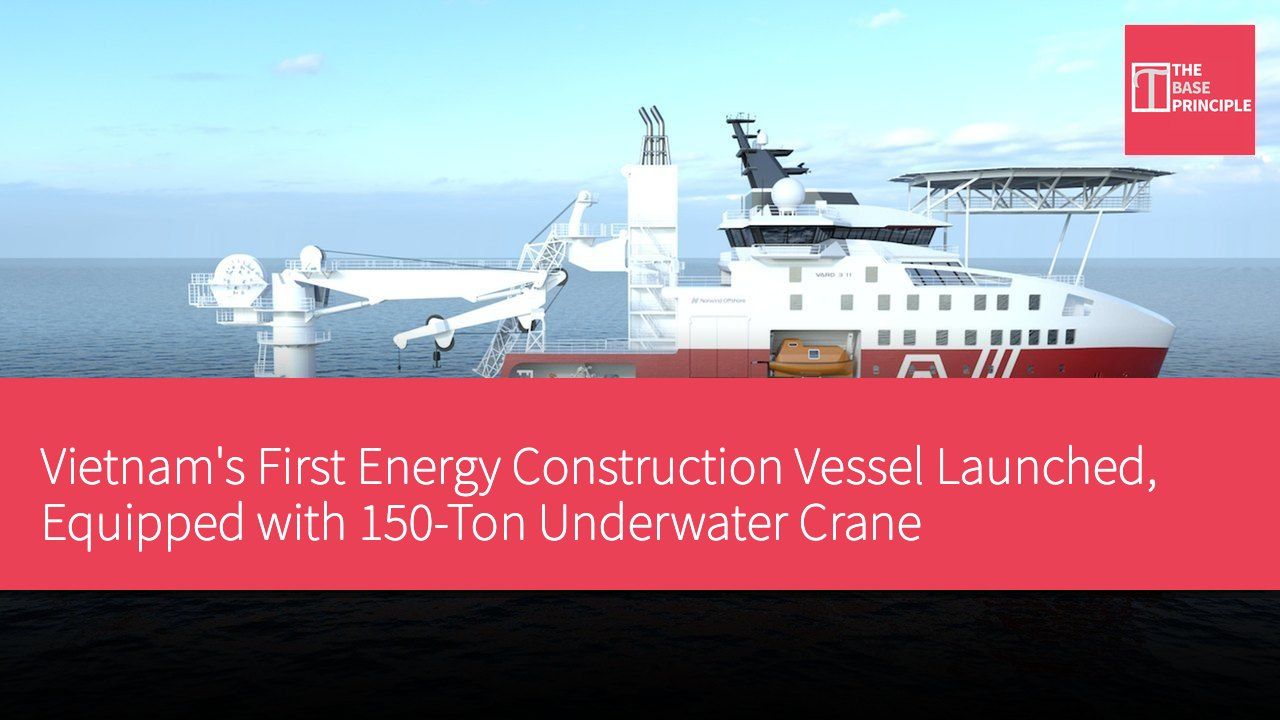
- Vietnam's first Energy Construction Vessel can support offshore wind farms and underwater maintenance operations.
- The vessel is 366 feet long and equipped with a 150-ton subsea crane.
- The vessel features an advanced walk-to-work system that ensures stable movement for workers.
- VARD will be responsible for the integration shipbuilding operations of the entire project, including design and commissioning.
An innovative Energy Construction Vessel (ECV) has officially set sail in Vietnam, capable of supporting offshore wind farms, subsea infrastructure, and underwater maintenance operations. The vessel was designed by the shipbuilding company VARD, located in Ålesund, for the Norwegian maritime company Wind Energy Construction AS, which focuses on offshore construction services and is partially owned by green energy supplier Norwind Offshore.
According to a representative from VARD, the vessel named NB985 was launched on October 27, 2026, at the Vard Vung Tau shipyard in Ho Chi Minh City, Vietnam. This launch comes more than a year after construction began on October 6, 2025, when Norwind Offshore CEO Svein Leon Aure announced that the companies had designed a completely new class of vessel in 2024.
Vessel Design and Features
This vessel, built for high-demand tasks, is 366 feet (111.5 meters) long and equipped with a 150-ton subsea crane, an advanced transfer system, and can accommodate up to 120 people. The vessel features VARD's 3 11 design, specifically developed for offshore wind and subsea projects. It is equipped with the tools necessary for underwater construction, infrastructure installation, and maintenance operations, and has a 150-ton compensated subsea crane that minimizes the impact of vessel movement during lifting operations.
The vessel also features a 3D electric, motion-compensated walk-to-work (W2W) system, which ensures stable movement for workers between the vessel and offshore structures. According to the company, the vessel can accommodate up to 120 people, providing space for crew and specialists engaged in offshore projects. Aure explained, "The concept is based on our previous construction market vessels built with VARD, and we are confident in the important role this vessel will play in offshore wind and other fields in the coming years."
Project Progress and Future Plans
The launch ceremony on October 27 was approximately one year after the first steel was cut. The project began with Norwind Offshore's order in 2024, with VARD responsible for the integration shipbuilding operations of the entire project, including vessel design, hull construction, outfitting, and commissioning. Torgeir Haugan, Senior Vice President of Sales and Marketing at VARD, emphasized the significance of this work. In a press release, he stated, "We are pleased that the teams at Norwind Offshore and Wind Energy Construction AS chose VARD as they expand their fleet, this time with its advanced energy construction vessel targeting the promising subsea oil and gas market,
while also strengthening our foothold in the renewable offshore wind market."
However, despite the vessel being launched, further work is required before it can commence commercial operations. The next phases include completing the vessel's equipment installation, outfitting, and commissioning, followed by delivery. Haugan added that the project reinforces VARD's position as a leader in offshore technology and shipbuilding. He concluded, "We are pushing boundaries with our clients, continuously developing our vessels to meet their needs in the green transition." The vessel is scheduled for delivery in the second quarter of 2027.
Impact of the Energy Construction Vessel on Renewable Energy
The launch of this Energy Construction Vessel marks a significant advancement for Vietnam in the renewable energy sector, particularly in the construction and maintenance of offshore wind power. As global demand for green energy increases, the design and construction of such vessels will help enhance the efficiency and safety of offshore wind projects. VARD's technological innovations not only strengthen its market competitiveness but also demonstrate a commitment to future sustainable energy solutions. The successful operation of this vessel could facilitate the development of more similar projects, further driving the global energy transition.