
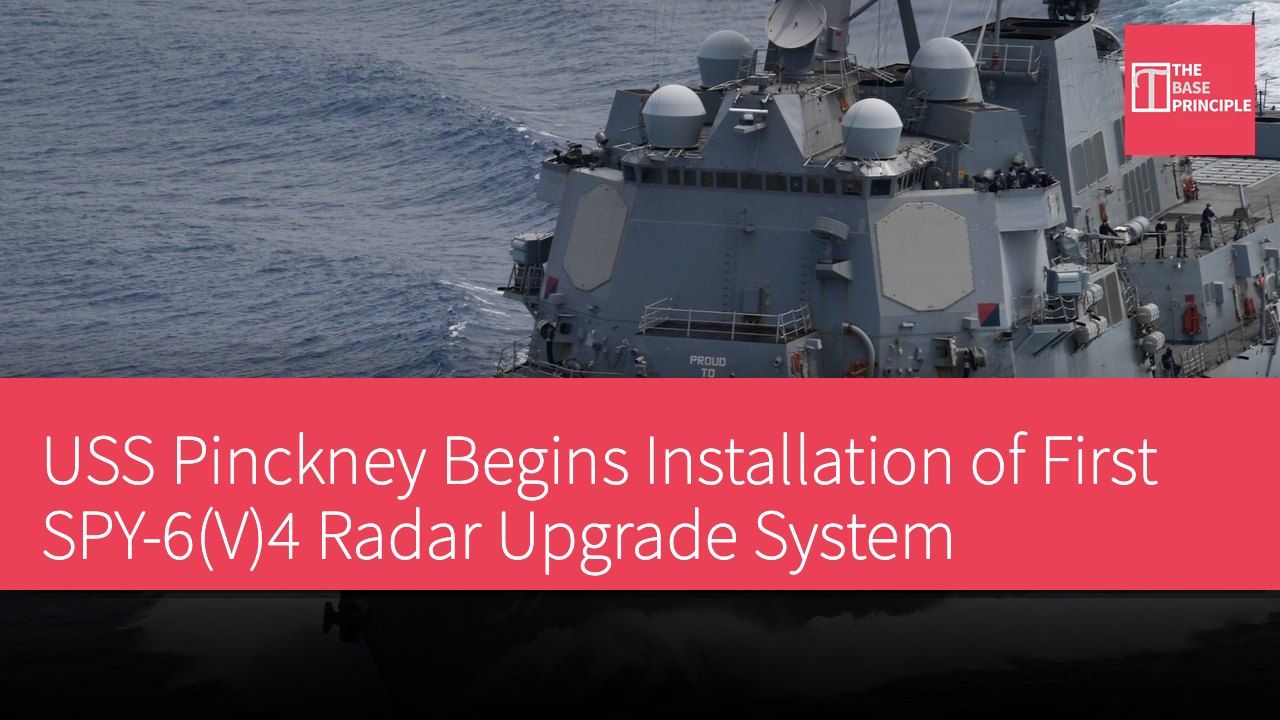
- USS Pinckney has begun installation of the first SPY-6(V)4 radar system to enhance operational capabilities.
- The new radar system will strengthen detection and tracking of aerial threats.
- The upgrade also introduces a high-performance air conditioning system to meet increased power demands.
- The DDG MOD 2.0 program aims to modernize four destroyers.
The USS Pinckney of the United States Navy has entered a shipyard in San Diego to begin installation of the first SPY-6(V)4 radar on an Arleigh Burke-class destroyer. This modernization effort, initiated at General Dynamics NASSCO, will equip the warship with upgraded sensors and cooling systems to address evolving missile and aerial threats. The project is part of the second phase of the destroyer modernization 2.0 program, aimed at enhancing the operational capabilities of four guided missile destroyers. The $149.6 million contract is expected to be completed by September 2028.
Radar System Upgrade
The primary component of the radar upgrade is Raytheon's AN/SPY-6(V)4 radar, which will help the Navy better detect and track aerial threats. The system will integrate with the Aegis Combat System baseline 10, enabling the destroyer to simultaneously handle air and ballistic missile defense. The new radar will assist Pinckney in responding to more advanced weapons, such as incoming missiles and drones. This is particularly important as Navy destroyers operate in regions facing greater security threats.
The upgrade also introduces a new high-performance, large-capacity air conditioning system to help manage the additional power and heat requirements of the new operational equipment. “The collaborative efforts of all stakeholders have ultimately brought us to the execution phase,” said Captain Tim Moore, the DDG MOD 2.0 program manager. “After the modernization period at the shipyard, USS Pinckney will rejoin the fleet equipped with the most comprehensive multi-spectral integrated sensor system, aimed at maintaining maritime superiority for decades.”
USS Pinckney has a displacement of approximately 10,300 short tons (9,300 metric tons). Pinckney completed its first modernization phase, known as DMP 1.5, in 2024. At that time, it was the first ship to receive the SLQ-32(V)7 Surface Electronic Warfare Improvement Program Phase 3 system and structural enhancements. This electronic warfare system helps the vessel detect and respond to electronic threats. The Navy has adopted a phased installation approach, referred to as Split Start, allowing industry partners to gain upgrade experience before proceeding with radar installation.
Following the early upgrades, Pinckney was deployed in the Pacific and the Middle East for eight and a half months. The Navy stated that this deployment demonstrated the destroyer's advanced operational capabilities in challenging environments.
The DDG MOD 2.0 program includes four Arleigh Burke-class destroyers: USS Pinckney (DDG 91), USS Chung-Hoon (DDG 93), USS James E. Williams (DDG 95), and USS Halsey (DDG 97). Before undergoing radar upgrades, these vessels will first receive electronic warfare enhancements. This provides experience for the Navy and its industry partners for future projects. The Navy plans to consolidate modernization efforts for future ships, with USS Sterett (DDG 104) potentially being the first vessel to complete two upgrades during a single shipyard visit.
Addressing Evolving Threats
Consolidating upgrades into a single shipyard period may reduce the downtime of the destroyers. This approach will also help the Navy modernize more vessels while maintaining operational availability. These upgrades are being implemented against the backdrop of increasing demands faced by the United States Navy in the Indo-Pacific and Middle East regions. Destroyers are crucial in protecting carrier strike groups and other vessels from missile and drone attacks. By enhancing advanced radar and improved electronic warfare systems, the Navy aims for its destroyers to detect and defend more effectively, as threats to deployed vessels continue to evolve.
Item Specifications Displacement 10,300 short tons (9,300 metric tons) Contract Amount $149.6 million Electronic Warfare System SLQ-32(V)7
Importance of Navy Destroyer Modernization
The United States Navy's destroyer modernization program reflects a commitment to addressing current and future security threats. As missile and drone technologies advance, destroyers need to be equipped with more sophisticated radar and electronic warfare systems to maintain operational superiority. These upgrades not only enhance the vessels' detection capabilities but also enable effective responses to challenges in various operational environments, ensuring the Navy's strategic position in the Indo-Pacific and Middle East regions.