
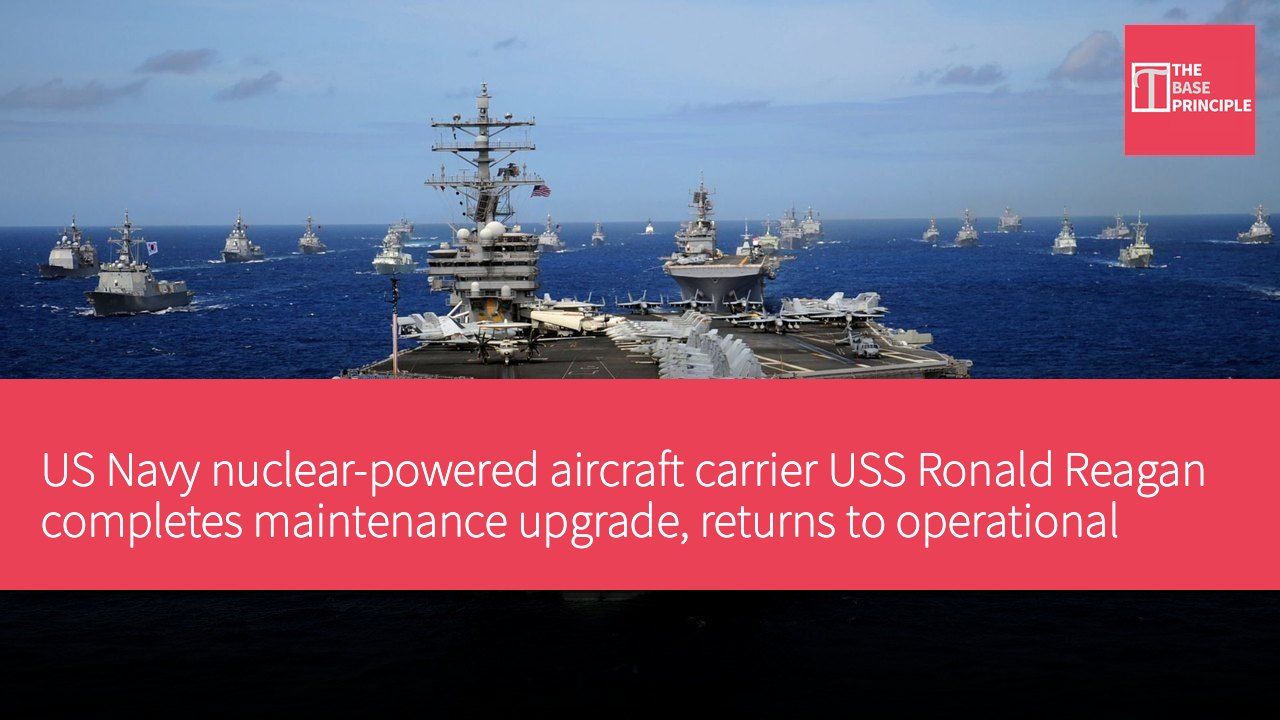
- USS Ronald Reagan has completed an approximately 18-month maintenance and modernization program.
- The maintenance covered multiple areas including the hull, flight deck, and reactor systems.
- Ronald Reagan underwent its first DPIA since 2012 and will return to the fleet in 2026.
- The maintenance program improved living and working conditions for the crew.
The US Navy has returned the aircraft carrier USS Ronald Reagan to its operational fleet after the vessel completed an extensive maintenance and modernization program at Puget Sound Naval Shipyard in Washington. The Nimitz-class nuclear-powered carrier underwent approximately 18 months of maintenance during a Docked Planned Incremental Availability (DPIA). This major maintenance period was aimed at repairing critical systems, upgrading equipment, and preparing the vessel for future operations.
The Navy confirmed that the vessel has completed the work and returned to the fleet in September 2026.
Significance of the maintenance work
Maintenance on a large nuclear-powered aircraft carrier spans multiple aspects of the ship, including the hull, flight deck, reactor-related systems, and warfighting capabilities. Crew living and working spaces were also improved. This type of maintenance period is particularly important for large nuclear-powered carriers because of the complexity of their propulsion, aviation, weapons, and support systems. The work aims not only to repair equipment but also to ensure the carrier remains capable of supporting future deployments. This maintenance was Ronald Reagan's first DPIA since 2012. The vessel began the maintenance in March 2025 and conducted sea trials in early September 2026 after departing the shipyard.
Commissioned in 2003, USS Ronald Reagan is the second-youngest of the Navy's 10 Nimitz-class carriers. The vessel has a long operational history in the Indo-Pacific, having served as the US Navy's forward-deployed aircraft carrier at Yokosuka, Japan, since 2015. Its role has included joint exercises with US forces and regional allies and partners. Before returning to the United States, Ronald Reagan participated in a number of Indo-Pacific missions, such as the 2024 Valiant Shield exercise, a large multinational exercise involving US forces and Japan's Self-Defense Forces.
Future deployment of the carrier
The completion of Ronald Reagan's maintenance returns the large aircraft carrier to the Navy's available fleet after an extended shipyard period. For the Navy, maintaining older Nimitz-class carriers while introducing newer Ford-class vessels is part of fleet management. Ronald Reagan's return therefore comes at a time of transition for the carrier force and the supporting infrastructure.
The carrier's next deployment has not yet been announced. For now, the completion of sea trials and maintenance marks the end of an extended shipyard period and the beginning of the next phase of Ronald Reagan's service with the US Navy. The vessel's return also highlights the importance of maintenance and modernization in keeping large naval vessels operational after decades of service. Ronald Reagan can accommodate approximately 5,000 sailors when deployed. As a result, the recent maintenance program involved not only technical work on the ship itself but also improvements to spaces used by the crew.
The critical role of maintenance and modernization
The USS Ronald Reagan maintenance and modernization program was aimed not only at repairing equipment but also at ensuring the carrier's operational capability for future missions. With the introduction of the Ford-class carriers, maintaining the Nimitz-class fleet has become a necessary measure of fleet management. The completion of this maintenance marks Ronald Reagan's continued role in the Indo-Pacific and its support for the Navy's overall strategy. Improvements to crew working and living conditions during the maintenance period also reflect attention to sailors' well-being, which is essential to enhancing overall fleet effectiveness.