
Key points
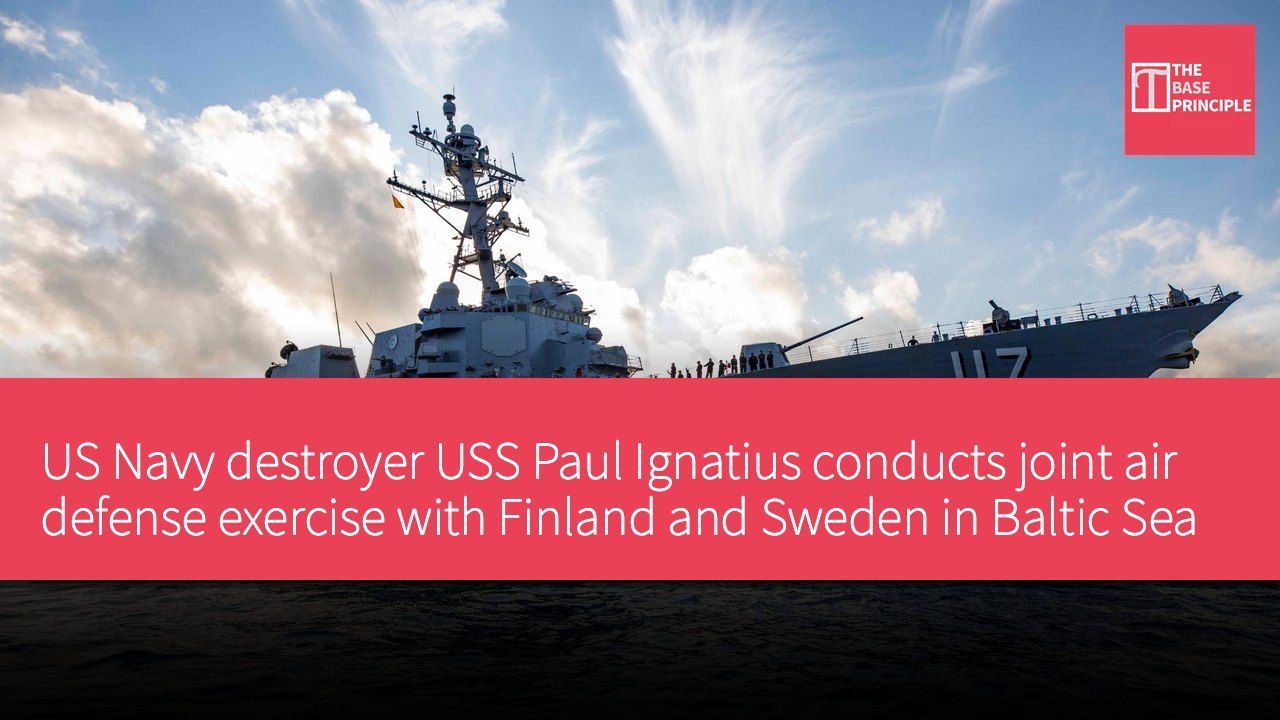
- USS Paul Ignatius conducts joint air defense exercise with Finland and Sweden, testing interoperability.
- Finnish and Swedish naval personnel assist navigation, ensuring maritime traffic safety.
- Live-fire shooting against unmanned surface targets during exercise tests air defense capabilities.
- US emphasizes security partnership with Finland, demonstrating commitment to allies.
Finnish-Swedish cooperation
Finnish and Swedish naval personnel boarded USS Paul Ignatius on October 5, working alongside US sailors in the navigation department to share local knowledge and hydrographic expertise. Their assistance helped the destroyer navigate shallow waters and complex channels in the northern Baltic Sea. Officers from the three countries also conducted navigation and tactical exercises during the voyage. Finnish Navy Commander Rear Admiral Tuomas Tiilikainen said: "Working together with our allies aims to ensure the safety of Finland's and Sweden's sea lines of communication. This way, we will be able to support allied operations and safeguard our societies' supply security." During the process, training in the Gulf of Bothnia included live-fire shooting against unmanned surface targets. These exercises tested joint targeting procedures and integration of air defense capabilities among participating forces. The exercises enabled crews to coordinate actions during maritime operations and assess how their capabilities work together. The ship's voyage was a continuation of maritime activities by the US and Nordic countries in Norway, while North Atlantic exercises focused on long-range maritime defense. The US Navy described these activities as part of a coordinated framework linking the North Atlantic, High North, and Baltic Sea.Sweden's military modernization
US Sixth Fleet Commander Vice Admiral J.T. Anderson said: "The high level of integration of Finland and Sweden within the NATO framework continues to strengthen the security architecture in the High North and Baltic Sea. The unparalleled regional expertise and modernization efforts of allies Finland and Sweden ensure NATO stands ready to deter aggression and defend every inch of allied territory." During visits to Stockholm and Helsinki, Anderson met with Finnish Minister of Defence General Jussi Jokela, Swedish Navy Chief Rear Admiral Johan Norlén, and Tiilikainen to discuss maritime infrastructure protection, response options in the High North, and NATO's northern coordination. In Stockholm, Supreme Commander of the Swedish Armed Forces General Michael Claesson met with regional leaders to discuss the Swedish Navy's growing role in the alliance. He linked this effort to military modernization and closer cooperation with allied forces. Claesson said: "Sweden is no longer merely defending its own coasts; we are actively contributing to the collective security of the entire Baltic Sea region and the High North. Through high-end modernization, such as our new air defense frigates and deep integration with allies like the US Navy, we are demonstrating the ability to operate as a unified force."US commitment to Finland
The destroyer's arrival in Helsinki on October 8 also highlighted Washington's security partnership with Finland. US Ambassador to Finland Howard Brody said: "The presence of USS Paul Ignatius in Helsinki is a clear symbol of America's steadfast commitment to our Finnish ally. This visit, especially the joint crew program, demonstrates that our security is seamless." USS Paul Ignatius is a forward-deployed destroyer assigned to the US Sixth Fleet's area of responsibility, based in Naples, Italy, where the fleet conducts naval and joint operations in Europe and Africa to support US, allied, and partner interests.Importance of security cooperation under NATO framework
USS Paul Ignatius's exercises not only underscore US military cooperation with Finland and Sweden, but also reflect strategic integration among NATO member states. As the geopolitical environment changes, such joint exercises help enhance regional security and strengthen deterrence against potential threats. Finland and Sweden's roles within NATO are growing increasingly important; through modernization and cooperation with allies, these countries are able to contribute to collective defense on a broader scale, ensuring stability and security in the Baltic Sea region.H
About the author
Henderson