
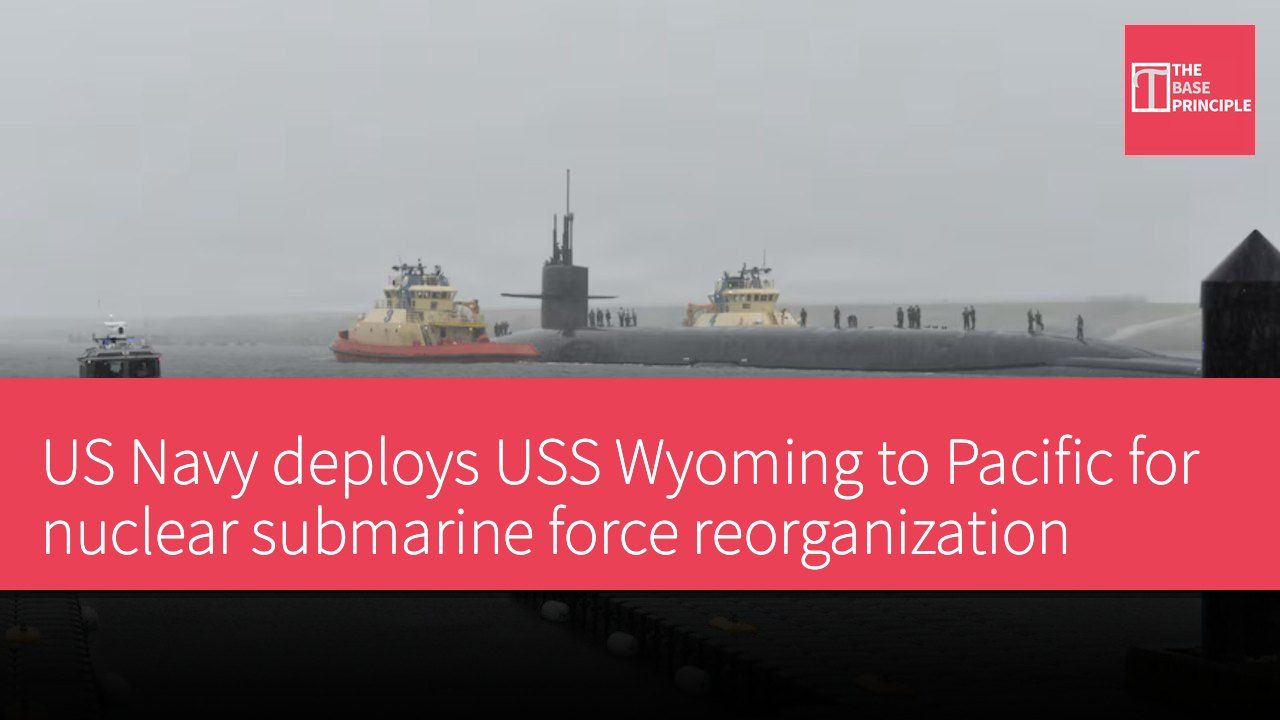
- US Navy deploys USS Wyoming to Pacific for reorganization.
- Swap does not increase submarine count, but allocates based on submarine age.
- Maintaining crew organizational integrity is critical for submarine availability.
- Navy prepares for Columbia-class submarine operations.
The US Navy has redeployed its newer Ohio-class ballistic missile submarine to the Pacific Northwest for a strategic submarine force reorganization. USS Wyoming arrived at Naval Base Kitsap in Washington state on October 1, 2026, and conducted a port swap with the older USS Pennsylvania. Commissioned in 1996, Wyoming is now homeported at Bangor, while Pennsylvania, commissioned in 1989, has transferred to Naval Submarine Base Kings Bay in Georgia.
The Navy announced the swap on October 2, calling it part of a long-term plan to modernize the existing Ohio-class submarines.
Strategic Significance of Submarine Swap
This swap does not increase the number of ballistic missile submarines in the Pacific Fleet, but rather changes the allocation of Ohio-class submarines in the region based on their age and remaining service life. Both submarines are nuclear-powered ballistic missile submarines capable of carrying Trident II D5 submarine-launched ballistic missiles, supporting the US sea-based strategic nuclear deterrent. Wyoming was commissioned seven years later than Pennsylvania. Deploying the newer submarine to Bangor provides the Pacific force with a vessel that has a longer remaining service life, even as the Navy continues to operate an aging fleet.
The Ohio-class submarines' service life has been extended to approximately 42 years, and continued operation requires extensive maintenance, refueling, and modernization to address aging equipment and difficulties supporting legacy systems.
The Navy also avoided relocating entire crews and their families during the swap. Most personnel remain at their current bases, with Bangor and Kings Bay crews simply taking over the new submarines. This approach preserves the existing command and training structures at both bases and limits disruption from transferring submarine personnel across the coast. Ohio-class ballistic missile submarines operate with Blue and Gold crews, an arrangement that allows one crew to prepare for operations while the other deploys or completes related activities, helping maintain submarine availability. Preserving the integrity of these organizations is particularly important for a force that relies on experienced personnel and established maintenance routines.
Role of Naval Base Kitsap
Naval Base Kitsap Bangor is the primary West Coast base for Ohio-class ballistic missile submarine operations, with facilities supporting submarine maintenance, logistics, training, and operations of the Pacific strategic force. The base must continue supporting aging Ohio-class submarines while preparing for Columbia-class submarine operations. Deploying Wyoming there provides additional flexibility because the submarine has a longer remaining service life than Pennsylvania. The Trident II D5 missile system also provides continuity during fleet modernization.
The Navy is developing the Trident II D5 Life Extension 2 program to sustain the weapon system, while planning an upgraded version for the Columbia-class submarines.
The Columbia-class submarines are planned to replace the 14 Ohio-class ballistic missile submarines with 12 new vessels. Expected higher operational availability will help maintain the required strategic deterrent patrols with fewer submarines. Consequently, the condition and availability of the existing Ohio-class fleet are especially important until enough Columbia-class submarines enter service. The Wyoming-Pennsylvania swap gives the Navy a way to redistribute submarine service life between the Atlantic and Pacific without rebuilding established crew organizations.
This also keeps the newer submarine at Bangor, where the Navy is preparing its infrastructure and support systems for the next generation of strategic submarines. For now, the Pacific force retains the same number of Ohio-class ballistic missile submarines; the main change is the vessel filling that role, with the newer Wyoming replacing the older Pennsylvania.
Impact of Submarine Reorganization on US Navy
The US Navy's submarine reorganization reflects the importance placed on maintaining strategic deterrent forces, particularly against the backdrop of aging submarines. Swapping USS Wyoming and USS Pennsylvania not only ensures the Pacific Fleet's operational capability but also extends submarine service life and enhances overall operational flexibility. Additionally, Naval Base Kitsap's support is critical for maintaining aging submarines and preparing for future Columbia-class submarines, demonstrating the US Navy's forward-looking planning in the face of new challenges.