
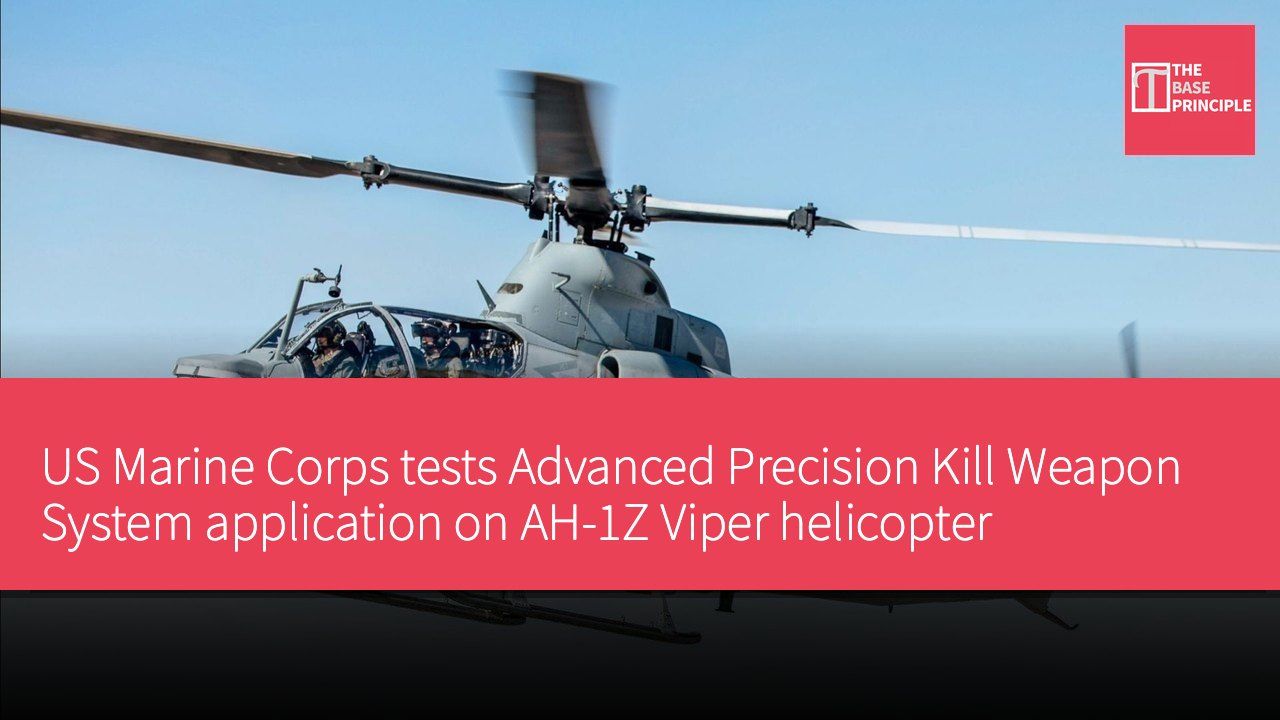
- AH-1Z Viper successfully tests Advanced Precision Kill Weapon System (APKWS).
- APKWS provides scalable strike options, limiting collateral damage.
- The event streamlines training, reducing time required to deploy APKWS.
- 26 observers gain firsthand experience with APKWS performance and requirements.
The AH-1Z Viper successfully delivered the Advanced Precision Kill Weapon System (APKWS) during a live-fire test conducted on May 12 within a restricted range. The event was jointly conducted by the U.S. Marine Corps Light/Attack Helicopter Program Office and Air Test and Evaluation Squadron 21, at the Upper Yuta Impact Area. The launch test verified weapon integration parameters, range safety protocols, and ground ammunition handling procedures. The event aimed to streamline training and reduce the time required to deploy the capability within the Marine Corps H-1 helicopter community, while attracting 26 observers from the Naval Aviation Enterprise.
Tactical Advantages of APKWS
The Marine Corps stated that APKWS provides commanders with a scalable strike option to engage time-sensitive targets in contested environments while limiting collateral damage. Its integration enhances close air support and complements emerging manned-unmanned teaming concepts. The test examined the delivery parameters required to launch the weapon from the AH-1Z Viper. During the launch, the team verified the safety and ammunition handling procedures supporting its use. "By validating APKWS delivery parameters in the most space-constrained firing environment, our H-1 team demonstrated the precise, scalable effects that commanders can confidently employ."
Col. Jason Duke, PMA-276 program manager, said.
Importance of Training and Coordination
The event's objectives extended beyond weapon integration to include streamlining training and reducing the time needed to deploy APKWS within the Marine Corps H-1 helicopter community. The restricted firing range setup required close coordination with the Plans, Training, Mobilization and Security Directorate at Fort A.P. Hill, led by Matt Fleetwood. The directorate worked with the Range Control Center to establish a dedicated weapon delivery zone for the launch. The coordination addressed limitations on available range space and the need to protect surrounding operations during the event.
The Range Control Center imposed safety check pauses in adjacent training areas to clear the area and protect surrounding operations. These measures supported the launch while meeting safety requirements for nearby training activities. HX-21 stated that the firing range setup established repeatable procedures for Marines operating at remote locations. These procedures link restricted range coordination with the force's broader readiness and deployment goals. "The weapon delivery zone construct and range conflict resolution we provided here translate directly into repeatable procedures that improve readiness and expand operational options for Marines operating at remote locations."
HX-21 Ordnance Officer Michael Hunt said.
Twenty-six observers gained firsthand experience with APKWS performance and requirements relevant to future fleet deployments. Representatives from PMA-276, the Direct and Time-Sensitive Strike Program Office, the Aviation Simulation Center, and HX-21 attended the event. Their participation added practical learning to the developmental flight test effort. The event linked weapon integration testing with the practical procedures needed to support naval helicopter operations. In a single live-fire event, delivery parameters, ground ammunition handling, and range safety were all validated. For the H-1 community, the goal is to streamline training and reduce the time needed to deploy the capability.
The restricted firing range setup also provided procedures that HX-21 said can be repeated by Marines operating at remote locations.
Impact of APKWS Test on Marine Corps
This test not only validated APKWS integration and performance but also underscored the necessity for the Marine Corps to respond rapidly in operational environments. As operational requirements continue to evolve, the ability to effectively engage time-sensitive targets while reducing collateral damage is critical. Additionally, streamlining training and deployment processes will enhance unit efficiency, ensuring flexibility in dynamic operational environments. These measures not only strengthen the Marine Corps' combat capabilities but also provide valuable experience for future weapon integration and deployment.