
- Plasma heating method enhances cement production speed and reduces fossil fuel dependence.
- New technology accelerates cement clinker formation nearly 100 times faster with reduced heat loss.
- Plasma-produced cement maintains durability and can utilize recycled waste as raw material.
- If powered by renewable energy, the plasma heating process can achieve zero emissions.
Researchers from Stanford University and the University of California, Berkeley have developed a novel plasma heating method that could significantly increase cement production speed while reducing reliance on fossil fuels. The technology, developed by Stanford's Dr. Qi Zheng and Dr. Yi Cui, along with Dr. Paulo Monteiro, a civil engineering researcher at UC Berkeley, uses plasma heated to over 4,352 degrees Fahrenheit (2,400 degrees Celsius) to directly heat the raw materials used in cement manufacturing.
In proof-of-concept tests, the extreme temperatures caused the raw materials to transform into cement clinker within seconds, nearly 100 times faster than standard production methods.
New Technology Boosts Cement Production Speed
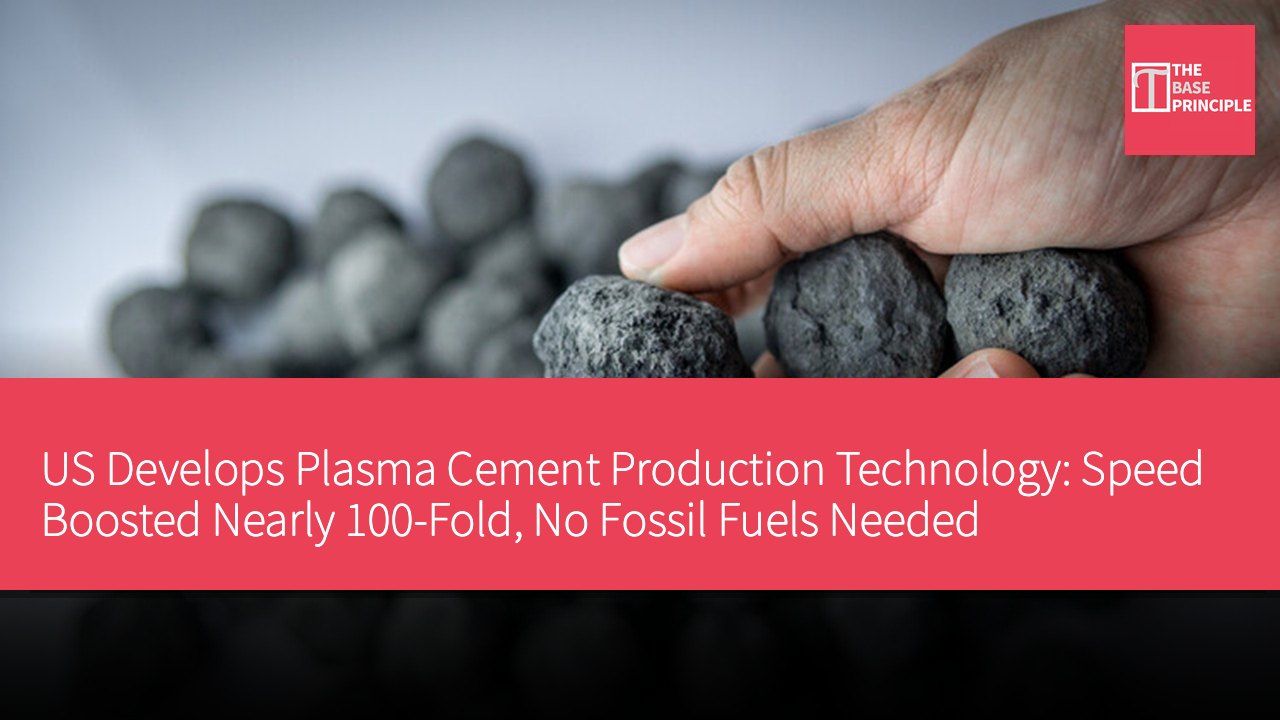
Cement clinker is a dark gray, pebble-sized material formed by heating limestone and clay in a kiln to about 2,642 degrees Fahrenheit (1,450 degrees Celsius). The research team believes this method can reduce heat loss and eliminate emissions from fossil fuel combustion in cement kilns. Zheng stated, "There are many intermediate steps in the process, which leads to serious heat waste issues."
Cement is the second most consumed material globally after water, with an average annual consumption of one cubic meter per person. However, the cement industry is also responsible for approximately 8% of global CO2 emissions. Despite these significant emissions, the basic production process has remained largely unchanged since cement was invented in 1824. The traditional process involves heating limestone, clay, and other materials to temperatures up to 2,552 degrees Fahrenheit (1,400 degrees Celsius) to form pebble-sized clinker blocks, which are then ground into cement powder. Some of the industry's emissions come from burning fossil fuels to provide the massive amount of heat needed for cement kilns.
Environmental Benefits of Plasma Cement Production
To reduce emissions, the research team turned to an electrical solution, creating a system that uses plasma to replace fuel-fired kilns for heating. Plasma is generated by passing an electric current through an ionized gas. The team noted that temperatures above 4,352 degrees Fahrenheit can greatly accelerate clinker formation, allowing the entire process to be completed in seconds. The faster production process reduces the energy lost as waste heat. While traditional cement production typically has a thermal efficiency of only 30% to 40%, the plasma-generated heat in the team's experiments was nearly 80% directly usable for cement production.
The research also showed that this low-carbon cement retains mechanical properties such as durability and workability. The team used electron microscopy to examine the material and found that the plasma process creates nanoscale defects, which rapidly dissolve upon contact with water, helping the cement set faster. The researchers believe the new technology can also support a more circular cement industry—recycled cement waste can be used as raw material in the plasma process, reducing both waste and carbon emissions. Additionally, if the electricity used for plasma generation comes from renewable sources, the heating process itself can achieve zero emissions.
The researchers now plan to collaborate with stakeholders in the cement industry to evaluate whether the technology can be scaled up for large-scale production. Zhang concluded in a statement that further testing is needed to determine "whether the new technology is robust enough to handle various types of waste or if it requires pre-sorting before being fed into the machinery." The research was presented at the ACS Fall 2026 meeting, the American Chemical Society's fall conference held in Chicago from August 23rd to 27th.
Item Specification Heating Method Plasma Heating (Electric current through ionized gas) Plasma Temperature Over 4,352 degrees Fahrenheit (2,400 degrees Celsius) Traditional Kiln Temperature 2,552 degrees Fahrenheit (1,400 degrees Celsius) Clinker Formation Temperature 2,642 degrees Fahrenheit (1,450 degrees Celsius) Process Speed Completed in seconds, nearly 100 times faster than standard production Traditional Process Thermal Efficiency 30% to 40% Plasma Process Thermal Efficiency Nearly 80% Global CO2 Emissions Share Approximately 8% Average Annual Consumption per Person One cubic meter Year of Traditional Process Invention 1824
Impact of Plasma Technology on the Cement Industry
The cement industry is a major source of global CO2 emissions, with traditional production methods relying on fossil fuels leading to significant emissions. The newly developed plasma heating technology not only boosts production efficiency but also substantially reduces emissions, aligning with global sustainability goals. By incorporating recycled waste into the production process, this technology further promotes a circular economy, minimizing resource waste. If combined with renewable energy, it will move cement production closer to the goal of zero emissions, having a profound impact on environmental protection.