
- USS Abraham Lincoln completes 321-day deployment, returns to homeport.
- The vessel accumulated significant kill data during operations with Iran.
- Claimed kill record stands at approximately 173 targets, but inconsistencies exist.
- Official report shows strike group conducted 3,693 combat sorties.
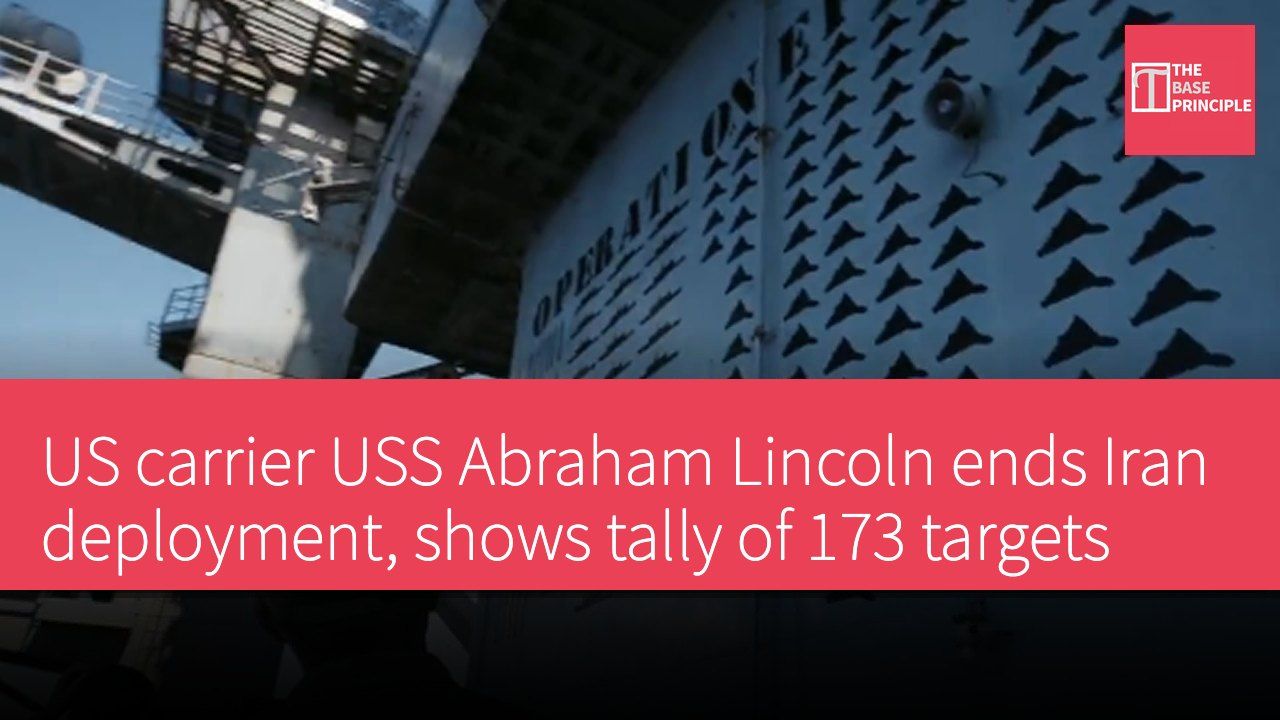
After a 321-day deployment, USS Abraham Lincoln has finally returned to its homeport. The ship departed San Diego on November 21, 2025, and returned to port on the 8th of this month, ending a deployment of nearly six months, just shy of the 326-day record set by USS Gerald R. Ford in May 2026. While the news itself has drawn attention, even more striking are the prominent kill markings displayed on the vessel.
This is a common practice in many armed forces, and USS Abraham Lincoln was evidently busy during its six-month operation with Iran. Photos and videos released during a visit by US Defense Secretary Pete Hegseth show the ship (and its strike group) accumulated a substantial kill record while engaging various enemy assets.
USS Abraham Lincoln's kill data
According to the markings, the most common kill data involves one-way attack drones represented by the Shahed-136 UAV. Taken at face value, the carrier and its strike group claim to have neutralized 106 drones during 'Operation Epic Fury.' Other kill data includes claims of 34 surface vessels sunk, 23 vertical missiles, and 10 submarines. For USS Abraham Lincoln, this is an impressive kill record. The kill data also mentions the expenditure of approximately 1,463 bombs/munitions.
Overall, this would bring the claimed kill record to approximately 173 targets.
Credibility issues with kill data
Recording such kill data is very common among aviators, who often paint small silhouettes on their aircraft fuselages after successful missions. However, the data on USS Abraham Lincoln more likely represents a collective record of its strike group, encompassing kills from various assets including its air wing and escort vessels. Crucially, these are merely claimed figures, not necessarily confirmed kills. Consequently, there appear to be some inconsistencies in the claimed kill numbers. For example, regarding drones, the strike group's official report records only about 77, not the claimed 106.
Surface vessel data also differs from official records, appearing to underestimate the actual figure. According to the official report, the strike group sank about 64 surface vessels, not 34. As for submarines, there is currently no official report. It remains unclear at time of writing why this discrepancy exists.
However, there are several plausible explanations. For instance, the markings may include kill data from different phases of the deployment, use different kill definitions, or depict only certain vessel types. Others may be credited to specific aircraft or other units rather than the entire strike group. As for the submarine kill claims, these may not refer to submarine-versus-submarine combat. It is known that prior to 'Operation Epic Fury,' the Iranian Navy operated Russian-made Kilo-class diesel-electric attack submarines and Ghadir-class midget submarines. Since previous reports have mentioned Hellfire missiles and Army Tactical Missile System (ATACMS) missiles being used against such assets, it is reasonable to infer this is what is being referenced.
In such cases, the submarines were most likely neutralized while on the surface or docked.
Beyond the headlines, the strike group's official report provided by Hegseth shows an impressive record, including 3,693 combat sorties and a total of 250 consecutive days at sea.
The complexity of USS Abraham Lincoln's kill data
USS Abraham Lincoln's kill data reflects its combat achievements in operations with Iran, yet the credibility of these figures raises questions. While the vessel's claimed kill numbers are impressive, there are clear discrepancies between official reports and claimed data, which may reflect different kill definitions or recording methods. Such situations are not uncommon in military operations, particularly when involving multiple combat assets. Understanding the context of these data and their possible interpretations helps provide a more comprehensive assessment of the US Navy's operational effectiveness in the region.