
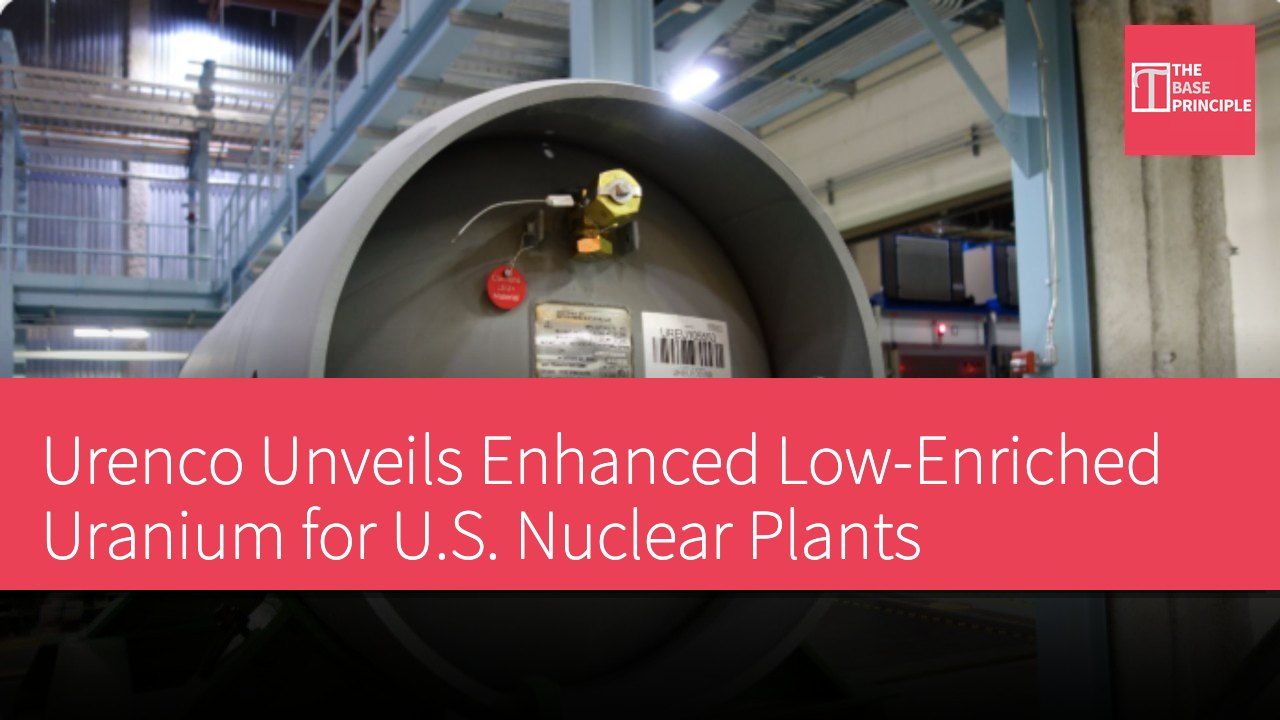
- Urenco USA successfully produced the first commercial Low-Enriched Uranium Plus (LEU+) cylinder.
- LEU+ can achieve enrichment levels of up to 10%, extending plant operating times.
- LEU+ provides a stable domestic fuel source for the U.S., enhancing reactor efficiency.
- The production of LEU+ in New Mexico strengthens U.S. energy independence.
Urenco USA has successfully produced its first commercial Low-Enriched Uranium Plus (LEU+) cylinder at its facility in New Mexico, marking a significant turning point for the development of the Western power grid. For a long time, Russia has dominated the global enriched uranium market, and this achievement represents a major breakthrough for the Western world, opening up powerful new options for aging plants and next-generation reactor designs. Next-generation small modular reactors, such as high-temperature gas-cooled and sodium-cooled fast reactors, occupy a smaller footprint than traditional plants. Advanced compact cores rely on increased U-235 concentrations to achieve optimal operational efficiency.
Enrichment levels can reach 10%. Natural uranium consists of over 99% U-238 and less than 1% fissile U-235. Commercial reactors have long operated on standard low-enriched uranium, which contains 3% to 5% U-235. The newly launched LEU+ expands these limits, raising the enrichment level to 10%. This additional concentration increase is significant. For existing light-water reactors, LEU+ means that plants can operate for longer periods between refueling outages, thereby reducing maintenance costs and maintaining a stable supply of zero-carbon electricity with fewer interruptions.
The Importance and Impact of LEU+
For advanced reactor developers, LEU+ provides a stable, domestic fuel source. Additionally, LEU+ serves as a critical stepping stone for producing High-Assay Low-Enriched Uranium (HALEU), which has enrichment levels between 10% and 20%. This will enhance the production efficiency of high-tech reactor concepts currently under design. “Achieving this milestone required significant effort from our plant and staff,” said Jody Blackshear, General Manager of Urenco USA.
“Through the collaboration of our entire site and company teams, we can now offer innovative fuel options to our customers and support next-generation nuclear fuel technologies.”
Strengthening U.S. Energy Independence
Moreover, the adoption of LEU+ can help plants extend their operating times, increasing refueling cycles from 18 to 24 months to over 24 to 30 months. The overall capacity factor of plants improves, and less time is spent on routine maintenance. The passage of the "Ban on Russian Uranium Imports Act" has established an important strategic backdrop for Urenco's milestone. Federal restrictions on Russian low-enriched uranium have created an urgent demand for domestic alternatives to ensure the security of the U.S. power grid. Therefore, the production of LEU+ in New Mexico has strengthened Western energy independence and enhanced the domestic supply chain for both current and next-generation nuclear reactors.
This development follows the overcoming of key regulatory hurdles in September 2025, when the U.S. Nuclear Regulatory Commission authorized Urenco USA to enrich U-235 to 10% across all its gas centrifuge cascades. The company is now preparing for large-scale expansion. To meet the growing demand, Urenco USA is investing to expand its operations in New Mexico and plans to achieve a capacity of over 7 million Separative Work Units (SWU) within the next decade. A new dedicated enrichment plant is set to begin construction in 2029, with the first new cascades expected to be operational by 2032, followed by additional capacity before 2036.
The Impact of LEU+ on the Future of Nuclear Energy
The launch of LEU+ not only marks a significant breakthrough for the U.S. in the field of nuclear energy but also provides a stable fuel source for future reactor technologies. With restrictions on Russian uranium imports, the production of LEU+ can reduce foreign dependence and enhance the stability of the domestic supply chain. Furthermore, the high enrichment characteristics of LEU+ will enable existing nuclear plants to operate more efficiently and reduce maintenance costs, which is crucial for advancing zero-carbon electricity supply.